school days with steve albini. part two.

#2: Motorcycles = Broken Body Parts.

Continuing my account of four things I learned through my short high school friendship with Steve Albini, I come to #2, which does not require much explanation. Steve rode a motorcycle. During his senior year (’79 -’80), Steve got creamed on his motorcycle by a larger motor vehicle. Steve’s leg got snapped like a pretzel. Come to think of it, his legs were pretzels. The straight kind, you know, like Mr. Salty.

Never, since I saw him in his hip-to-heel cast, and heard his account of the accident, have I wanted to own a motorcycle or ride on one going more than 15 miles per hour. That’s just how it is.

Lesson learned. Thanks, Steve.

It actually may have not been his only injury-accident on a bike, but my memory of that is fuzzy now. At least one account of Steve’s high school days says that he taught himself the bass guitar while he was incapacitated. I don’t recall that myself, but it does make a nice segue into #3, which is all about music and life.

#3: Do it Yourself, Why Don’t You.
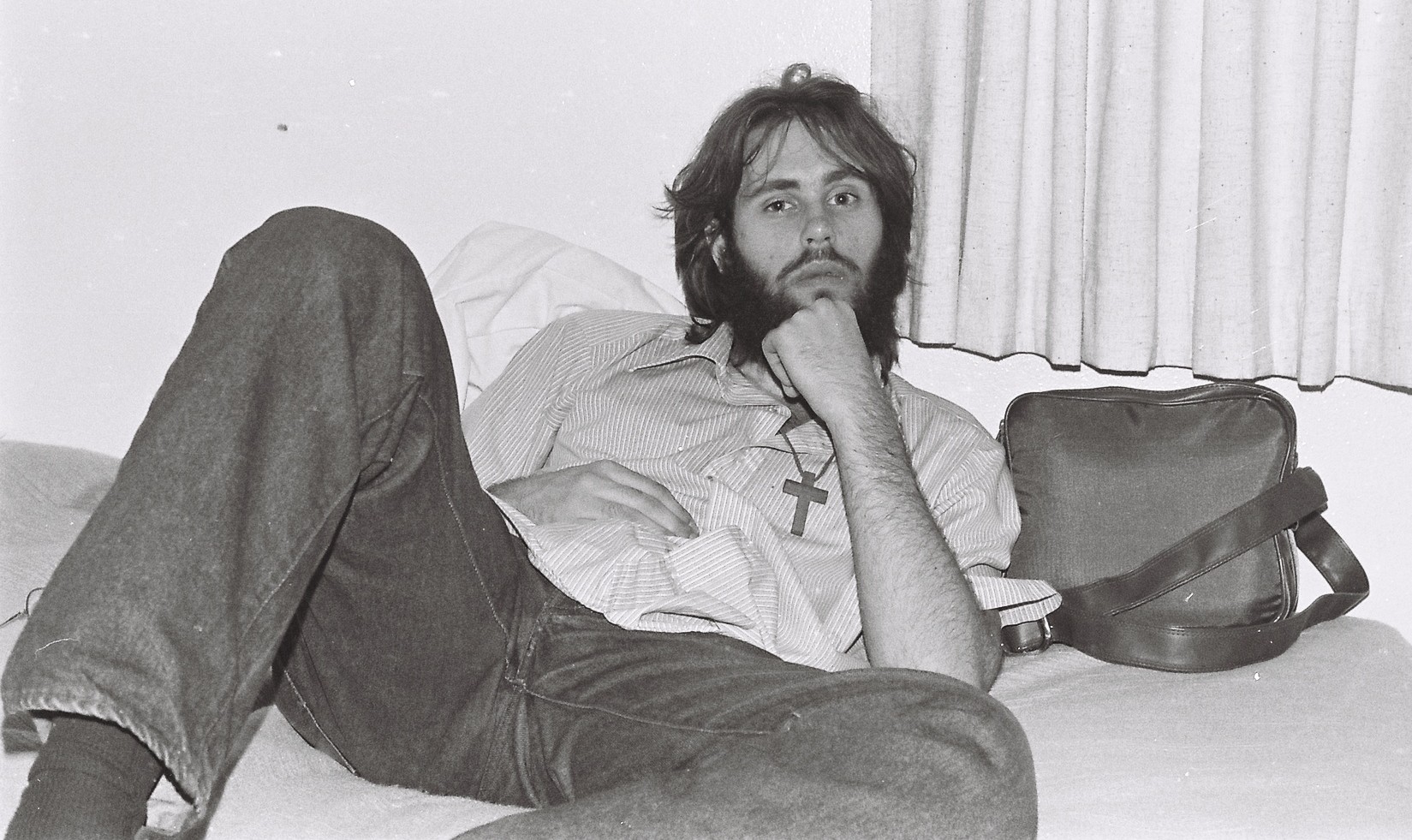
In Dallas, 1983

In March of 1983, I was living in Oklahoma City, and took a bus up to Chicago. I went up because Troy Deckert was getting married. Mark Hayes was living in Chicago as well, and at the time was staying with Steve. I don’t remember where I slept at night, but it seems we spent considerable time at Steve’s apartment. Steve was in his third year at Northwestern. I recall that when I first got there Steve was out of town.

When he returned he breezed into the apartment, explaining that he, “Just came from Madison, where I got my hair cut by a Neo-Nazi.”

I hadn’t seen him in two and a half years.Time was flying. Steve was flying. He was energetic, enthusiastic, apparently happier than he had been in Missoula. He seemed to have a lot of irons in the fire.

When he got there it was the first time the four of us had been together since December of 1980 in Missoula. That, I may as well add here, is when and where The John Lennon Story fits in.

It was my junior year at Hellgate High School, and I was struggling, academically and personally. One of the things I felt I had going for me was my work on the Lance, where I had Steve’s old position of Editorials Editor. In December, the murder of John Lennon was a real blow to me and several of my friends. We did not talk about it much, mostly I suppose, because we didn’t know what to say. I know I didn’t. It just sucked.

Steve came home to Missoula that week. I ran into him Saturday night at a “New Wave Festival” at the University, and asked him if he would write a guest column for the Lance. I thought it would be funny to see people’s reaction to its appearance when they thought they were finally rid of him for good. He balked at the idea. I pressed him and he relented.

The piece he turned in I felt compelled to publish, but I was the one who was cheesed off by it. There were two reasons. One: the thrust of the column was, “John Lennon is dead and I don’t care.” Two: he included an account of me asking him to write it that had me sounding like a complete dork. If Steve truly did not care what people thought of him, then I was his total opposite. I cared desperately what people thought, and I had pretty thin skin, too. I didn’t stop to think that nobody’s opinion of me would be formed by what he wrote. Some people would have considered it an honor to be called a “notorious hippie” in the same piece that said John Lennon was better off dead. But I felt the column had made of a fool of me, and it hurt my feelings because, even though we weren’t close, I considered Steve a friend – with good reason. At the same time I realized how ridiculous it would seem for me to vent my anger for the same period of time I felt it. I expressed my anger to my friends, who laughed it off, then kept it to myself. It seems to me now that it was Steve’s last chance to give high school the finger. I just happened to be standing in view.

There’s a story our friend Deb Scherer tells, who also served on the Lance. She had a distinctive way of dressing. It was eclectic, it was funky, it was her own. Steve was giving her a hard time about it. This from the guy who came to school in his deliberately shredded pretzel-pants and similarly abused t-shirt on which he had painted in fire-engine red: “DIE!” Deb finally said to him, “I don’t care what you think of the way I dress!,” to which he replied, “Good, you shouldn’t!” Some of the things Steve did and said were undoubtedly expressed with this conviction in mind. Considerable vexation throughout the English-speaking world over the last 30 years could certainly have been avoided if others had shared it.

Matter Magazine, 1983

So, in 1983, that had been the last time I had seen or spoken with Steve. I was over it, but in the intervening years a lot had happened. Steve had heard that I had gone off into the Weirdlands and become a born-again Christian. Even more disconcerting, Troy, who was a closer friend to Steve, had come to Chicago the previous summer and done the same. I suppose you can imagine how completely insane some of our friends thought it was that we would both, at the same time, hundreds of miles apart, come to Jesus. Every time I saw one of my old friends, I expected to be “dealt a ration,” as we used to say. I expected the biggest ration of all to be dealt by Steve. I was waiting for it.

Steve showed me his apartment. The highlight of the tour, from Steve’s viewpoint, was in the kitchen, where he showed me Archie, a really huge and thankfully deceased cockroach. I’ve got to hand it to Steve Albini. Not only did he afford Archie the respect and honor he deserved, but he had enough taste and culture to preserve him for others to enjoy. As I admired the enormous blattoid, Steve said,”So Dehner, why Jesus?”

I was expecting something quite different, so the question caught me off guard, and I fumbled for something to say that would make sense. Actually, it was great question. It was perfectly respectful, and I should have been able to give a coherent answer. But what can I say? It had been nine months. I was nineteen years old. So I said something like, “Because He’s real. I have no doubt that He is…” Something like that.

Historic Reenactment: Not actually Archie.

“Huh.” He shrugged. And that was it. People who don’t know Steve might think, on account of his sometimes, um, forthright way of expressing his views in public, that he’d have given me or Troy a hard time. But regardless of what he might have thought, he had nothing mean or derogatory to say to me. Live and let live seemed more his style. He let a Nazi cut his hair. He let a Jesus freak see his cockroach.

Then Steve showed me a unfurnished bedroom, that had only some musical gear, his electric bass, his drummer Roland, and a box or two of 45rpm EPs.

“This is our record,” he said, pulling one out. “Here, have one.”

It was Big Black’s first record, Lungs. And it wasn’t really “our record,” it was his record. He made it.

No, I mean: he made the record.

He wrote, played and sang (“i’m a steelworker, i kill what I eat”). He engineered, recorded and mixed. He took the photos and created the cover artwork and logo. Wrote the liner notes. Polymerized the vinyl compound with his own chemistry set and hand-etched the grooves in the disk (Actually, I think he might have hired this part out.). Packaged and delivered the records to local stores — with party favors enclosed for the lucky customers, so that opening your Big Black LP was the musical equivalent of Cracker Jacks (if you wouldn’t mind finding a bloody kleenex as your ‘toy surprise’).

The point, that I’ve taken so long to get to, is that he didn’t ask anyone’s permission to make a record, and he didn’t wait for – or even pursue, as far as I know – a recording contract, either. He didn’t have someone looking over his shoulder telling him what he could or couldn’t say. He just made the thing himself. And he told anyone reading the insert to go make their own record, too. It was simply unacceptable to him that he would relinquish the control and freedom to make the music he wanted, and get ripped off in the process.

Using this approach, Steve pretty much made his musical career on his own terms. Further, he inspired others to do the same. This same spirit came to drive not only independent music, but indy film making as well, and made the Internet the ultimate democratized medium.

When I was struggling to make films in the 80s and 90s Steve’s literally homemade record pointed to the possibility of not only by-passing media gate-keepers, but also kicking down the gates. One of the things we talked about in August was the collapse of the recording industry as we’ve known it, and something much better (in Steve’s view) replacing it.

On Lungs, Steve had a friend named John Bohnen play the sax on one of the songs, and gave Mark credit for “more yells on dead billy.” He did everything else. Big Black was about to become a band, and this record helped put it together. But before Big Black was a band, even before Big Black was just Steve and some instruments – there was Just Ducky.

Next: #3 Part 2 – Just Ducky 
part one.   part three.   part four.

From the ‘liner notes’ insert. For the record, ‘Lungs’ was made in 1982, not ’81, as has been mistakenly reported.

Just like we used to do

We shall walk again down along the lane
Down the avenue just like we used to do
With our heads so high smile at the passers by
Then we’ll softly sigh…

Everyone, Van Morrison

This past summer, I had one of the very happiest experiences of my adult life. It confirmed once again that – for myself – along with love and discovery, one of the  paramount joys of living is reunion — meeting friends and loved ones after being separated by time and space.

In August, more than twenty people gathered in Missoula, MT, who were friends at Hellgate High School between 1978 and 1982. One person came who went to Sentinel High. Most but not all of us had worked on the staff of the school newspaper, the Lance. We came from Portland, Seattle, Tucson, Oakland, DC, New York, Juneau and Saudi Arabia. Many of us had not seen each other in over thirty years.

We honored our journalism teacher and Lance advisor, Wayne Seitz, who recently retired. For many of us he was the best, or certainly one of very best teachers we had.

We strolled the streets of Missoula, visited some old hang-outs, and recalled some that are now gone or changed. I remembered skim-boarding the Clark Fork, hiking up Mt. Sentinel to the M, playing pinball and Space Defenders in the University Commons, parties until 2 am, all-night Risk games, putting the Lance “to bed,” walking and driving the eerie, ash-covered town on the night of May 18, 1980, cycling up Pattee Canyon, cresting Strawberry Ridge and looking down on Missoula with its Dome of Smog created by temperature inversion; standing in the warm summer rain, knowing the sun would be out to dry us in a few minutes.

I was struck by how deeply affected I was by living less than three of my 49 years here. I reflected how fortunate I had been, recalling my friends, a few now gone from this world, the cast of characters we saw every day at school, the truly wonderful teachers I had (and a few awful ones), and the best and the worst of being a teenager in what I still regard as a pretty awesome town.

We walked the halls of Hellgate, which were remarkably unchanged. A friend and I got the custodian (also a classmate) to let us into the room that was the Lance office back in the day, and into the old journalism class room.

A few of us went to the Western Montana State fair, and found it just about exactly as it was in the late 70s.

We did a lot of reminiscing, and told a few secrets. I was fascinated to see how we had changed, and how we were the same. Most delightful of all was the proof that no matter how much we may change and grow, our personalities are essentially the same. This reunion came after  doing a lot of blogging, yet to be published, about my teen years. I wondered if I would look back on them differently after seeing the people I spent them with. I think so, but I’m not yet sure how. But seeing them and hearing their voices does make the old times seem fresher in my mind.

I don’t want to leave the impression that I am one of those who consider high school the high point of my life and it’s all been down hill since. That was not in the least true of me, nor do I think it could be said of my friends. It was pretty rough going for a lot of us, and some have few fond memories. But as always, it’s the friends you remember, and who matter.

When I was 16, and I was getting ready to go to a party with my friends, I would get rather excited about it. There was hardly a thing in the world I looked forward to more than spending an evening with these people. And for a few days last summer, I felt the same way. It foretells to me of a day when I am reunited with those I have lost to death: the ultimate reunion. It’s a little taste of the joy to come.

I could hardly contain the joy I felt at seeing and talking to these old friends, some of them very dear to me. In four days I drove the majority of 1200 miles, only slept about 17 hours, yet felt like Iron Man. I probably seemed a little giddy, but not as much as I felt. What a gift it was to have them come together. Thank you, friends.

My Nana, my Home, my Hero, my Haystack.

Yesterday my wife and I visited the Portland Art Museum. One of the exhibits is a patron-participation collection called Object Stories. Laura told me that we could bring an object and contribute to the collection, so I brought an item I have had for many years, and told its story. To document the object story, I sat in a booth and spoke while an audio recording was made. Then some photos were snapped of me and my object. In about a week my story will join the many others already recorded and on display there and online. (Update: my Object Story is now here.)

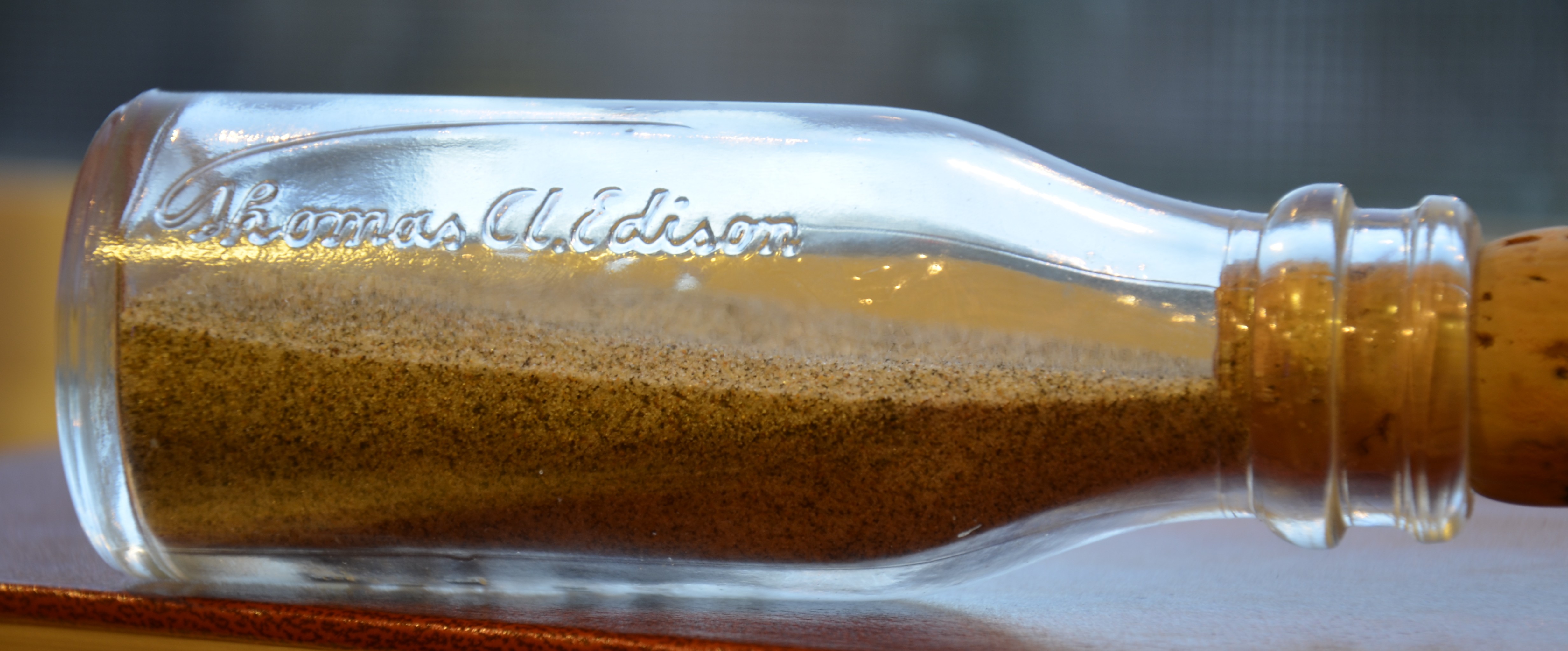
I brought a bottle half-filled with sand. Here is the story.

Sometime in 1976 or 1977, my grandmother, whom we always called Nana, had a collection of antique glass bottles.  I don’t think she had collected them; they came to her, if I remember correctly , together and uncleaned. She let me have one that she knew I was interested in. It was made of clear glass, about four inches high. It had been a bottle of battery oil – Thomas Edison Battery Oil.

Edison was a childhood hero, a man whose genius, creativity, scientific mind and brilliant inventions inspired me and made me want to grow up to be an inventor. At least, when I was eight. His signature was formed in relief vertically on the bottle: Thomas A. Edison.

A year or two later I moved away. In the summer of 1978, I moved to Montana, and later in the summer came back to Oregon, where my family spent a week at the coast. I brought the bottle. About to turn 15, I knew I was closing the chapter of my childhood in Oregon, and wanted to bring a piece of it with me to my new home. So I went down to the beach one day, scooped up some sand, put it in the bottle and stopped it with a wine cork. I took it back to Montana with me, and except for a short period here or there, I’ve had it with me ever since. For 34 years.

I chose the coastal sand over some Portland clay because the ocean beach was special to me, especially Cannon Beach and Haystack Rock where I often went as a boy. So I didn’t need a moment’s thought when choosing the object for my story. This little bottle with its fourfold precious meanings – a gift from Nana, the name of a childhood hero, a piece of home and a remembrance of boyhood summer days at the ocean – came instantly to mind.

Mobs | Part Two

Previously on The Free Range: I have had two opportunities to witness street mobs in action, from formation to mayhem to dispersion. The experiences didn’t provide me much in the way of insight. But did they did make an enormous impression on me, and confirm for me what is commonly understood of mob psychology.

Yoyogi-A-Go-Go

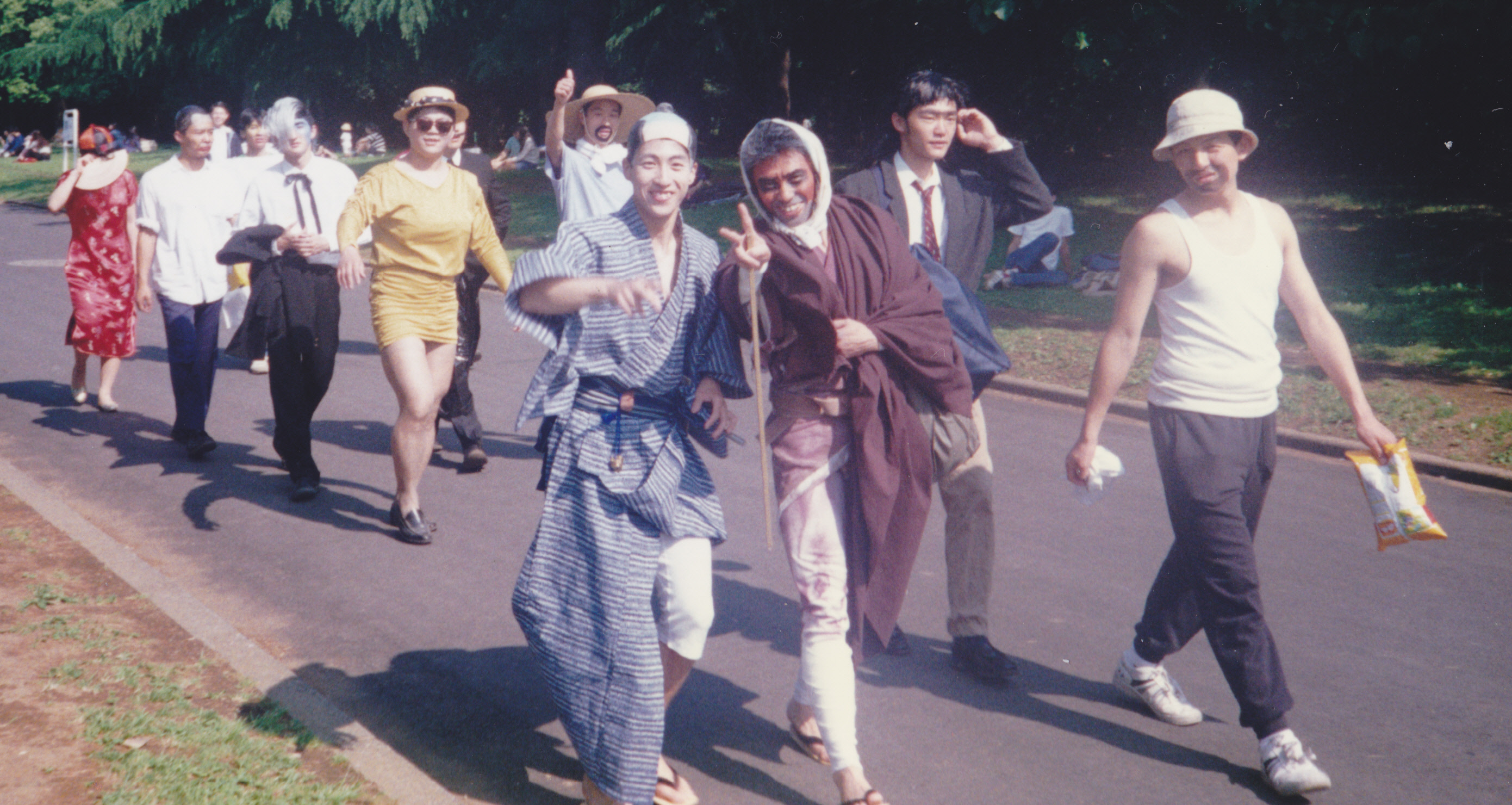
Almost exactly ten years after the Seattle Market melee, I found myself in another mob. In May, 1991 I was in Tokyo’s Yoyogi Park with my sister Julie. In this case, no riot ensued, and no one got hurt, but the frightening character of the mob was on display.

Yoyogi Park on any Sunday: just wonderful and bizarre and brilliant. If you ever have the good fortune of visiting Tokyo, stay through Sunday so you can go to Harajuku and walk through Yoyogi Park. There you will see a delightful cultural menagerie,  uniquely Japanese, swirling with cross currents of Asian, American and European influence and participation. And it must be one of the best places for people-watching in the world.

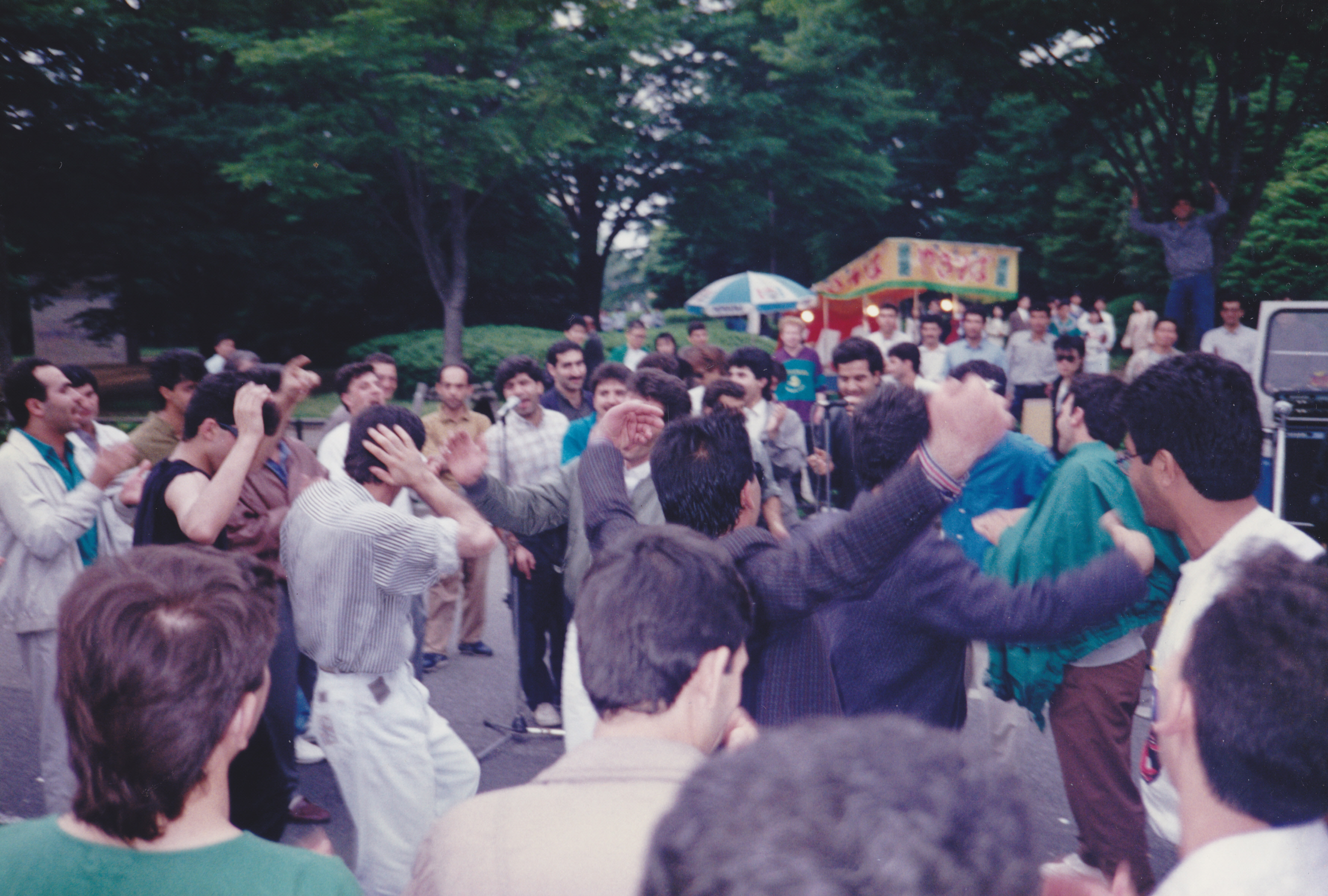
After we had walked through most of the Park and were heading back out, we came to group of a few hundred Iran-jin. They were guest-workers, all young men who were standing together, talking and dancing. The mood was festive, there was music playing, and their street-party spirit was infectious.

Three Amerika-jin, a couple of guys and one young woman, were there as well. They had been drinking. They had not been trained in cross-cultural competency. The woman started dancing, as if she were merely joining in the fun. But she was not. She quickly seized the attention of a great many of these bachelor strangers in a strange land. What she thought about her dancing, and what the men thought about it, were two wildly different things. I can’t say what was in their minds, but as I said in my previous post, in a mob there is nothing in the mind at all.

The happy Iran-jin as we found them.

The woman soon found herself the center of attention and, cheered on by the excited crowd, kept her up beer-fueled dance party. Now she was encircled, and the shouting and cheering was all around her. “Woo-hoo! Look at me!”

Yes, we are all looking at you. Is that all you’re going to do? Isn’t there something more? The crowd closed together and in on her and her friends. I believed they were hoping that she would shed some clothing. American women do that, don’t they? But what they wanted was hard to discern.

The Amerika-jin decided that the crowd was crowding them and the men began trying to get them to back off a little. They did not. The woman stopped dancing and her smile turned to fear. Now all of them were trying to push the crowd back and get away. The enthusiasm of the crowd was high, though, and they wanted the show to resume. No, really! We want you to dance some more! I think it was pretty important to them.

To start dancing like that, and after you have stoked the interest of the men, then to just stop – well, it wasn’t playing well. Her friends started shoving the crowd back and shouting furiously at them to let them go their way. Afraid and angry, they had to back their way out of the mob.

Fortunately, it it did not escalate beyond mobbing and trying to touch the woman. They  were able to get away. Though it took a while before the mob realized Salome and her friends were gone, when they did, the crowd spread out out as they had been when we arrived.

It was only a close call, more or less a mis-communication between cultures. With a mob, you can’t explain, “I was just dancing because everyone else was. We do that in America, men and women together. I’m not a stripper.” It’s that much harder if they don’t speak your language.

The scene  impressed on me just how fast things can change in a crowd, and how they can spin out of control when people don’t understand each other.

These two experiences have convinced me that there is only one wise course if I am in a crowd that turns into a mob: Hanarere.

Mobs | Part One

Warning: strong language, violence and communism.

I have a special disdain for and fear of mobs and the irrational behavior they engender, especially violence. It is not a phobia, it’s more like the healthy fear you should have of the lion’s den.  Outside: ooh look, a lion. Inside: yikes-a-hooty.

I have had two opportunities to witness street mobs in action, from formation to mayhem to dispersion. The experiences didn’t provide me much in the way of insight. But did they did make an enormous impression on me, and confirm for me what is commonly understood of mob psychology.

Marketplace of Ideas

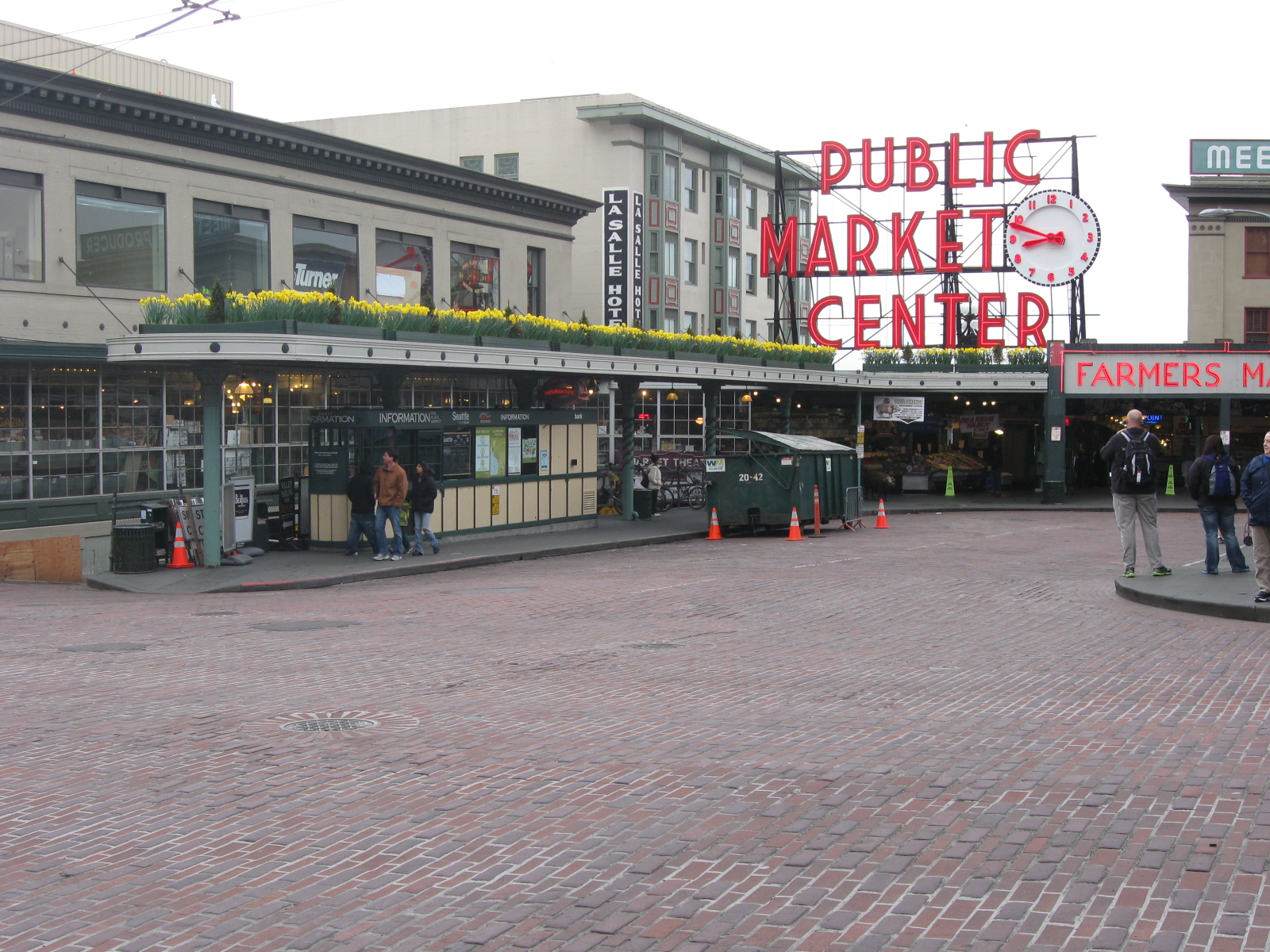
The first incident happened on May 2, 1981, shortly after I had moved to Seattle from Missoula, Montana. I had a Saturday off from my new job at the cinema, and walked down to the Pike Place Market. It was a clear, cool, sunny day.  At the entrance to the Market, at 1st and Pike, there was a small group of demonstrators from the Revolutionary Communist Party. I knew the RCP. They were very active in Seattle. They were serious communists, who called for the violent overthrow of the US Government by the end of the 80s. They meant to wage all-out war on American soil, killing everyone who opposed their violent imposition of a Worker’s Paradise.The American Communists were lame. The Chinese and the Soviets were pikers. The RCP were going to really crack a few eggs.

But, for today, this was a peaceful group of maybe fifteen comrades, more than half of them women, in their twenties and thirties. They had their red flags, Revolutionary Worker newspapers , and a bullhorn. I walked past them, past a man on the sidewalk playing a flute, past the florist into the Left Bank Bookstore, with its door propped open.

The scene of the riot today

After I browsed for about ten minutes, I heard one of the partisans start up on the bullhorn. I walked over to the door.

“Listen up, America! Your time of complacency is coming to an end! The working people will no longer tolerate the oppression by the ruling class! The bourgeois Reagan regime will not survive the coming upheaval!”

I walked out the door to listen. My complacency was already over. It had been, for two years. The man with the flute played on.  Some other people stopped to listen. The speaker gathered some steam. He quoted Marx, from the Manifesto, nothing to lose but their chains, blah, blah, blah, and then handed the bullhorn off to an African-American comrade. He brought the anger. More people gathered as he rained the wrath of the proletariat on the heads of the dirty, racist, honky capitalists who were going to die in the Revolution.

Understand: I was sympathetic to my communist brothers and sisters. But I was strictly for non-violence. I winced at the thought of a revolution by force of arms. Any sensible person knows that’s a dead end, especially in a country that provides for the peaceful change in government.

The crowd began to feed some of that anger back to the RCP. I don’t think it mattered much who these demonstrators were. Their message was angrily anti-American, and the growing crowd didn’t like it. I was close enough to see their faces, and the partisans were sorry they had let this guy on the bullhorn. Someone took it back, as the crowd grew more hostile.

“Hey, listen. Don’t let us do all the talking. I know there’s a lot of people who have a different point of view—“

“Damn right, commie $#@?!”

“Okay. So the horn’s all yours. Come over here and speak your mind.”

Too late for that, Phil Donahue.

“We want an exchange of ideas here, not a shouting match.”

Yeah, violent revolutions are all about exchanging ideas.

Across the street was the legendary 52 Donuts, a grubby, yellowed cafe peopled by lost boys and hoods. They all emptied out, joined the mob, and immediately became the most hostile and violent people on the street. After all, how could you could pass up a little ultraviolence, especially when you’re in a mob? And mobs don’t get arrested until the cops show up — by then the mob is no more. But now, there was crowd of about two to three hundred people.

Here’s some advice from a former radical. If your rhetoric for overthrowing the oppressive capitalist system evokes anger and violence from street kids at 52 Donuts – scroungers, thieves, pan-handlers and hustlers – it’s time to furl your red flags and call it a day. If the struggling masses want to break your head on the pavement, they probably can’t  be counted on to break bourgeois heads at your request.

Well, you know
We all want to change the world
But when you talk about destruction
Don’t you know that you can count me out
-The Beatles
Revolution

Yep, it turned out the street kids loved America, and not the Revolution. The following year I wrote about this incident for a composition class.

The people (in the crowd) hurled their worst insults at them, and they retorted with Marxist-Leninist doctrine. Then the violence broke forth. It began when a few people went into the Market and bought some vegetables (and eggs), which they threw at the communists as the crowd cheered.

“Hey! Why are you afraid to talk? If you disagree with us, get up here and we’ll have a debate like civilized human beings!”

At the time the irony was lost on me of a group that wanted a peaceful environment to launch a violent struggle in which thousands if not millions of their fellow citizens would be slaughtered. I have since learned this is in keeping with RCP strategy to remain safely on the right side of the law, until the day arrives they can oversee their revolutionary bloodbath.

With that, the speaker received a raw egg squarely in an open eye with such force that his eye started bleeding. At that point I was standing about ten feet away. I knew that staying in that particular spot might soon became dangerous, but I couldn’t persuade myself to leave. Part of it was the excitement…

Then a man, mid-twenties, appeared at my side, said he was a reporter and started interviewing me. I told him how it started. The crowd was pushing in, pressing more tightly around the demonstrators. There was no pushing my way out now. I was in it.

Our talk was interrupted by some confusion behind us. I heard the rattling of the chain-link fence that encased the market newsstand. A tall young man scurried up it and climbed onto the roof. After shouting and whistling, he got everyone’s attention.

“Okay, everybody, listen up! This whole situation is goddamn ridiculous! It’s stupid, and it should stop right now. These people out here – now, I don’t happen to agree with them personally. But dammit, they got a right to be here and have their say.”

A few cheers.

“I think you’re all a bunch of cowards if you don’t have the guts to talk to them like they want. (Booing now) And this bullshit of throwing stuff just shows what chickenshits you are! Now knock it off!”

Some scattered cheers, but mostly anger still. His effort to elevate the discourse didn’t help, other than indicating that, like me, not everyone there was with the mob.The crowd was now a mix of bystanders, trouble-makers looking for a fight, and some persons who would defend the demonstrators, either peacefully or by obliging the trouble-makers with a fight.

People armed themselves. They took the flags from the communists and used the sticks to batter them. They grabbed the newspapers and made a pile with them and the flags and started a bonfire in the street. I saw a young woman being kicked and beaten with a flag pole by a 10 year old kid. The other women had their hair pulled, were slapped, kicked and pushed down. The sticks were broken to give them sharp ends…

Fists started to fly. The reporter and I put ourselves between as many people as we could (holding our arms out and pressing backwards against the mob) to prevent fights. There was little we could do. It was becoming a riot…

There was sheer mass confusion. Shouting, flying objects, fist fights, and the whole crowd pressing closer to the center. Finally the the communists were completely pressed in… and were forced to start retreating. Then the cops arrived, about six or seven of them. They forced their way through the crowd, breaking up fights.

I don’t think I’ve mentioned the blood. There was blood.

One cop broke up a fight and one of the fighters tried to grab him. He got a serious thwacking across his thigh.

“Hey, we saw that!” someone yelled. “Somebody get his badge number!”

“Don’t worry, I got it!” yelled someone else.

(Side note: The police broke up the melee when the communists were utterly hemmed in, kept it from getting worse, and made possible their retreat. Red Papers 4 (1970), part of the RCP’s founding manifesto, advocates and celebrates the murder of police officers at every opportunity. Yeah, you’re welcome, comrades.)

The crowd began to withdraw toward the street again, and disperse, while the demonstrators ran into the Market. I helped a woman off the ground and told to her to beat it – as her brave brothers already had. I stayed until the place was completely cleared. The man playing the flute was gone. The pavement was littered with produce, eggs, and pages from the Worker newspapers. I picked one up, smeared with egg, and kept it.
When I wrote about this in 1982, I saw the episode as a defeat of American values (freedoms of speech and peaceable assembly) at the hands of thuggish American patriotism. I thought the mob should have known they were stepping on rights which were central to our national greatness. But I didn’t consider that mobs don’t know anything. They don’t think. Now I look at the incident more as the confused collision of bored and violent kids feeling the resurgent national pride ushered in by the new president (along with the release of the hostages from Iran and the first space shuttle launch), with incendiary, strident America-hatred – all mashed into the forward, unthinking, unfeeling momentum of a street mob: which more than anything acts likes a mindless, furious lunatic.

Next: Mobs | Part Two

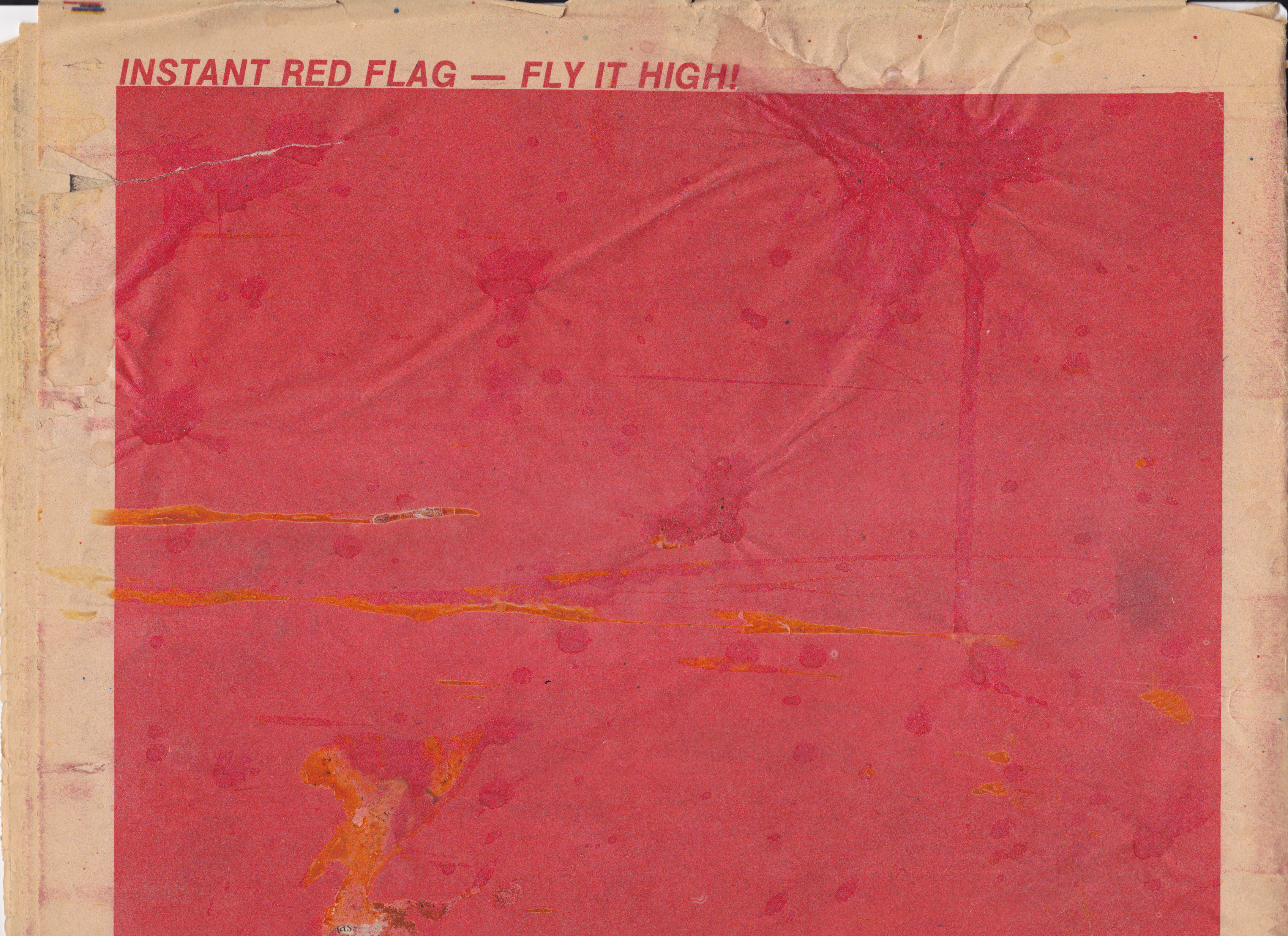
A free flag! Already the Party pours its blessings on a grateful proletarian.

Indian Bracelet

“I’m going to Wounded Knee.”

At 9 years old, I was standing in our kitchen with my now divorced parents when Dad told Mom he was going to assist the Native American activists who had seized control of the South Dakota town and were surrounded by heavily armed US Marshals and FBI agents.

“We’re going to try to get some food in.”

My mom was plainly not enthusiastic about the idea of Dad entering a siege that threatened to explode into open warfare at any time, but she chose not to argue with him about it. He had made up his mind.

“Well, be careful. Don’t get yourself shot.”

It was commonplace when I was growing up that adults, especially young adults, had no idea what was so often was falling upon the ears of children. I know from my own experience as a parent that it is easy to forget that children are completely unable to take in certain words or conversations without utter bewilderment or fear.

Shot? I thought to myself. “Where are you going, Dad?”

“South Dakota. I should be back in about a week.”


Dad didn’t just look at the siege on the evening news one night and decide to go help. He had been deeply involved with the Indian community, particularly the Sioux, for some years. He worked at a social service agency in Portland called the Urban Indian Bureau. His close ties to the community had made him almost an honorary member. He made ceremonial drums and gave or traded them to his Indian friends.

Frank in 1976

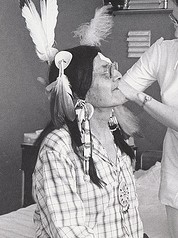
One such friend was Frank White Buffalo Man, the last surviving grandson of the famous Sitting Bull. For one drum Dad made, Frank traded a wonderful oil-on-canvas he had painted of a bald eagle in flight, which still hangs in Dad’s house. Dad’s friendship with Frank also rendered another honor. Dad presented each of his children to Frank to receive a Siouan name. I went with Dad to meet him, and Frank White Buffalo Man named me Hoksila (pronounced Hoke-sheela), which means, “Young Man” or “Boy.” At age 8 this left me rather underwhelmed. On the one hand, I knew I was being honored (or rather Dad was), but I had hoped for something like “Bear Killer” or “Big White Wolf.” Young Man? Gee, I hope I can live up to that! Even so, I have never forgotten the meeting or the name I was given. I have recently learned that this very word was also applied affectionately to warriors or soldiers, just as in English we might say, “our boys in uniform.”

Dad would take us to pow-wows. There was a big one every year at Delta Park in Portland. I was utterly entranced by the real ti-pis, traditional dress and the fry bread. The music and dancing I found hypnotic. Even as a teenager in Montana, I didn’t pass up opportunities to go to Native dances or other events.

I didn’t understand what was happening in South Dakota, exactly. It sort of blended in with the general upheaval of the times. My own experience was of the demonstrations that my parents went to, and some of which they had taken me to. I vaguely understood there was something to be upset about. I also knew this meant marching and picketing with signs and chanting and singing songs and making your own cigarettes which didn’t smell anything like the ones my parents smoked. The police often showed up and that meant trouble. That I had I seen on the news, not in person. But the occupation at Wounded Knee was on a whole other level. The AIM militants had machine guns, not folk songs. The Federal response was to prepare for a full military engagement, and this meant tanks, cannon and fighter jet fly-overs. Luckily I didn’t know this at the time. My parents, whether by design or by accident, managed to shield us kids from most of the insanity that we would have seen on the evening news.

When Dad came back, he brought two things. One was the story of his attempt to sneak food into the besieged Indians under the cover of night. With another person they were creeping through a field when they were spotted and arrested by the FBI. They were booked and locked up for the night. The next day they were kicked loose and had to leave.

He also brought souvenirs for us kids. He gave me a copper c-shaped cuff bracelet with an Indian design on it. I put it on and wore it for the next seven years. I rarely took it off. I slept and bathed and showered and swam with it on. I got used to washing off the green mark it left on my wrist. I was occasionally teased by my peers for wearing a bracelet, even though there wasn’t anything especially feminine about it.

I invested the bracelet with immense personal significance and value. It was from my dad. It memorialized an adventure that epitomized for me his courage and sense of justice. It represented the Native culture we both admired. It held every bit of this meaning and reminded me of it every day, every time I looked at it. I was going to wear it forever.

I certainly tried to. When I was in high school, I had to take it off for sports fairly often. Eventually a crack appeared in the middle of the band, and I knew it was going to break in two. I asked someone if it could be welded back together, but I knew that it was time to give it up, not repair it. I took it off some time in my sophomore year when it finally broke, and eventually it was lost as I moved around over the next two years. Since I stopped wearing it because I had to, rather than by choice, I told myself that everything that it meant to me I could keep with me always, even though the bracelet was gone. I had seen Citizen Kane when I was eleven; I knew my little Rosebud could end up in the flames, but that I didn’t have to lose what it stood for. I let go of my childish idea of wearing it forever — reluctantly, though.

The summer before I started high school (1978), Dad, Jane and I drove across the country from Portland, stopping in Missoula to put all our things in storage. Then we headed toward the East Coast. Along the way, as I sat in the back seat of our Ford Pinto, I read Dee Brown’s Bury My Heart at Wounded Knee. As we drove through the country where so much of the history took place, the whole sad drama of the clash between Indian tribes and the American settlers came vividly to life for me. On the third day of  our trip, we came to the Little Bighorn Battlefield. It was one of the most impressive and haunting places I have ever visited. There Sitting Bull, among others, led a huge army that  destroyed the Seventh Cavalry, killing every last man. The graves stand where they fell. And here I stood, with my Instamatic camera, 102 years later, privately cherishing the name given me by the grandson of the warrior chief. I felt connected to the land, its memories, the fallen, and the continuous thread running through time that ties the past to the present moment. I think Dad must have felt something like this, too.

A day or two later, driving through South Dakota, we walked through a tourist stop gift shop, and I saw some bracelets like the one I was wearing, the one that Dad had bought five years before. They cost a couple of dollars at the most. There was nothing special about them — not like mine: My bracelet had gunfire and war paint, Sun Dance and campfire and starry Great Plains nights. My bracelet remembered fallen warriors,  my brave Dad and the sons of Sitting Bull; it smelled like bison jerky and fry bread; it held courage and love and remembrance and a good name: Young Man.  If you can get all of that in a bracelet, it turns out you probably don’t need that bracelet — not forever, anyway.

Dancing in the Dark

You can’t start a fire, you can’t start a fire without a spark.
-Bruce Springsteen, Dancing in the Dark

You lust and do not have.
-James 4:2

When I moved back to Portland in the summer 1977, I was excited that I would be attending Whitaker Middle School for 8th grade with half a dozen Community School alums, including my best friend Dave Linn. When school started I also was reunited with my best friend from my first two years of school, Mike Pitts. And a friend from third grade, Ricky Munson, was in my home room. The grades were divided into two teams who had most of their classes together, and unfortunately Dave and I were on different teams, so we rarely if ever were in the same class. But I also found that Dave was moving in a social circle I would probably never be included in, the ‘popular’ kids. It seemed like we were on passing ships every day.

At Whitaker I continued to feel like an outsider. But now that I was with some people that I had grown up with, Northeast Portlanders, my tribe, not seeming to fit in was a different sort of a ordeal than my alienation in Estacada had been.

Our school was a hive of fads. Though I loved Star Wars, there were other trends and fashions I could not or did not want to follow. Saturday Night Fever had brought the disco craze to new heights. In our school, for some strange reason, ski jackets were in fashion, even though it hardly ever snowed in Portland or got below 40 degrees. There was a lot of polyester and feathered hairdos and curly perms, even on boys. Dave and his friends had taken to dedicating songs to one another. I don’t mean calling a radio station as in days of old and requesting a song and and having the DJ dedicate it to someone. If a song came on the radio, and you thought it was especially illustrative of a classmate, you would say, “I dedicate this song to you.” Someone would dedicate to the new kid in class the Eagles’ New Kid in Town. A girl who was a good dancer was bound to have a friend dedicate to her Abba’s Dancing Queen.

The only time I approached the cutting edge was when I got a newly popular brand of tennis shoes. When I showed up in gym class wearing a pair of red waffle-soled shoes with a yellow Nike swoosh, even the jocks took notice (Pre wore Nikes.”) But it wasn’t enough to get a scrawny, bookish nerd like me into their circle.

And having friends in the circle also did not get you in. In the spring, when we took our big outdoor school trip to Lake Malheur in southeastern Oregon, I spent most of the second day on the bus sitting with and getting to know Carolyn Wetter, in my eyes just about the prettiest girl in 8th grade and firmly established in the circle. We had a great time together, and the whole day I kept wondering why she was willing to even be seen talking with me — even taking a walk together at our lunch stop. But when outdoor school was over, the ref sent us back to our corners, and we never got back in the ring, so to speak. At school, she’d smile at me when no one was looking and I’d nod, but I wasn’t in the circle, and I wasn’t going to be.

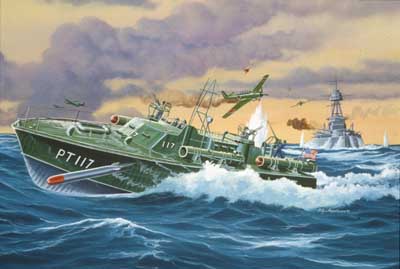
Problem was, my friend Dave was in the circle. We couldn’t hang out at school and I lived miles from the school and everyone else who went there. So when Dave invited me to join Sea Scouts with him, I jumped at it, even though I had no personal attraction to the idea. Sea Scouts was an organization within Boy Scouts, something like a naval auxiliary. It was to the Navy what the Civil Air Patrol was to the Air Force. Each troupe was called a ship, and we dressed and conducted our meetings in Navy style. It really wasn’t me, but it was something new, I would learn how to sail, and I liked the leaders and other scouts. Each ship owned a sailboat and we had a 32-footer our ship had built that we moored on the Columbia River. There were girls’ ships as well, and all the ships in the Portland area collectively owned a WW2 PT boat, like the boat commanded by JFK in 1943 when it was split in two by a Japanese destroyer in the Solomon Islands.

PT-117

Our boat had been disarmed and the gas engines replaced with one diesel engine: they didn't want to hand over that kind of speed to teenagers.

The highlight of the year was an annual trip up the Columbia on the 80-foot disarmed motor torpedo boat. The crew was coed. We met with a girls’ ship to plan the trip with our leaders, and at that meeting I met Marti.I don’t recall how that meeting went, but we must have shown an obvious interest in each other, because at the end of the evening, Ben, one of the older scouts, took me side. We looked up to the older guys. Ben, probably 17, took his job as a role model seriously.

“I saw you met Marti. Cute, huh?

“A fox.”

“Well, I just want you to understand something about her.” He had a sincere, big-brotherly bearing that fixed my attention.

“I wouldn’t want to see you get mixed up — I wouldn’t want to see you have your feelings hurt by her.”

“What do you mean?”

“I mean, Marti — I’ve seen her, we’ve all seen her… go from guy to guy. She’s a –” He stopped himself from using that word, or the other word.

“She’ll make you think she cares about you, then she’ll be onto the next guy. You see what I mean?”

“I guess. Well, I just met her.”

“I know, but we’re going on this trip together. I’m just warning you, because you don’t know her like I do, okay?”

“Okay.”

Yeah, okay. But I was 14. The part of my brain that knows good advice when it hears it did not yet function in any useful way.

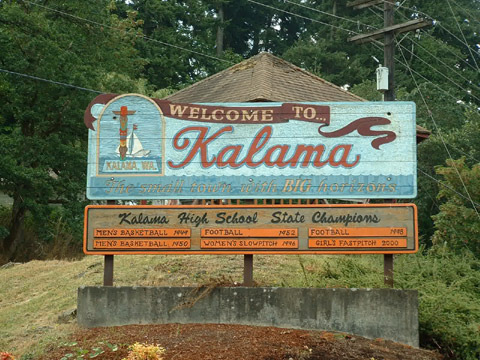
On our trip we sailed 30 or 40 miles from our moorage in Portland down the Columbia to the small river port of Kalama, on the Washington side.

The Small Town with BIG Horizons

We each had a turn at the helm. We had to work with a fellow scout who was navigating, find the beacons on shore and use them to steer the boat down the river. When it was my turn, I sailed the torpedo boat on a choppy, gray Columbia, under leaden skies, with wind and rain sweeping over me. I pulled my sailor’s cap down tight and brushed my forearm across my face, keeping an eye out for river traffic, debris and other hazards. It was just about the most exciting thing I had ever done in my 14 years. Until I saw Marti.

That night, moored at Kalama, we were free to come and go until maybeKalama Marina 11:00. Below decks a radio was playing, and we were scattered throughout the boat, some playing cards or lying on their bunks. Somehow, I ended up alone with Marti, talking in the midship/galley section. The lights were off and only a little stray light kept us from complete darkness. I have no recollection of a single thing we talked about. Johnny Rivers’ Swayin’ to the Music (Slow Dancing) came on the radio and, as though scripted by a Hollywood cheese maker, she took my hand and stood up, and we were dancing. I had never danced like this, but that didn’t matter; she led. My heart was pounding as I realized I had no will of my own. The only will was Marti’s and I don’t think I could have said yes or no or man overboard. If I was going to give any more thought to Ben’s sober warning, it would have been now. But I didn’t.

It’s late at night and we’re all alone,
just the music on the radio.
No one’s comin’, no one’s gonna telephone.
Just me and you and the lights down low.

We’re slow dancin’, swayin’ to the music.
slow dancin’, just me and my girl.
Slow dancin’, swayin’ to the music.
no one else in the whole wide world…

I am not making this up, as Dave Barry likes to say. This really happened. Then we stopped for a moment and kissed. Excluding games of spin-the-bottle, which allowed for little pecks on the cheek, this was my first kiss.

The sad truth is I wasn’t that different from anyone, of any age, who can’t resist the feeling of being wanted. If this pretty girl wanted to dance with me, maybe I wasn’t worthless. If she wanted to kiss me, maybe I wasn’t a leper. In this little moment, in the dark, away from real life, it must not have mattered how I dressed, or what kind of haircut I had, or whether I followed all the fads. It seemed like someone wanted me. I couldn’t say no to that to save my life.

After a little more swayin’, we went ashore and walked through the dark, deserted streets of Kalama. We stopped under a street light in an empty gas station and kissed again. We slipped out of the light and stood against the shadowed wall of an old brick building. We stood in the dark and barren town, embracing and kissing and meaning two absolutely opposite things to one another. Everything and nothing.

— — —

“I’ve called her like three times, but she hasn’t called me back.”

Dave and I sat in his room a few days later, darkened like we had been by the clouds on our river journey: two 14 year old boys, carried by the elements of nature, driven from within by our own nature, and whipped and blown every minute. Life just seemed to be making less sense all the time.

I thought I would see her, maybe ask her out. I thought we’d gotten off to a pretty good start. Who could say these crazy feelings weren’t the first stirrings of love — the feathery kind of love they sing about on the AM. You know — you meet, you kiss, you get to know each other, you can’t live without each other — like that? Maybe my chronology was a little off, but she did give me her number. Why would she do that if she didn’t want to talk to me again?

“She’s not gonna call me back. Ben warned me about her, but when it was just me and her, I didn’t care what Ben said.”

“Girls.”

Dave’s mood mirrored my own, as if it had happened to him as well.

“Ben knew exactly what Marti was like.”

“She broke your heart.”

“I don’t think I’m in love, Dave.”

“But that’s how you feel. She lifted you up, acted like she liked you, then she threw you down.”

I felt thrown down.

Dave, friend to the end, would not be lifted out of this somber mood until I was. As we sat there with only the sound of the radio, Johnny Rivers was singing again,

As we dance together in the dark,
So much love in this heart of mine.
You whisper to me, “Hold me tight.”
You’re the one I thought I’d never find.

Dave lifted his head and looked at me earnestly.

“I dedicate this song to you.”

Waiting for the End of the World

Mother, do you think they’ll drop the bomb?

-Roger Waters, “Mother”

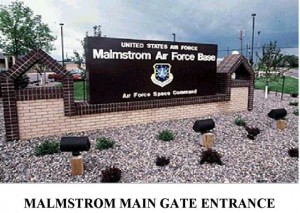
On Easter Sunday, 1980, I proceeded a with a group of protesters across a point of no return at the main entrance to Malmstrom Air Force Base near Great Falls. We walked forward deliberately and slowly against the previously delivered warning of the airmen guarding the gate.

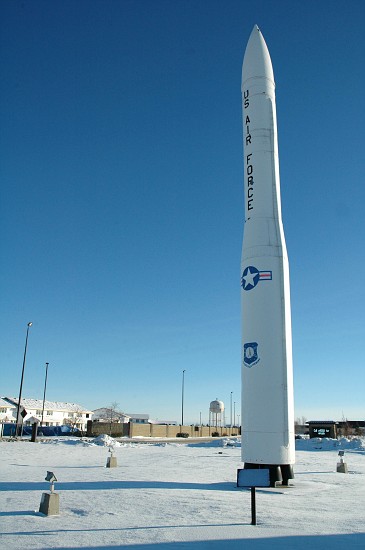
We had come in protest to the presence around Malmstrom of the largest missile field in North America. Over this vast area in north central Montana the rolling grassland was dotted with over 200 underground silos, each the home to a Minuteman ICBM armed with warheads capable of unimaginable destruction : city-killers. They were all aimed at targets in the Soviet Union. Undoubtedly, somewhere in the USSR, there were missiles pointing not only at US targets, but directly at this missile field.

At 16, I was the youngest among the protesters. As we walked in a straight line over the threshold, we were arrested and taken to a holding room.

It was a combination of fear, anger and conviction that drove me to join this group and decide to get myself arrested in protest. But it originated wholly of fear, when I was ten years old. I remember the day.

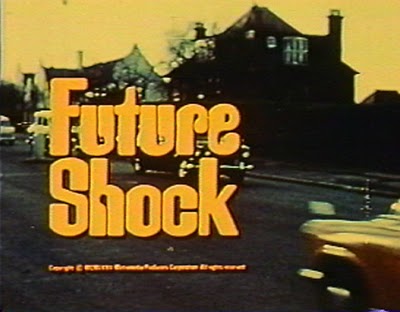
It was in the fall of 1973, and I was in my first months at the Open Community School. The Middle Group (mostly 2nd, 3rd and 4th graders) was shown a 1972 documentary film based on Alvin Toffler’s best-selling book, Future Shock.

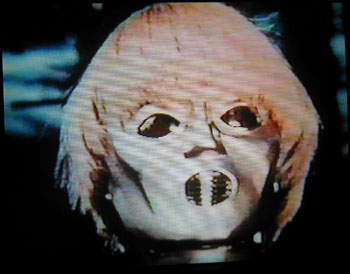
It was narrated by Orson Welles, and had the effect (on me, at least) of a dead-certain prediction of things to come. At times silly and dated, and full of what are now pop-sociology cliches, it was nevertheless disturbing and at moments terrifying, as was the opening montage. Imagine how it looked to 8-, 9- and 10 -year- olds!

It warned of cyborgs, human clones, social disintegration and technological change running “out of control.” In the latter part of the film, we see some protesters chanting, “Ban the bomb!” followed by Welles: “Sometimes technology can destroy. Amchitka. An underground nuclear explosion. When will the next nuclear blast occur, and what will it do to us?” A few minutes later Toffler was on camera, saying to some college students, “…The technology is so powerful and so rapid, it could destroy us if we don’t control it.”

This was the first I had heard of nuclear weapons and the threat they posed to us. After the film our teacher explained a little about the arms race, weapons stockpiles, and the MAD (‘mutually assured destruction’) doctrine.

Well, I was deeply troubled. We were talking, after all, about the end of the world. If that weren’t enough to rock my ten-year-old world, we were later treated to another documentary.

About Hiroshima.

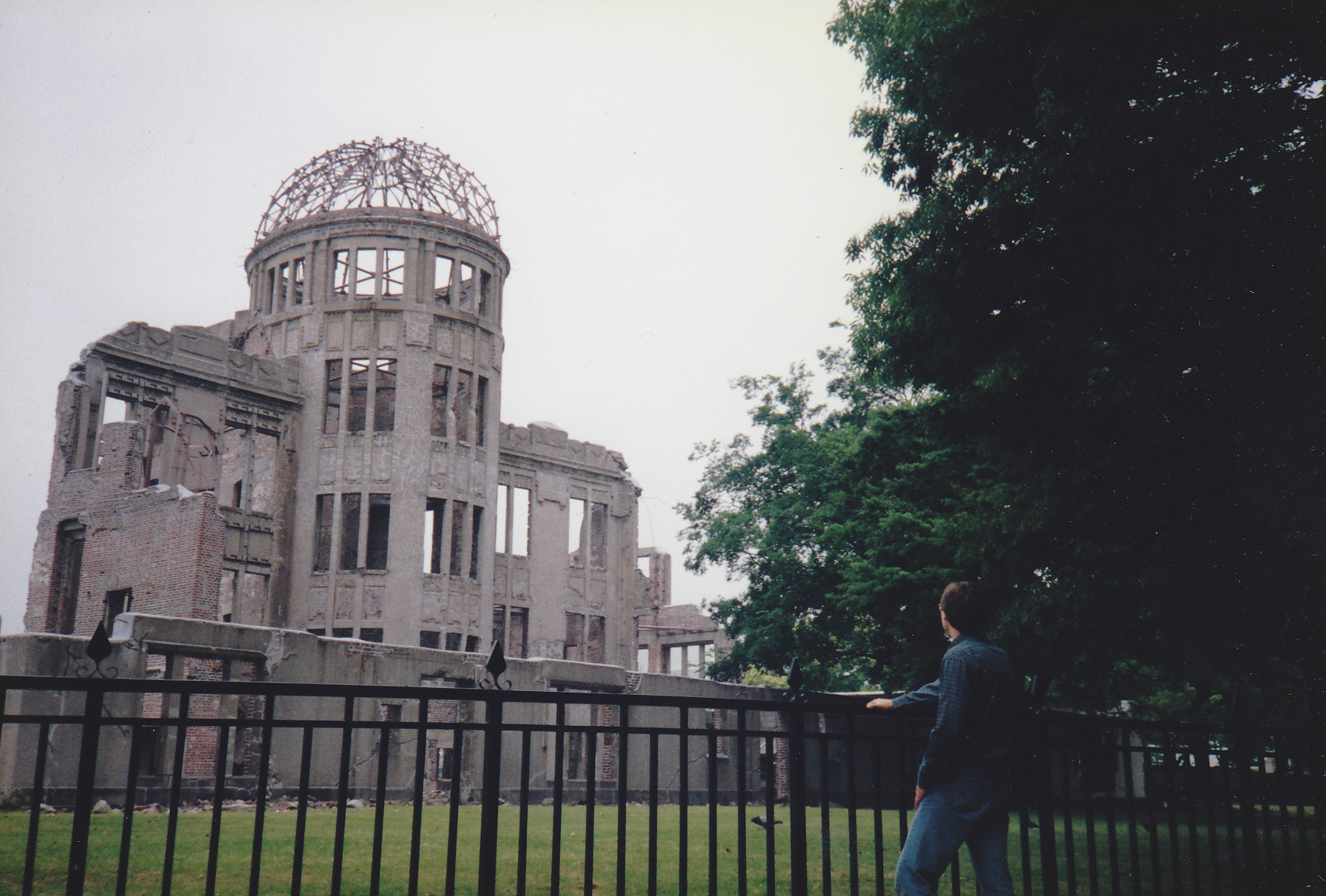
At the A-Bomb (Genbaku) Dome, Hiroshima Peace Memorial, 1991

I have not been able to track this film down, but I do know that it incorporated footage of the aftermath that had only just been declassified by the US Government in 1973. The film showed horrific images of the dead and dying, and survivors of the atomic blast. I’d never seen anything even remotely as appalling or frightening.

We were told that the superpowers possessed enough weapons – even hundreds of times more destructive than the Hiroshima bomb – to kill every person on the planet a hundred times over, and if we got into a war with the USSR, the world would be consumed in a global nuclear annihilation.

Wow. Bummer!


This was the worst news I’d ever heard. It haunted me for the next eight years. The following school year I was spending the night at the rural home of my friend, Todd Mecklem. We always stayed up and watched Sinister Cinema, but rarely made it through the second feature. As I slept, I dreamed.

I was sitting on the steps of our house. There was the sound of an air raid siren, and prop planes overhead. Someone pointed at a plane in the sky. Next, I was heading for shelter. I entered a large room with high ceilings. It looked like a bank lobby, with the curtains drawn over large windows. Scores of people were crowded in and sitting on the seats and the floor. I saw my mom, and sat with her. Dread filled the room, I felt it. We were waiting. Waiting for the bombs to drop. I knew if they did, it was the end.

That was the first nightmare I had about imminent nuclear doom, but not the last. The others were just variations: with my dad, in a car, racing for shelter — and the blinding flash.

As I thought about it I realized that what really troubled me was not the prospect of death by itself; even for a kid, my own death was not nearly as terrible as the death of everyone, the whole world.

Chosen Survivors (1974). They escaped nuclear conflagration against their will, only to be overrun by killer bats. The irony!

Over the years, my fear was fueled by movies such as the Planet of the Apes series, The Omega Man, Logan’s Run, Chosen Survivors (one of the worst movies I’ve ever seen), Dr. Strangelove, and Peter Watkins’ The War Game. I seemed to keep hearing that the future promised either: untold wonders of technological advances, space travel, medical miracles, etc. — or: total annihilation. As I got older and the fabulous space age did not emerge, it was looking like the annihilation-thingy was only a matter of time.

I don’t feel safe in this world no more
I don’t want to die in nuclear war
I want to sail away to distant shore

-Ray Davies, “Apeman”

When I was a sophomore in high school, I saw a documentary on the arms race featuring a retired US Army colonel who was an antinuclear activist. I began to see how I could turn what was only helpless fear into activism and hope. I figured if you saw something wrong with the world you should work to fix it or sit down and shut up. And what was wrong with the world in my view was the existence of the weapons. So the obvious solution was to get rid of them, was it not? I decided to inform myself. I sent away to Sojourners, and they sent me a packet with articles, ideas for activism, and a map. As I unfolded it, it revealed the contiguous US and drawn on the map were all the nuclear targets in the event of a full exchange with the USSR. In Montana, where I now lived, it showed a huge area that represented the Minuteman missile field near Great Falls. The intent of the map was clear. In that, it was successful. My fear was refreshed, and outrage was now added, and I set about seeing what I could do.

I became associated with leftwing activists at the University of Montana, the Student Action Center. I started a polital action club at Hellgate that I modeled after SAC: the Union for Student Awareness (USA).


USA Club Hellgate HS 1980

I asked my English teacher, Robin Hamilton, to serve as advisor. He now serves in the Montana legislature.

SAC was planning an action for Easter (April 6) preceded by a week of meetings and forums on war & peace issues. On Monday, March 31st, the week’s featured speaker appeared on campus: Philip Berrigan, half of the famous Berrigan Brothers, the anti-war clergy-activists of the 60s and 70s. Just five months later they would launch the Plowshares Movement. In between noon and 8pm talks, he met with SAC and those would participate in the Easter Vigil action. We asked him questions about civil disobedience and the issues of the day. I told him I was planning to get arrested on Sunday, and he commended me for it.

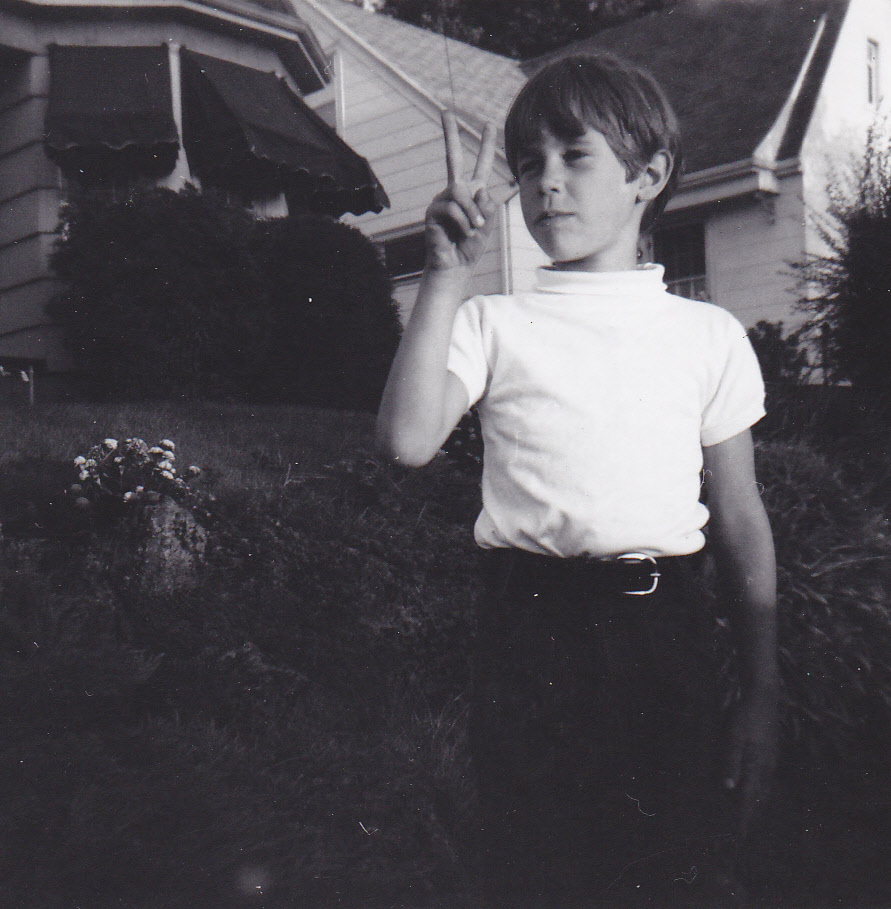
Two fingers, right? 1970, age 7.

It felt great to have a legend of the anti-war era, a man who spent years in jail for acting on his convictions, give me a pat on the back. But there was another person whose approval meant a lot more to me than Phil Berrigan’s: my Dad. He too was an anti-war activist who went to jail for his protests, and as a 7- and 8-year-old, I had accompanied him to planning meetings, marches and pickets. In finding what I thought was a good outlet for my anti-nuke feelings, I had also found a way to emulate Dad. Secretly, I hoped it would earn his respect, something most boys crave from their fathers.


On Saturday night they offered a free showing of the famous 1974 anti-Vietnam war documentary, Hearts and Minds, another film that I (again, alarmingly) had seen when I was about 12. The film was going to be delivered on Friday, so I asked SAC if I could show it Friday night at Hellgate. They agreed, as long as I confined my advertising to the high school. I plastered fliers all over the school with just a day or two’s notice. I had to go over to the U campus and walk the film back to school, a herculean task I was barely able to manage. We had an enormous turnout and it was the most successful event USA carried off. Late that night I walked the reels back to the campus.

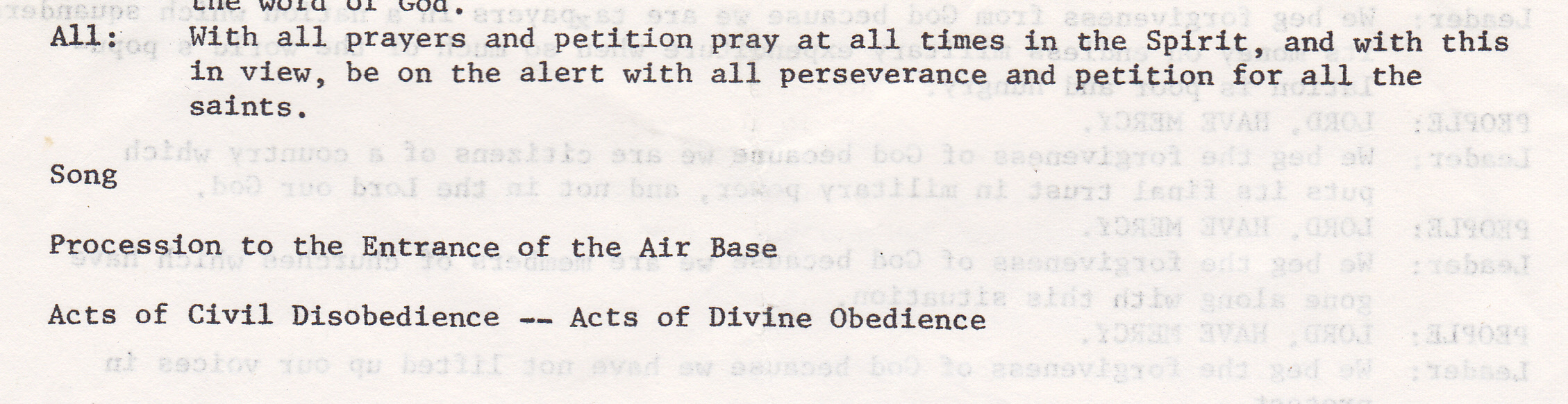
The Easter Vigil was led by John Lemnitzer, a Lutheran pastor, and Terry Messman from SAC. The group met on campus and we drove up to the the Base. The Vigil and the action were planned and intended as a Christian tesimony to the evil of war and its weapons. There were those in the group, including myself, however, who would not have identified themselves as Christians, but we would have agreed that the statement of the Vigil was in accordance with Christian teaching, and that was good enough for us. We stood outside the gate and sang a few songs. In particular I remember the one from the 20th Psalm:

Some trust in chariots
And some in horses
But we will trust in the name of the Lord


When we crossed the line of trespass, the guards escorted us to some concrete room, where we spent hours being processed and awaiting our disposition. When I decided to get arrested, I had agreed to accept whatever charges and sentencing I might receive. I had my parents blessing in this. I did not know how it would turn out. At the end of the day all but John and Terry were released and no charges were brought against the rest of us.

When the final results were tallied, the nukes were still in their silos and we were going home with a great sense of satisfaction. But as any radical knows, that is not one’s general experience in life. A radical eventually comes up against the annoying little fact that hardly anybody in the world, even your non-radical friends, really see things the way you do: that’s why you’re called a radical. When I would venture to claim that we were in danger of incinerating the entire human race, I’d be met with, “Wow. Bummer!” and a shrug.


This failure of the rest of the world to see the outrage it should have leads to constant frustration. This is why radicals inevitably grow angry and resentful. They come to hate American society (If they didn’t already) for it’s moderate-to-conservative outlook, and their own inability to change it. “If no one can see things as I do, they must be morons! Or corrupt. Corrupt morons!” Americans in a nutshell, for your average radical.

I quickly started down this path. But I think I had some sense or at least some doubt about where it was heading. It may have been that I was just growing a little more pessimistic about social change. After the elections of 1980, it did not look as though things were going our way. That didn’t mean I wanted to give up, I just meant I would have to come to terms with things as they were.

That would have to include the finger of the maniacal, wild-eyed, warmongering Ronald Reagan resting on the “Blow-up-the-world” button. (As it turned out, few things have increased the security of the world as much as ending the Cold War without letting it erupting into a hot war. And history has given the primary credit for that feat to the warmonger Ronald Reagan.)

After my rebirth in 1982, I looked at the prospective end of the world in a very different way. I believe that God has committed to humanity the stewardship of the earth, but not its fate. Human history and its ultimate disposition are in His hands, not ours. But I also eventually came to look at weapons differently as well. Weapons alone are not fearful. The evil that can be done with them proceeds from the human heart, the ultimate weapon of mass destruction. A knife, a club, an airliner – they only pose a threat in the hands of someone of ill-will. Men as powerful as Hitler or Stalin had no atomic weapons before 1945, but look what they had done by then. Nukes have not been used since 1945, but we shouldn’t assume that it has nothing to do with the people and nations that have them. Turn just one nuke over to Ahmadinejad and you can march, chant, trespass, and pound nose cones all you want, but if you live in Tel Aviv, you’re dead.

In my view I wasted my time on any effort to get nuclear weapons out of the hands of responsible nations that would probably never use them. And as far as activism goes, it will never wrest such weapons from the nations or groups that would use them. You can only try to stop them from acquiring them and keep the price very high for using them. For that, you need the US government and its military forces.

Autoblography: Introduction

This is not a background bio, or even a conventional memoir. It is more of an experiment I thought of a couple of years ago, and which I’m sure is not original. The thought was to write a memoir over a long period of time, consisting of posts covering different aspects, experiences and observations from my life. It will not be chronological. My idea is to organize posts around themes and threads running through my experiences, as well as episodes, stories and sketches.

I have no idea where this will take me. Wanna come?

Autoblography Page

——————————————————————-

Here is a little chronology so you can figure out where the different posts fit into the scheme of things.

1963
Born in Portland, OR

1963-1976
Lived in NE Portland

1972
Parents divorced

1973-1976
Open Community School (Grades 4, 5 & 6)

1976-77
Seventh Grade in Estacada, OR

1977-78
Back in Portland for 8th Grade

1978-1981
Lived in Missoula, MT and attended Hellgate High School

1981-1982
Lived in Seattle; spent the summer of ’81 in Missoula.

1982
Moved to Portland; hitchhiked to New Mexico, then to Oklahoma City

1982-1985
Lived in Oklahoma City

1984
Married Laura Weatherly

1985-1992
Lived in Portland

1986-1988
Portland Community College

1992-Present
Lived in Forest Grove, OR

1992-1995
Pacific University