60 Days in Europe: Day 4/June 2

June 2, 2014 – Sorrento to Rome.

IMG_0381

Please bring me my wine.


From my journal: Big day!

Went to train station early, caught the slow & dirty to Napoli, and the clean & fast to Rome by 11:10. Just a few blocks to the hostel. Dropped our bags and walked to the Coliseum.

After that the Forum, then Palatine Hill.

Tried to nap on a patch of grass on the trail down the Hill to Via S. Grigoria. Too much traffic. Walked back to the hostel for siesta, and ate at Alfredo’s at 7 (spaghetti carbonara & ravioli).

IMG_1047

Then caught the Metro to Piazza di Popolo, and walked the length of the Via del Corso. Then back to the hostel by 10:30. Whooped!

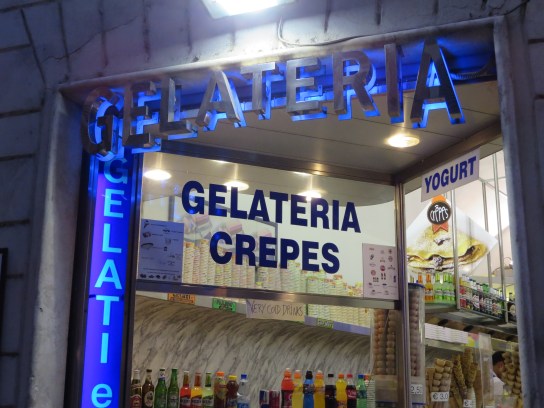
PS Gelato Day 3: shared a small pistachio on del Corso. Different than what we know in the States; less sweet, nuttier. Delicioso!

IMG_1074

Video: Rome I

60 Days in Europe: Day 3/June 1


June 1, 2014 – Sorrento – The Amalfi Coast.

From my journal: Stopped at the market deli next door and got picnic food + biscotti, and went a little further to a cafe for cappuccinos and biscotti. Walked down to the Porto to learn about ferry transport to Amalfi Coast.


Decided to go by bus and caught one back to the train station.

Bus to Positano, where we got off. Walked down to the beach. First time in the Mediterranean!

Ate and boarded a fast boat to Amalfi.

This meant going directly to the far end of the coast and working our way through the other towns on our way back, rather than the other way around, as we had planned.

Amalfi:  Wound our way through a great medieval passage to the Piazza and walked through the Cathedral.

IMG_0932


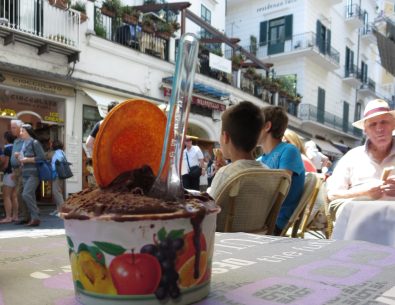
Gelato Day 2! 36 Flavors: I got ciocollato and arancia (chocolate & orange), L. got coconut.


We then made our own exploration of the old walkways, looking in vain for medieval aristocratic houses we read could be identified by ‘turrets.’ No one knew anything about these, but we did venture into the residential area above the central downtown into run-down, very old buildings. One sign dated a street (via) to the twelfth century.

A colorful and amusing return followed our stay in Amalfi which stretched later into the day than we anticipated.

We opted for taking the bus back to Sorrento, the last of the day, marked by an hour wait (third in line), brazen line-cutters and projectile vomit on the bus.

8:00 dinner again – made a salad from the store – bought a mix, tomatoes, and  oil, plus cheese and olives left over from lunch.


60 Days in Europe: Day 2/May 31

Italics are used for my original journal entries.

May 31, 2014 – Ciampino – Herculaneum – SorrentoIMG_0370

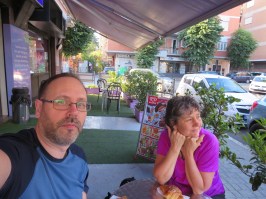
Awoke at 5:30 well-rested. Packed and went to cafe and enjoyed tea, cappuccino and pastry at an outdoor table. 

Took a short train to Roma Termini. Struggled to arrange our train to Sorrento via Herculaneum (Ercolano). L. scored 2 bus. class seats on the express to Naples, dep. at 10:15. While waiting we strolled the neighborhood and split a ciabatta from a local spot.

Raining in Naples.Caught train to Ercolano Scavi. Entered ruins 1:15 (sun shining) – after pizza and gelato!

Herculaneum – 1:30-4:30.

Train on to Sorrento, with Nigel, Melissa & Dena, from Nottinghamshire.

In Sorrento, we met an older English couple as we ate at an outdoor table.

…Trevor, who along with his wife Cindy, we met when we went to a nearby pizzeria @ 8:00. They live in the Lake District. Also married 30 years. He organizes outdoor rec for people with disabilities; she teaches Pilates.

They made some suggestions for when we visit the area in July: Catbells Walk near Portinscale on Derwent Water, Honister Pass, and a scenic route for our drive north to Oban in Scotland.

Video: The bell tower chiming in Sorrento.


60 Days in Europe: Day 0 & 1/May 29 & 30

Italics are used for my original journal entries.

Thursday, May 29, 2014 – A travel day.

Laura  and I flew out of Portland to Dallas, then onto London.

Arrived at American desk by 10:50 am. Security, Starbucks, gate.
I said, “There’s no one in the whole world I’d rather go on this trip with than you.”
“Me neither.”

I believe she meant me and not herself.

The previous fall I turned 50, Laura would turn 50 while traveling, and in between our birthdays was our 30th wedding anniversary. To celebrate all three, we planned a five-country, two-month trip. We would just bring backpacks. We would stay almost exclusively in hostels.
We had never traveled like this. We tried to plan it as cheaply as possible, while also seeing and doing as much as we could without feeling rushed. We weren’t really sure that it would turn out that way; there was only one way to find out.

Dallas. Arr. 5:45 pm.
Dep. for London, 7:50 CT

May 30, 2014 – Our second air travel day.

11:25 am GMT landing at London-Heathrow.

st-albans-cathedral

St. Albans

11:22 – First glimpse of England! Dreamt of since I was a lad.
Caught bus @ 1:15 to Stanstead (Airport). Bob Marley on the coach radio. Freeway driving on the M25 outside London – looks like the I-5 in Oregon: trees and power lines. Further along, the country opened to fields, farms and clusters of old brick houses.

The highlight was glimpsing St. Alban’s Cathedral rising above some trees.

Our flight for Rome left at 6:19. We ate and slept while waiting.

20140530_194026

Flying over the Alps

On our flight to Rome, we sat next to a woman, Amanda, from Rome, who made the following suggestions:

[Three pages of notes by Amanda, her favorite places, including bakeries.]

After landing, we took a bus to Ciampino Train Station and walked half a block to our hostel.

Ciampino

60 Days in Europe

Welcome to my daily, day-by day account in words, pictures and video of our five-country,

IMG_1276

60-day European tour we began two years ago today. Each post will be published on the day exactly two years from the corresponding date on our trip.

The text is mostly from the journal I made as we traveled. I usually wrote just before sleeping each night, sometimes adding a note in the morning. My entries are uneven, sometimes just recording mundane facts about where we went and what we saw, at other times trying to add a little flourish here and there about how wonderful the the sights and sounds and tastes were. When I didn’t do that, it was usually because I was tired, not because the day wasn’t amazing.

IMG_1451I hope you enjoy it.

Italy          May 30 – June 18
France      June 18 – 21
Spain        June 21 – July 5
Paris         July 5 – 7
England   July 8 – 20
Scotland  July 20 – 25
England   July 25 – 29


I Quit My Job to Write

Last month I quit my job of 12 years, without another job to go to. I quit so I could write.
While it’s still fresh in my mind, I want to set down for myself, if for no one else, how exactly I came to do it. Just a few months or years, to say nothing of the possible doubts or second thoughts that might arise, could begin to smudge what was once clear and imperative.
I must write. I must do it every day. I must work hard at it, with all my soul, and be the best that I can be. I made this change openly so that I could not easily turn back, so that my friends would ask me what I was working on, and I would need to answer them.
I have to make the time. I have to get out onto the page what is in the pains of labor to be born. I must not, should I be blessed with twenty or thirty more years, bear as an old man the attending regret of never having given myself the time and space needed to make a committed endeavor of writing – of wishing I had, but never having been willing to take the necessary risks of missteps, rejection, criticism and failure. I no longer fear these as much as I fear that regret for having avoided the risks and kept my gift locked away.
But how did I come to this resolve, and why did it take so long? That is what I want to put down now, before it fades.
I had wanted to leave my job for some time, six or seven years at least, but not with very much intensity. It was a small academic community for which I had lasting love and loyalty. But I was stuck in a job I didn’t love, although I didn’t hate it, either. All my attempts to find a different job at the college or elsewhere, or to change the job I had, were frustrated. But my biggest career obstacle was not having a career. Toward that end I considered graduate school in a related field. I attended seminary for a year. But I never uncovered a clear path. I knew I wanted to depart, but I didn’t know where I wanted to go.
In the last two years I turned 50, saw a couple of doors close at work, and took a 60-day trip across Europe with my wife.
Before I left I had written my first polished essay, and I decided that when we returned I would try to get it published. By that time I had already made up my mind time was a crucial issue for me. I wrote to myself:

I’ve come to accept an obvious but unwelcome realization about what I want to do with last third of my life, which is to write: I’ve never been able to write in my spare time, and I never will. That is because after dressing, commuting, working and seeing to all the other demands on my time, it turns out that my spare time is where I live my life. My leftover time is my life. So, I have a stark choice: write or live.
My life consists in the real living that I do every week, spending time with my family, with my friends, at church, walking, eating, sleeping, praying, reading. My life is not always easy, but it is pretty simple, and I like it that way.
But I want to write, and I don’t consider that living time is the obstacle. What I consider life – friendship and love and connecting with God and people and the creation – these are not the thieves, and they are not the things I want to sacrifice in order to write. No, I’m looking at the other side of my time – the job, the time it takes me to go to and fro, the 48 hours of my week – as the real thief. And I want to grab hold of it like I would a Neapolitan pickpocket, grip it by the wrist and jerk, and I mean jerk it back. It’s my time, and I’ll wrestle him to the ground to get it back. It’s this guy, not my life and my love that’s the problem.

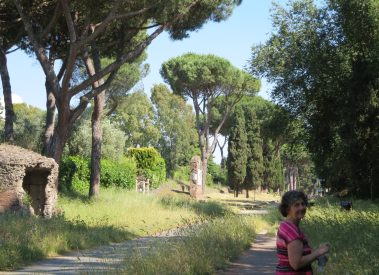
While traveling in Italy, Spain, France and the UK, I was carried along by wave after wave of inspiration. A feast of natural, artistic and architectural beauty greeted us everywhere, every day. I had half a dozen ideas for new essays. At Dove Cottage I saw William Wordsworth sitting at the edge of Grasmere Lake, composing verses in his head. The lakes and ancient forests, the Holy Isles, the ruined abbeys, the Florentine tower, the great walled city of the Cathars, the Alhambra, the Alps, the Appian Way, all made me want to write – like Wordsworth, who walked in the morning from his doorstep to the bank on the shore and wrote without pen or paper.

THE sylvan slopes with corn-clad fields
Are hung, as if with golden shields,
Bright trophies of the sun!
Like a fair sister of the sky,
Unruffled doth the blue lake lie,
The mountains looking on.

People like Wordsworth, and Shakespeare, and Dali and Michelangelo, who had left their enduring and indelible marks on the world – marks we saw and were awed by and rejoice in – they had not given of themselves merely a portion of their time and passion to create what they did. They had gone all in.
And I was, etymologically speaking, breathed into: inspired.
When we returned home I was even more convinced I could not stay at my job, that I could not turn 60 there. I didn’t know how, but I had to carve out some time to write, to drop the 270 miles a week of commuting, and do something different and closer to home. I would have to leave. We had agreed that after Laura found a full-time job, I would once again look for a different job. As we considered our financial situation, it occurred to us that if I worked part time and she full time, we would be no worse off than when our situations had been reversed the previous five years.
I applied for part-time library jobs. My hope was to quit before the beginning of another academic year. And my goal was to get my essay published before I gave my notice.

I wrote my first story when I was about eight. It concerned a boy who was transparently me, who got his dearest wish. The end.
I think my grandparents had gone to Florida, and brought back a board game for me and my siblings, but I was the only one who really took an interest in it. Some assembly was required and I put it together. I don’t recall ever actually playing the game, but that was quite all right. It was called A Visit to Walt Disney World, and on the box cover Mickey and Donald stand over a picture of the theme park. Once constructed, it was a paper and cardboard version of the Magic Kingdom, which promised “a world of fun:” the castle, with fireworks, the haunted mansion, a spinning teacup ride, and best of all a monorail on the wall that surrounded the board, with paper cars that slid atop the walls.
I thought about the real monorail, and Tomorrowland, Captain Nemo’s Nautilus, the go-carts, the Enchanted Tiki Room. This paper world came alive in my imagination. I knew there was no point in asking my parents if we could go to this magical place, because we could not. Instead I invented a story in my mind about a boy, much like myself, whose parents surprise him with the announcement that the family is going to Disney World!
I was quite happy with the two or three hundred words I’d written, and showed it to my parents and some other adults. I believe they all took it as more of a broad hint than a story, which was quite understandable. But there was something more. I felt a satisfaction that came from giving expression to my wish; it didn’t have to come true. The story made me happy as a story because it had my own feelings in it, real feelings of longing, anticipation, and attainment. It was enough. That story served and satisfied myself, but only a few years later, I saw how stories served and satisfied the reader; that good stories were a gift.

That was 45 years ago. I have been bothered by the fact that even though I returned time and again to writing, for different reasons and in different genres, I never gave myself permission to call myself a writer until I got paid to do it, and I never let myself believe I could write creatively in my own voice. I never gave myself completely to it. I lied to myself or let myself be lied to. It was such an obvious and hateful lie. Why did I listen to whatever it was in me that was always decreeing what I was incapable of doing?
I loved writing when my friends and I made our own newspaper in fourth grade. I loved writing as a student journalist and columnist in high school and college. I began writing poetry and experimental prose in high school as well. Later, and for twenty years, I planned and wrote mostly unfinished screenplays, which no one ever saw. At 20 I began a novel, which I abandoned. In college, I first struggled with but came to shine in the assigned essays I wrote. I wrote scripts for an audio book and a PSA. I wrote training materials and curricula. Eventually, a friend invited me to join a dot-com startup as their marketing and web writer. It was the best job I ever had. It lasted 14 months until the company moved to San Francisco and left most of us behind.
How could I have missed that writing was my gift and my love? It may have been a dismissal based on the ubiquitous axiom that one cannot make a living at it, and therefore, it is not worth one’s time or effort. It was also the pull of my competing interests. And deep beneath was a crippling doubt about my own voice, the one that doesn’t hide behind newsprint or format or objectivity. The real me that lived in my poems, and the stories and ideas I couldn’t figure how to write.
On the other hand, I did figure out how to put myself into words, and I did come to this resolve, however late in life, at the time when I was ready – and not before. Those years were not wasted, they were lived. Every day went to making to making me a writer, because in many ways I was always thinking like a writer, writing in my head, always germinating ideas. I am affirming myself as a writer at the only time I could have, and it likely could not have happened sooner than now. I’ve made peace with that, and I am willing to forgive myself my previous denials.
Four years ago I was writing a series of posts (starting here) on this blog that set me on the path to finding my voice. I had begun a couple of years before, but the real change came in 2012, when I read Brenda Ueland’s If You Want to Write. Nothing I have read has given me more encouragement and motivation to write. I had been telling stories from my life, that were organized around themes rather than periods of time or single episodes. But I put little effort into the style, adopting a casual tone that mixed fairly straightforward voice with occasional experiments. The stories were interesting enough on their own, I thought, and I was driven by the urge to tell them, not necessarily to create excellent prose. The results were pieces I sometimes didn’t even want to read when they were done. But I was making progress.
Ueland believed that anyone could write well if they wrote from their hearts, from their authentic selves. I was challenged to write what I saw, what I felt, what I thought because it is one’s personal outlook that gives their words real value: by writing what only they and no one else can. Turning to my life stories, I attempted to dig a little deeper into the emotional terrain and find the language that could recreate my sensations and feelings on the page. I felt I was getting a little closer to the voice of my heart.
Early the next year I wrote an essay that brought me all the way home. I wrote about something deeply important and emotionally painful for me, and I sang with the voice I had been looking for, that came as close as I had ever come to capturing and projecting the real me. I felt I had nailed it, not because it was so good, but because it was so me.
This was the piece I submitted for publication last year. As I submitted it to the first four publications, all literary journals, I was prepared for a period of rejections. I was unknown and unpublished, after all. I shortly received my first rejection, from a prestigious journal that was admittedly a longer-than-usual shot. Then I received an acceptance, from a well-established online journal. I was delighted and surprised: after only one rejection my first-ever literary submission was scheduled to be published. It had been my goal to secure an acceptance before I quit my job. Three months after it was published I gave notice of my departure. I wondered if a few people who know me might not understand or approve of this change. It’s all right. They’ve had their say; I’ve been heeding their voices in one form or another most of my life.

Now I work part time – at a library, where I’ve always belonged – and I am free to write every day. And to this amazing privilege, there has attached an obligation – to create, to bear fruit in due season. But it is a happy obligation, one I accept easily because of its utter weightlessness. It is not something I carry, but which carries me.

The Trip That Changed My Life | Part Five

Well say goodbye
It’s independence day
All boys must run away
Come independence day

-Gretchen Peters

May 5th – 9th
For the second and certainly the last time the Alliance was broken, and I had done it. I didn’t regret it; it was the only thing to do, I thought.

But here I was, thousands of miles, not only from home, but from anyone I knew.  I didn’t know this place, and I wasn’t a quick study. I was alone on the road. With one or two other guys, no one bothered us. But alone, I made an easy mark, as Dad would  have said. I was an 18-year-old Yankee drifter without a clue. I only vaguely perceived the real dangers. They were more threatening than I realized. Truly, there were killers on the road, the road I was on. I belonged at home up north, not wandering from town to town in the southern Midwest. Again and again I would think to myself, What am I doing? How did I get here?

Now, even more, something opened before me, something great and airy and mysterious. The sky grew, the land spread out like a fan, offering no visible terminus. Now nature took on the infinite character I felt with time. The days went on and on; now walking out onto the Great Plains, space went on and on. I had never been in possession of so much room to move in, or time to stand or drift as I pleased. No person or thing called me to go there or do this now. I just was; and I never had been.

Alone with myself, and my life, especially the last two years of it, I had little else to do beside reflect on my stupidity, aimlessness and failures. However, such constant introspection never led anywhere, never led me to any conclusions that seemed to help. The God question never left me now. It already began to take on a feeling of desperation as my ability to live life on my own terms washed away in the spring torrents. In fact, I had no terms of my own; I’d let myself be led around, and I hadn’t ever tried to lead myself.

I had two questions. The first was, How would I leave the road? The best I could come up with was finding myself a job. It wasn’t as sensible as going home, perhaps. But deep down, I wasn’t ready to leave altogether. I wanted my drifting to end, but I felt this trip should end somewhere on down the road, not back at the beginning of it.

And the second question was, Why was I even on this planet? What had been troubling me for three or four years now came up before me in a way that I could not brush away. There were no more distractions, nothing with which to busy myself. There was no more noise or chatter or party or high to chase after. Just me and the towns of the Oklahoma plain. This was the God question. It was the same as the meaning question, and the reality question and the eternity question. It always came back to God.

These two questions intersected on my insides, where I felt a yearning, a pulling, a burning in my body to walk on and see what lie ahead. It hadn’t entered my mind that this could have had a spiritual component originating outside of myself, but I would soon become convinced of it.

Look here!
What d’you think you’re
Gonna be doin’ next year?

No lie…
How you know you’re not
Gonna up and die?

-The Clash

Mark and Troy left Elk City on May 5, and traveled north. We didn’t know when we would see or hear from each other again.

It may seem odd, but I made no immediate plans to leave Elk City. I decided I was not going to leave until I knew where I was going, and why. I asked around about some assistance and I was referred to a man named Harm Saunder. He came and picked me up in his car. He was a slight, buttoned-down man, perhaps in his forties, with angular features. Clean-shaven, in shirt-sleeves and a red tie, he looked me up and down. I hadn’t shaved for about six weeks. I wore a lot of the road on me. I was asking for help, because I was hungry, and didn’t know what to do. He didn’t look me in the eye; his mouth was tight. I immediately felt his disapproval.

Times like this, I really did feel like I was in a foreign country. We were from different worlds, and at the time I had no idea what was going through his head. I do now, because I know Harm Saunder, a lot of Harm Saunders. In fact, what is even more revealing is to know there is a trace of him in me, in most of us. Whenever I have  looked at someone through those eyes, eyes that disapprove, that distance, that disdain, I’ve forgotten and betrayed that hungry and aimless person I was all those years ago.

He drove us to a grocery store. I waited in the car and he came out with a loaf of white bread, American cheese and bologna. As he handed me the bag I looked at the food. I could taste the sandwich: it was going to be so good.

“If you want to get back on your feet, you’ll want to get yourself cleaned up, look for a job.”

“Yeah, I know.”

“Well, I wonder…” he said, fixing to come to the real point.

“Do you know Jesus Christ?”

Oh no, I thought. Here it comes.

“I know about him,” I said.

“But do you believe in Him? Have you accepted Him as your personal Lord and Savior?”

“I don’t know what I believe…right now.”

I just about choked on the words. I told the truth: I knew I didn’t understand much, I knew I believed a lot of things, I knew I didn’t know what I wanted to know, and maybe I didn’t believe what I wanted to believe. But saying the words, hearing myself saying them, was extremely uncomfortable. I squirmed.

“The help you really need is Jesus, young man. In a day, that food will be gone. What then? You need Jesus.”

“Maybe so. Thank you for your help.”

The next day, I met a couple of fellow drifters. You always do. It’s obvious to you the other people who are living on the street, sleeping in the park. They’re not invisible when you’re one of them. But I was very careful whom I spoke with, and what I told them. I didn’t tell anyone, for example, where I would be sleeping. Ironically, I was welcome at a cafe on the main drag, where one of the regulars started calling me Oregon, after he got used to seeing me there every day. I felt safe there, and no one there looked down on me.

One of the guys I met was Emmett Glover, an alcoholic in his fifties, tall, wearing an overcoat, always with a bottle of hooch in his pocket. Right away he warned me about a couple of guys at the park, standing at a distance.

“You see those two? Georgia boys, bad news. Just stay away from’ em. N’don’t you ever turn your back on ’em. Those Georgia boys’ll cut your throat for a dollar in change. Do it while you sleep. Just stear clear of ’em.”

Emmett was from Kentucky. We sort of paired up, it seemed. I felt safer with him around. He was tall and lumbering, always drinking but rarely drunk. He had years on the street and on the road behind him, and he could tell I wasn’t savvy.

I’d never known a person like Emmett before: a broken down man, a man who’d brought his life to nothing, a homeless, hopeless drunk with nothing in this world but pain – physical pain, he told me – but psychic pain as well, I supposed. I couldn’t imagine what he was looking forward to, ever.

“It’s my back,” he told me. “I’m in pain all the time. It’s just no good. I can’t work, and drink is the only thing that gives me any relief. That’s only reason I drink. Got no other medicine for it.”

The day I met him, I also called Mom. I told her where I was, that I’d split up with my friends, that I was in a town called Elk City, Oklahoma. She insisted on wiring me some money and later in the day I did my best to conceal my walk to the Western Union office to get it. One of the more amusing problems I had in all my travels was having that fifty dollars that allowed me to survive, but which I was certain I needed to keep a secret from everyone – for my own safety.

And make no mistake, everyone wanted and needed money – for one thing or another. In my case, it was food. But when Emmett said to me, “Let’s go panhandle for some money,” I couldn’t make a plausible excuse. I found myself in the ridiculous position of standing outside a grocery store, asking strangers for money when I had the better part of fifty dollars in my pocket. I was surprised at how decently people treated me, and how much money they gave me when I told them I was trying to buy a sandwich. For money, I was set.

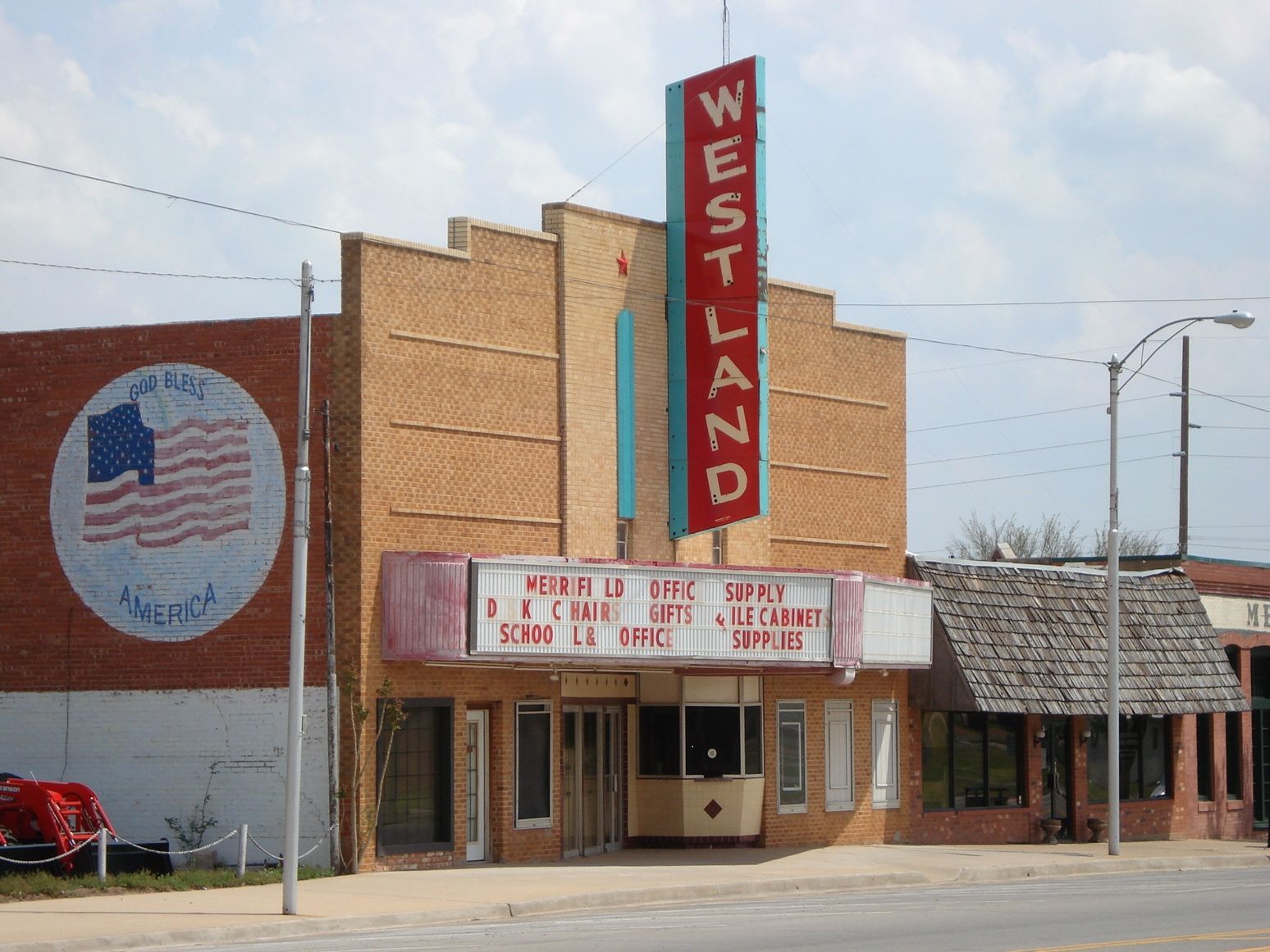
I wonder how long I thought I would stay there. I actually started looking for work. I even filled out some job applications, including one I handed in at the old downtown movie house on Main Street, The Westland. I still haven’t heard back.

I looked for any opportunity to work I could find. One night I went to an Arby’s at closing time. They let me mop the lobby, then sit at a table while I ate some unsold food.
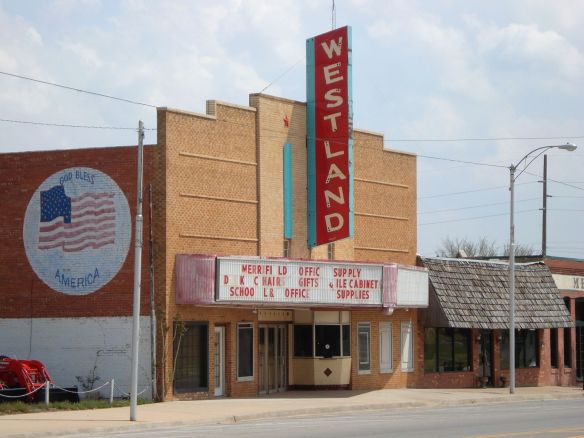
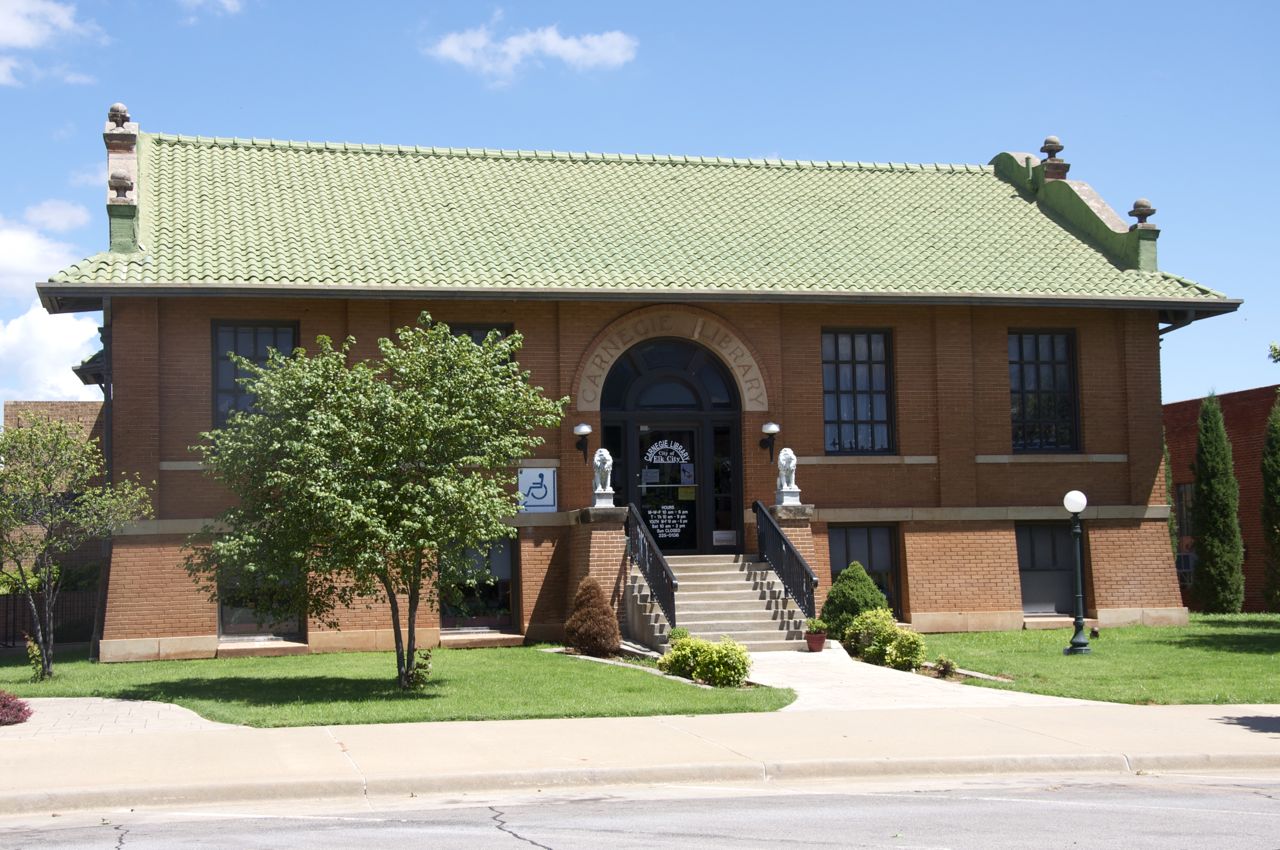
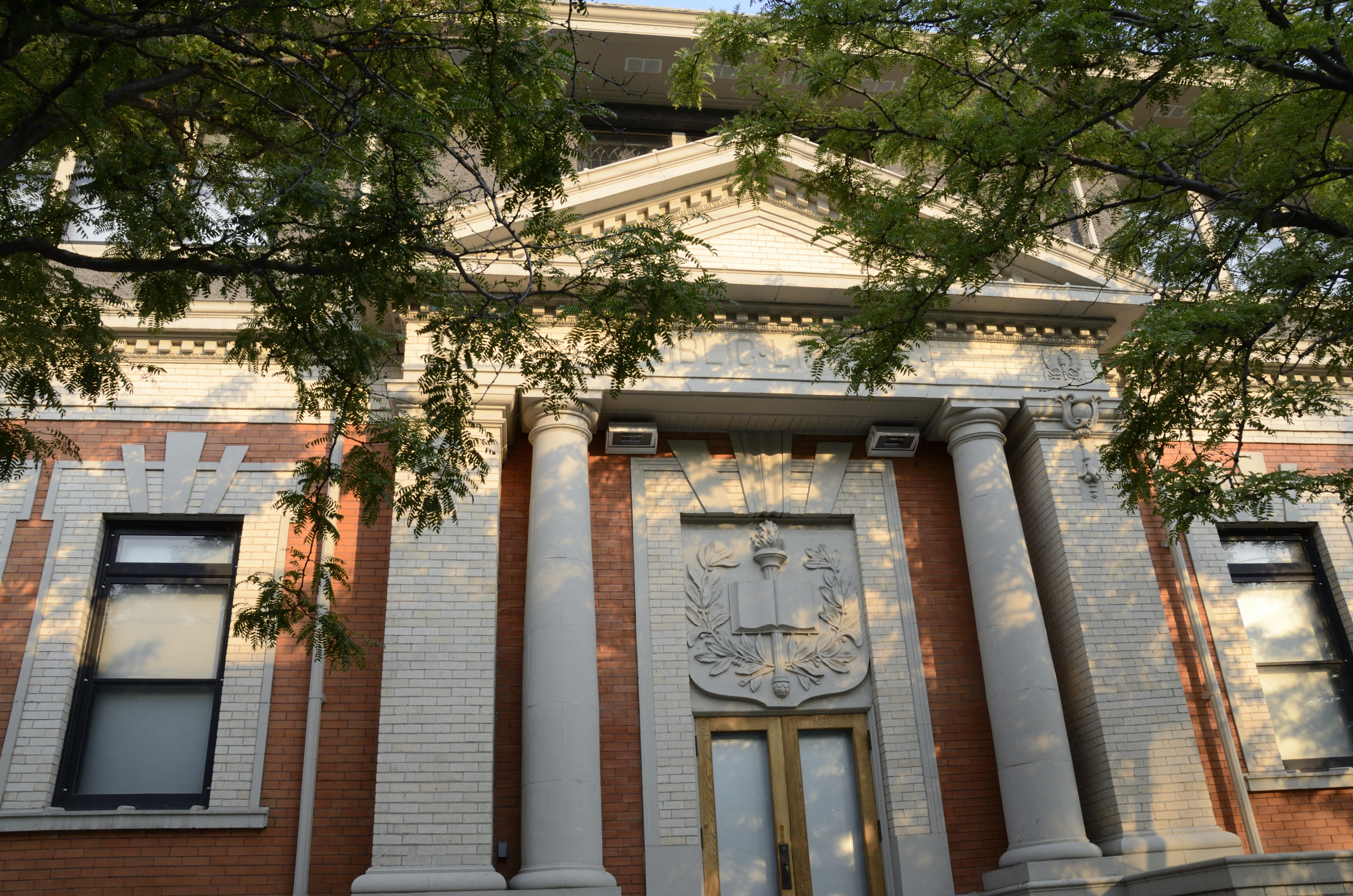
Westland th - elk cityThe next few days were divided between Elk City’s beautiful Carnegie Library and the cafe. That’s where I would eat, chat with regulars, and ask about work.

“Hey, Oregon,” this friendly guy said to me. “If you want to find a job, you really should go to the City.”  Oklahoma City was a little over a hundred miles down the 40.

“That’s where the work is. People here are nice, but they’re not gonna hire ya.”

Emmett had his own ideas. He didn’t want to go to the City. Maybe he just liked these small towns along the Interstates. If they were as hospitable as Elk City, I could see why. But I was ready to move on, after I saw the sense of going to OKC.

“I heard there’s a priest, who’s got a work farm somewhere out here,” Emmett told me. “Got a mind to check that out.”

That sounded interesting to me too, as an experience, but I was also wary of such a place. What I heard later about him and his farm made me glad I never went there.

I was in what began as a trickle, but later became a flood of unemployed Northerners coming into Oklahoma looking for jobs. We seemed to have wandered into a lost sequel to the Grapes of Wrath, in which the Californians all pack everything they own into their cars and drive to Oklahoma, where the Okies tell them, in a kindlier tone than the Californians ever took with them, “Sorry, folks. Got work, but not that much work.”

Emmett got a day’s work, and asked me to wait until he was done before I left. I met him on the eastern edge of town. He had money in his pocket and we were ready to leave town, but it was late, so we slept by the highway and left the next day.
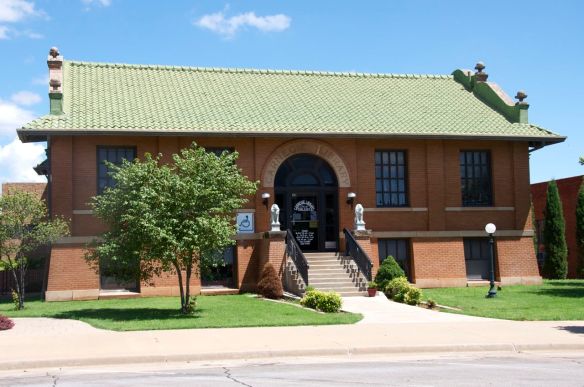
Carnegie library 3May 10th – 15th

I packed my bags and I’m heading straight into the storm
Gonna be a twister to blow everything down
That ain’t got the faith to stand its ground

-Bruce Springsteen
The Promised Land

It was Monday, May 10th. We got a ride to the next town going east, Clinton. It was cool and overcast, as we spent the night in a large park in the middle of town.

It was raining on Tuesday, and we were mostly hunkered down in the park, which included a pool, an amphitheater, a baseball diamond and tennis courts. Then it got stormy, with heavy rains and tremendous winds. It grew twilight-dark well before sundown, and it was clear we were going to need some shelter.

I really knew nothing about the seasons there, nor about tornadoes. Today was the day to learn. Emmett and I crossed the road from the park and took refuge in the Blue Pig Bar.

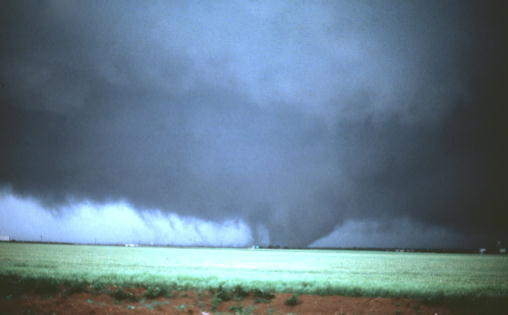
I hadn’t heard anything about any tornadoes anywhere. Then suddenly on May 11, 36 twisters touched down in Oklahoma, Texas and Kansas, 27 of them in our region. A little after 4:00 a tornado watch was issued. At ten to five, an F-3 twister hit Altus, about 70 miles south, tearing up the Air Force base there. Ten minutes later another F-3 traveled within a mile of the field where we had slept near Mangum only a week before. It killed two people as they ran for a storm cellar.

I didn’t know whether I should be concerned or not. I watched the folks inside the Blue Pig to find out. They ranged from apparently indifferent to tense and distracted. The radio and TV were on, and when tornadoes were sighted nearby, a half dozen or so of us went outside where we had an unobstructed view of the sky. I was amazed. The sky was aglow with gasses, turning the clouds green and casting a dark and eerie hue on us. The wind died down. It was weirdly quiet.

“The wind stopped. Is the storm over?” I asked.

“That happens,” someone answered,  “when there’s a twister.”

The waitress had been most nervous of all, repeatedly walking out, looking at the worsening conditions, then walking back in to take care of patrons. “That does it,” she said throwing down her cigarette. “I’m going to get my kids. He’s gonna have to let me leave.”

The evening wore on. I had some beers. Eventually the bar would close, and Emmett and I would be back on the street. How could we do that, when dozens of tornadoes had touched down?

Tornado sightings in western Oklahoma continued through the evening. Finally, the last one was seen at 8:42. It was ten miles away.

Emmett met a guy in the bar, who called himself Lobo. He was real rugged character, a Vietnam vet, about 40, with an army jacket and a cowboy hat. As closing time neared, he told us we could crash at his house. He lived a few miles out of town. The idea of driving out in this weather made me uneasy, but not compared to when we were doing it.

When we left, the storm was raging. The rain was blinding and the wind thrashed violently against every obstacle.  Then there was the lightning. As we drove out on the straight road leading to Lobo’s house, I looked out the window and could see nothing but the black of night and torrents of rain. Then the explosions began.

Back home in Portland, thunderstorms are pretty rare. In Montana they are common in the summer. My Dad, who grew up in Iowa, had taught me when I was a boy to count the seconds between the flash of lightning and the sound of the thunder, to determine how far away the lightning had struck.

I had never been so close – it had never occurred to me that I ever would be – that the flash and the thunder were simultaneous. When the first bolt of lightning struck the ground next to the road as we passed, I jumped. It was like a mortar round: a brilliant white light and a sound like a bomb exploding. I looked at Lobo, who had been drinking all night, I was pretty sure. He seemed steady. Maybe we wouldn’t die.

Then another strike. Instead of counting time, I counted at least three ways we could die: tornado, lightning or car wreck. Shortly we arrived at Lobo’s cinder block house.

Inside we dried off. I felt safe, and Lobo hadn’t a care, which made me feel better. On into the night, Lobo showed us snapshots from his time in Vietnam, and told some wrenching stories of carnage and loss.

Multi-vortex tornado in Altus, OK, May 11, 1982. NSSL Photo.

Multi-vortex tornado in Altus, OK, May 11, 1982. NSSL Photo.

In the morning he fed us and dropped us back in Clinton. I found a paper and read about the damage and deaths the night before. What would I have done without people like Lobo and the others who helped us?

God was invisible to me and silent. And yet these mounting instances of deliverance and refuge were both visible and vocal. So were the chance meetings, the little messages, the thunderous quiet and the revelations that came from being alone and drifting with nothing. Together they made me think and wonder.

We ask for signs and dismiss them when they come, but grace speaks the louder when we listen, reaches farther when we stretch out our empty hand.

* * *

I spent the next three nights in Clinton, one in the park, another in a self-serve car wash. At some time during those three days, Emmett and I lost track of each other and I didn’t see him again. I figured he was off to find that work farm.

The third night I met a guy named George who convinced me to sneak with him into a U-Haul lot and sleep in one of the trucks. The next morning, the 15th, he went off with a friend who showed up in a car and dropped off another guy named Kenny. George said he was coming back in about 45 minutes. When, after talking with Kenny for some time, I looked in my wallet and saw that George had stolen all of my money, I realized he wouldn’t be back.

“Damn. Stole my bandana, too.”

We’d both been ditched. Kenny bought us some coffee. He was something different. He was pretty clean. He had a leather jacket, and money. He was quiet and serious and guarded. He told me his story. He was from upstate New York and he was going out to California to be with his girlfriend. He said he came from money; his family was in the mob, and he wanted out. He could have been telling the truth, but I think sometimes people tell these stories as a way of saying, “Don’t screw with me. It’s dangerous.” I accepted his story as my way of saying, “Don’t worry; I won’t.”

So say goodbye
It’s independence day
All men must make their way
Come independence day

With no money, I decided it was time to leave Clinton for Oklahoma City. I walked to the east end of town and caught a ride to the next town, Weatherford. There I was picked up by a college professor who was driving his family to The World’s Fair in Knoxville. They were warm and kind, and once again, I wondered at the good luck of meeting such nice people. For crying out loud, they treated me like a nephew they hadn’t seen in years.

They stopped to eat their dinner at a supermarket parking lot in Oklahoma City. I told them about how I got here, about my friends, the hitchhiking and the roughnecking and wanting to go to Europe. They asked me my plans. I told them I would look for work in the City and start back to school. They perked up when they heard that, full of enthusiasm and encouragement. So I told them I wanted to write, that I would probably study English or creative writing.

The professor drove me further in to drop me close to downtown. A we parted he slipped me a five dollar bill. Now it was the only money I had.

I found a barber shop where I asked to use their phone. I walked in and felt I had stepped back fifty years. Three or four black men were sitting around, just talking. It was in the classic style, with black and white checkered tiles and chairs that were made when Roosevelt was president. The whole place looked like a Rockwell painting.

I was in the city: I felt it so strongly, and it was such a comfort and relief. These guys didn’t look at me sideways: they acted like this scruffy-looking kid with a knapsack and a sleeping bag wasn’t out of place. Reminded me a little of places back home, in northeast Portland. Is this home now? Am I done with my travels? Sure feels like it.

“Son,” the barber said, “You’re too late for the Sally. It’s past six.”

“Do you know somewhere else I might stay? Where they take people late?”

“Look up a place called Jesus House. They’ll take you.”

I looked up the number and dialed.

“Jesus House, ” a whiskey-voiced woman spoke rapidly in a strong South Texas accent. “This is Sister Betty.”

“Hi, I just hitched into town, and I wonder if I could sleep there tonight.”

“Yes, you may,” and she gave me directions.

“See ya, bye,” and she hung up.

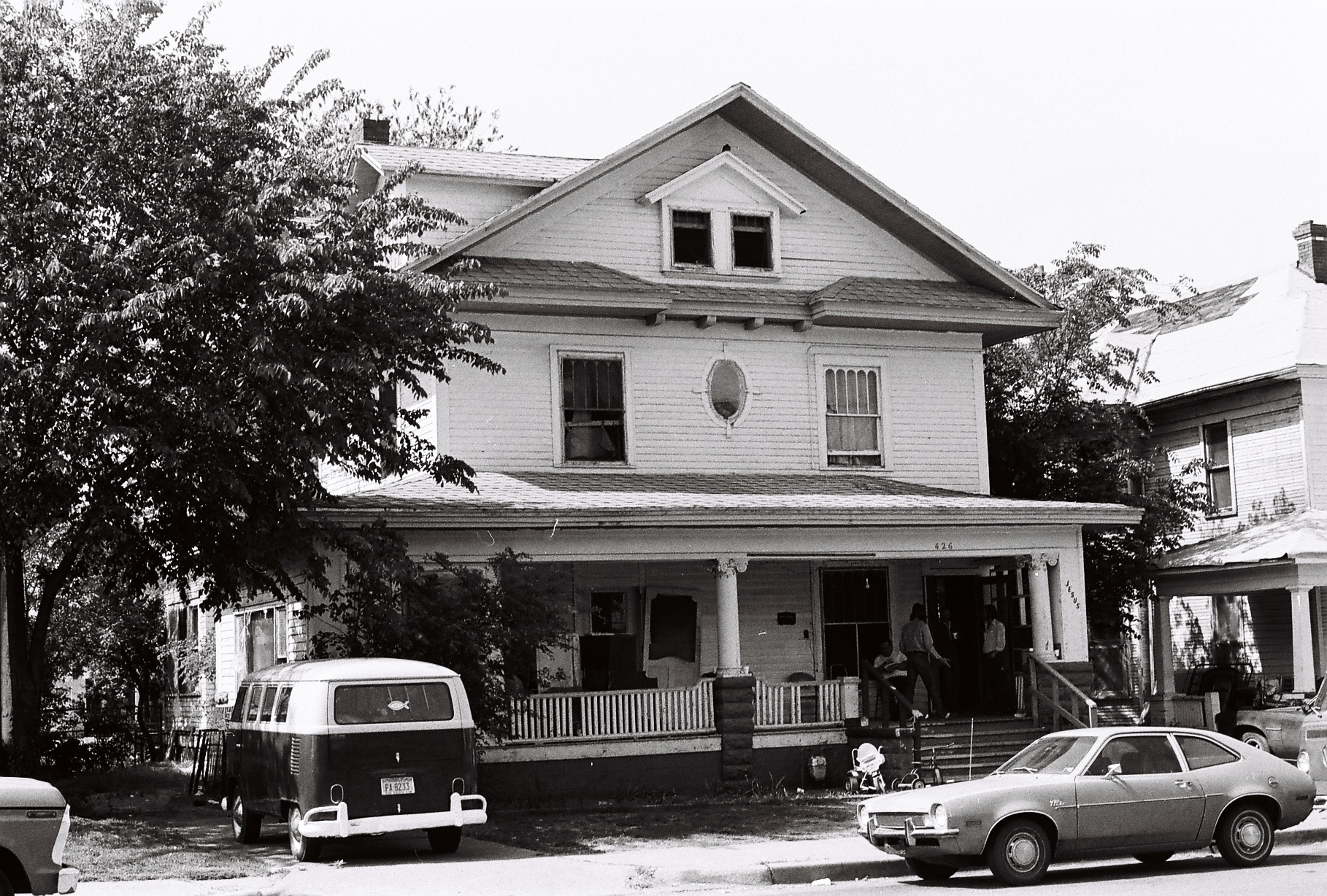
A half-hour later I was standing in front of a street mission in an ancient three-story house. My trip had come to its end. I hesitated, remembering that the first night of my journey, seven weeks and two days ago, was spent in a street mission in a house. Would they house men like that? Would they trade food for listening to a sermon? Would they throw down their rules, and not even engage me in a conversation like a fellow human being?

It doesn’t matter, I thought. It’s only for a night or two.

A290204-R1-26-26

The Trip That Changed My Life | Part Four

April 21st – 28th
Once again, something big had been turning in Troy’s head that fully revealed itself only after he had made a big decision. It was no surprise he wanted to leave Hobbs. By this time we all did. But here he was, packed and ready to thumb it out of town.

“I’m going to El Salvador. See the war first-hand, and write about it.”

The Salvadoran Civil War: it was full on, with the Government death squads murdering thousands of civilians a year, and the FMLN waging guerrilla warfare in the countryside. Yeah, he had talked about it, about the war, about working as a freelance journalist. But this?

“Now wait a frickin’ minute,” I said, or something like it.

“Let me ask you: Why am I here, in Hobbs, living in an oil field? Answer: you. Why did I come here? You. For that matter, why did I drop out of high school and move to Seattle? Why did I give up my last $300 and and my last $80? Answer: you.”

“And you,” I added, looking at Mark, “And this idea we had – together. No one is leaving.”

El Salvador. For crying out loud.

As we sat in our sleeping bags wrapped up over our shoulders, we asked Troy several times to sit down to talk, which he didn’t want to do, because he knew its only purpose was for us to talk him out of leaving. Finally he relented, which meant: No, he wasn’t walking across the the field and down Marland to Highway 18 south, at least not until we let him go. We talked a long time, about wars and death squads, and how those work; about how he pulled us back together, and here we were, and we ought make the best of it and figure out a plan. Finally, we convinced him to stay.

Hobbs was a bust, it was plain to see. But where should we go? We talked to a lot of people, roughnecks mostly, and roustabouts. We even hitched over to Odessa, leaving our camp for a few days.

(On the way: Scariest ride ever. When we got in the car the floor was covered two-deep in empty beer cans.Two good ole boys, pie-eyed and bombing down that Texas two-lane going about 90.)

We stayed with Stacy Gruby, who first gave Troy the idea of roughnecking the previous summer. But Odessa was a bust, too. Stacy said try the Panhandle, maybe, or Oklahoma. But it was back to Hobbs for now.

* * *

We survived, and not much else. We got canned food from a church. I think Troy had a little money, but it wouldn’t have lasted long. We might have panhandled. For myself, after getting sick of canned food, I lifted a banana from a big grocery store in town. I mean I stole it, you know, just so we’re clear. Man, I must have wanted that banana. Did it, even though I was scared to death of getting busted and facing Judge Roy Bean.

Luckily we had a handy source of water. There was a faucet on the side of the Totem Grocery that faced our field. There we could fill containers or rinse out our clothes. We could also come as close as we ever did to bathing. The Totem building is a concrete rectangular box with a front door and no windows. Unless we were in the store or in front of the door, they never saw us.

I was now living the full experience of being homeless. All the incidental things of life, like eating, drinking, washing, talking with strangers, these became the substance of our lives. There wasn’t anything else. Your day was an empty canvas, but the only paints were the minutiae of your daily life, and that was what you made into the sprawling pictures your long days called for.

Reading took up most of our days. I finished my Pelican History of Medieval Europe and handed it off to Troy. Then I read The Communist Manifesto, Herman Hesse’s Journey to the East, the Baghavad Gita and Kahlil Gibran’s Voice of the Master.

My favorite thing about Hobbs was the nighttime. Sunset would would quickly turn the light from warm to cool, the temperature would drop, and the stars would pop. Once dark, there was a wild flame in the distance that mesmerized me, sometimes short and sometimes long and waving like a flag. It was an Occidental Petroleum refinery stack southeast of us. When this pillar of fire was burning, we could hear the rushing sound it made, like a jetliner passing overhead, even though it was about a mile and half away.

Another persistent element was the weather. I had no real notion of what was coming. Until now the temperatures had fluctuated drastically: highs of below 60 and over 90 within a few days; and lows of 70 and nearly freezing in the same week. But it had been dry.

Then some rain came. I only remember one real downpour in Hobbs. It happened after dark while we were in the cafe, and enormous drops were suddenly pelting the front windows. Looking out at the torrent, we hurriedly flipped a coin three ways to see which one would stay (it wasn’t me) while the other two ran like wild men across the road and the field to our camp. We grabbed a few things, but mostly piled our stuff up and covered it with the  tarp. Then we ran back, drenched to our skin. I don’t remember how or where we passed the night. The next day, one of Troy’s acquaintances let us dry off some of our stuff in their mobile home. The sun dried up our camp.

April 29 – May 5th
It wasn’t long afterward that we decided to move on. The time had come to see if there was some work on down the road.The day we left Hobbs, April 29th, grew bleak as we headed north, venturing toward the Panhandle. We stopped near a town called Milnesand, NM, and by nightfall it was raining hard. All I remember is giving up on actually pitching my tent, owing to wind, I suppose, and just using it to cover myself from the rain.

The next day, Friday the 30th, we turned due east and landed in Lubbock. That night we went into a big, crowded honky-tonk. At that time the drinking age was 19, which Mark and Troy both were. I used my fake Minnesota ID to get in. Somehow, I got drunk. I mean, I know how that happens, but whence the means, I couldn’t say.

I stood behind a girl playing a video game and watched. Respecting this particular video game, I heard a lewd joke from the girl at the cafe-store back in Hobbs, and stupidly and disgracefully repeated it to this girl, something that I would never have done sober. But there it is. Without looking at me, she shrugged one shoulder at me and let that suffice as “Get lost.” That I did.

A little while later, as I stumbled around this totally jumpin’ joint, I looked over in time to see the girl pointing me out. To her boyfriend. This is surely not the only time, but it is certainly one of the times that I needed a cowboy’s appraisal of my behavior. That was a new experience. I could see it happening from twenty feet away, and it filled me with dread. He walked toward me like Jake LaMotta.

“Did you talk to her? Did you make a suggestion to her?”

Suddenly I felt pretty sober. “Yes, I made a stupid joke. I’m sorry I did, I’m very very sorry. Please tell her how sorry I am.”

“I think we should go outside, so I can teach you how to talk to girls.”

I had a feeling I was going to get taught about unilateral pugilism. Just then Troy nudged his way in. Troy the diplomat. Troy the guy who can talk his way out of any situation.

“Hello, sir,” he said in is most earnest and respectful tone. “Yes, could I please talk with you a moment?”

I couldn’t believe it. He got the guy’s attention, got him to turn away from me, defused his anger. He explained that his friend was pretty wasted, and we’re very sorry, and we’re leaving now, right now, and very sorry. Okay?

Classic Troy.

We hurried toward the door, the three of us. Out to the street.

We found our way to a Denny’s and spent the most of the night there, drinking coffee and trying not to nod off.

* * *

I want to see some friends of mine
True loving people whose hearts are kind
Find that little town that’s in the back of my mind

-Jimmy Webb
Oklahoma Nights

So this is how it was: Whenever we’d come to the next town, we would ask around. “How’s roughneckin’?”

And we’d hear something like, “Ya checked Lubbock?” And so we’d thumb it over to Lubbock, ask around again.

“No, nothin’ here, really. Ya’ll been to Odessa? Zat right? You know what. Y’all oughta see about Anadarko.”

“Anadarko?”

“Oklahoma.”

Oklahoma. Man. That’s another state.

And so we would aim to beat it on down the road, again.

The next day was grey and cool. We were in a little town east of Lubbock. A waitress told Troy we could see the parish priest about some assistance. When he want to the rectory, the priest made out like he was going to help, and told Troy to come back. When he did, he wouldn’t answer the door, told his secretary to tell Troy he was gone, and a few minutes later, as Mark and I watched from a  distance, the police came.

Troy was incredulous that the priest would’ve lied to him. Sadly, the man was afraid. To him, we were scary.

The police told us to get out of town, and we assured them we’d be gone with the first ride. That took us only as far as the next town, Crosbyton.

Then a ride came from a man I will never forget. Driving a car with his teenaged daughter and son, and another teenage friend, he didn’t really have room for three passengers. But he stopped anyway. Bud was a generous, talkative, tenderhearted man, in mourning for his wife who had died perhaps a year before. When he told the story of her illness and passing, and the grief that followed, and how the three of them had drawn closer, I was moved. But I never understood him like I do now.

He got choked up a couple of times.The girl, sitting between us in the front seat, looked at me and said apologetically, “He gets pretty emotional sometimes.”

“I do.”

“When he says goodbye to y’all, he’ll probably cry.”

“I probably will.”

“That’s all right,” I said.

He was driving home to Hobart, OK. All the way, black clouds drifted overhead. I marveled at how green it was on the rolling plains of Texas. Finally, it  looked like spring somewhere. Finally, we were out of the dust.

Bud was in no hurry. He was really enjoying this return trip, with the seven of us crammed into his car. Several stops. Easy drive, on into the night.

He let us out near a town called Mangum, about 40 miles miles south of Interstate 40. And, saying goodbye to us on the roadside late at night, he did cry. It was all right.

We slept in a crop field, and my thoughts, going to sleep and waking, were about rattlesnakes. That morning we headed north. We could have asked Bud to take us all the way to Hobart, which is only about an hour from Anadarko. We decided against it. I can’t say what we were thinking, but it may have been Kansas. I do know that a few days later, continuing north was the crux of a decision that would change the course of my life.

You ain’t gonna find nothin’ down here friend
Except seeds blowin’ up the highway in the south wind

-Bruce Springsteen
Seeds

We came to Elk City, where it was stormy again, and we slept that night in a park in the rain.

Elk City was a town, eighty years old, of about 10,000 people, situated on the old Route 66. Its highest distinction is that it’s the hometown of the great singer-songwriter Jimmy Webb (Wichita Lineman, Up, Up and Away, By the Time I Get to Phoenix, Highwayman, Galveston). The first day or two we were there, I saw a newspaper. It had an article about unemployment. It said that of all the states, the one with lowest rate in the country right now was: Oklahoma.

We talked again about where to go next. Troy thought there could be some roughnecking further north, in Nebraska.That’s where he and Mark thought we should go. I didn’t want to go north. I didn’t want to keep chasing oil. I was done with it. How much work were we going to find, if we found any at all? If we were going to get work, any kind of work, weren’t our chances better here, with the best employment rate in the country?

Of course they didn’t want just any job. What, settle down and get a fast-food job, or farm labor? What’s the point of that? We can get crappy, low-paying jobs anywhere. That’s what  we had, what we left, to come down here.

But I didn’t want to keep drifting. I was tired of going from town to town looking for the Holy Grail, which was, after all, just a job on the rigs. I had become less and less enthusiastic about the idea. Seemed every time I met some calloused roughneck, one that had been at at it for years, he was missing a finger or a thumb. That was from throwing chain, Troy told me.The kind of luck I have, I’ll lose a digit my first day on. No thanks.

On May 5, my friends were ready to to hit the road gain. I told them I wasn’t going. I was going to stay in Oklahoma, see if I could get some work, maybe go home, maybe go to school. I was dirty, tired, and hungry most of the time. It was fun while it lasted.

Look, we tried. We tried in Seattle, we tried here. It’s over. It was a mirage. We chased it, but it’s gone. I’ve gotta quit the road, that’s all. I’ve gotta be done with it.

Perhaps I thought I’d get them to stay, too. I would’ve liked that. But they weren’t going to stay. They had decided, and so had I.

I was telling them goodbye.

The Trip that Changed My Life | Part Three

And we headed down south with just spit and a song
But they said “Sorry son it’s gone gone gone”
-Bruce Springsteen
Seeds


April 1st – 3rd
The first of April, 1982 found me and Mark making our way toward Hobbs, NM, thumbing it out on Interstate 10 in the Arizona desert, reading our Gideon Bibles and hoping for a ride from the ever more seldom-passing drivers.

From a spot near Benson to another somewhere on the hundred or so miles to Lordsburg, we whiled the better part of two days. Finally we got a ride, but got dropped once again at a spot well short of a human population center. This time we were taken to rest area 25 miles west of Lordsburg, with nothing in between. The sun was going down. We slept under concrete picnic tables.

In the morning we were awakened by one RV after another making their morning stops. After talking about it, we decided it made no sense  go back to the road, when everyone inclined to stop was doing it right here. We couldn’t just stick our thumbs our, though. We’d have to ask for a ride. We split up and began walking up and down the long line of motor homes, looking for friendly faces. I found a man in his sixties and his wife and asked if we could at least go as far as Lordsburg with them. As he looked me up and down, I waved Mark over. The man was thinking about it, but wanted a feel for us, to make sure we were safe. He had us sit a spell and chat.

Stagecoach

One of the rich experiences of hitchhiking is that a surprisingly diverse range of people will pick up a hitchhiker, but they all have this in common: they want to give a ride to a stranger. It’s remarkable when you think of it. The inside of a car, or the cab of a truck, is such an intimate space, and inviting a stranger to share it with you is a generous, even a friendly gamble. Sometimes drivers are tired of driving alone. Or they are paying forward the rides they got when they were on the road. Sometimes they want to save your soul, or share a joint or a sandwich, or add a little spontaneity to a routine drive. Whatever the motive, they have this little albeit sufficient bit of trust, enough to reach out to a stranger and help out. It’s a beautiful thing, and I’m sad the psycho killers have all but ruined such an honored custom.

After he had a sense of us, he said we could ride with them. He was a retired rancher, and they were spending a good part of the year on the road. They were solid, conservative, Midwestern Protestants taking on a couple of Northwest lefty drifters, and what a fine time we had! This was one of the nicest rides we got. It came right after we had spent the last of our money, and we didn’t know how we were going to eat, or how many days we were from Hobbs.

As it turned out, we traveled in their motor home for two days. They drove us about 350 miles, to within  70 miles of Hobbs. The first day we went as far as Guadalupe Mountains National Park, where we stayed for the night. Along the way we stopped at a KFC, and when they realized we didn’t have any money left, they bought us lunch, and fed us thereafter.

lone-highway-to-guadalupe-mountains-texas-292824

Interstate 10 dips south at Las Cruces into Texas. I remember my shock as we swung near the Rio Grande and I could see across the rail tracks, fences and the river what looked to me like a shanty town in Ciudad Juarez: the houses of paper and tin and others of bare, crumbling cinder block. The contrast between the two cities, where the houses on one side were only a thousand feet from the houses on the other, was stunning.

And then there was this land we were driving through. As I crossed the Western and Plains states in 1978, I fell in love, deeply in love with the American landscape. Now, cruising across the great desert Southwest, entering Texas and then New Mexico for the first time, I was falling in love again. This was the land that starred in the old westerns I grew up watching with my grandpa, and my dad, who shared this romance. Open, hard, dry ground – red and yellow dust – sprinkled now with green –  against a blue and white sky. There is history here, and timelessness, air that can choke or drown you, but let you breathe deeper than you ever have; land that fights you but also frees you.

At the Park, I believe we pitched a tent outside the RV. The next day they dropped us at Carlsbad, NM. We were one ride away from Hobbs, a roof over our heads, some food and the next chapter of our lives.

By Boston Public Library [Public domain], via Wikimedia Commons

With any kind of luck, Troy lives at the Barton Motor Court!
(By Boston Public Library [Public domain], via Wikimedia Commons)

As we set foot in Hobbs, I looked around. Picture west Texas, just six and half miles away, and you’ve got Hobbs. It was a flat, dusty town, and there was only one reason I could think of for having a town there, or any place like it: oil. That’s just fine by me. Oil is why I’m here.

I pulled out the Rolodex card with notes about how to find Troy. Eventually we made contact. Troy found us at the Totem Grocery, a convenience store on the main drag. (The building is still there, with the Totem sign over the door.) After all the introductory remarks were dispensed with, I said something like, “Well, what do you say you take us to your place so we can drop our loads?” I was thinking of a cool, shaded room, and some real food.

“Yeah, let’s do that.”

We were on the western edge of town. A few sparse businesses, like the Totem and the Caprock Lounge, open fields of scrub, pump jacks – little more. Troy led us in a straight line north and west out into the middle of the field next to the Totem. In a few minutes we came upon a 20-foot canvas army tarp spread out on the ground, with a backpack, a sleeping bag, some empty food cans, some books, and some pots and pans. All around us were pump jacks bobbing up and down. Troy stopped.

“What’s this?”  I asked.

“My place.”

“Your place? This is where you’re living?”

“Yes, it is.  I guess it’s where you’re living, too.”

“You told me you had a place to live. I mean, indoors.”

I looked at Mark, expecting him to be as incredulous as I was. He wasn’t.

“You knew? You knew he was – ? Oh, crap.”

Troy had moved to the field because rent was costing too much money, and money was tight because…

“Well, the work has kind of dried up around here.”

“Dried up? That’s why we’re here – to work. Dried up? You haven’t been working?”

“Not as much.”

“But you made a lot of money. You saved your money.”

“I did. I had some money. Until a few days ago. Somebody came through while I was gone, and ripped me off. I had a little with me, though.”

My heart sank a little. When Mark and Troy first talked about this, they knew they wouldn’t get me to come down here if I knew we were going to be camping in an oil field. That was probably true. But if I had known that work on the rigs was falling off – never. Never. I felt betrayed. They had both lied to me. White lies to them; to me, black.

There was no shelter, no shower, no refrigerator, toilet or sink. No water or electricity. No food, no money, and who knows, maybe no work.

Welcome to Hobbs, the Oil Capital.

April 4th – 21st
Now my grievances against my friends were having a cumulative effect. But what could I do with them? Me, not much. So I filed them away in my overstuffed file labeled, “Crap I don’t want to keep but can’t get rid of.”

And hey: the Alliance was re-allied, after all. And that was great. Together again. I rather marveled at where our friendship had brought us in less than a year and a half: from our homes back in Missoula to Seattle, then dispersed in opposite directions, only to reunite in this of all places. Being homeless and nearly destitute was a small thing. In fact, in light of our travel plans, it was funny. We were back to laughing at our self-made predicament.  Situation normal.

And there was an amusing irony here, that only now occurs to me. What did we do back in Missoula? We griped about our small-town captivity and longed for the freedom and opportunity to make our lives what we wanted. No parental constraints, no demands from school or jobs to hamper us. We didn’t want our lives mapped out for us by family or teachers or society. Freedom, baby.

Well, we got what we wished for. And you know what that freedom looked like? Eating VanCamp’s pork and beans out of a can on a dusty piece of canvas in the middle of an oil field. No jobs or school or parents to pin us down, push us around or rob our time and energy. All the time in the world, in fact. Freedom, baby!

* * *

Not a lot happened in Hobbs. The three of us lived on the tarp for the rest of April. Every weekday we rose early, dressed for worked and went to the Totem Grocery. There we waited as the roughneck crews stopped for coffee and food on their way to work. If a crew was short a guy or two, they’d pick someone up. This is what Troy had been doing. The more work, the  more likely a guy wouldn’t show, so when the rigs were hopping, Troy would get plenty of work. Problem was, the big oil boom, which had been going since 1978 or ’79, was going bust. Just in time for our arrival.

We went every day, but weeks passed, and we never got hired. We would spend the rest of the day on the tarp, or at the library, two miles away. At night, or when the weather was bad, we often took shelter at a place across the road from the Totem, which was a service station with a cafe and a store. (Also still there, under new owners.) The girl who worked there like to flirt with us, and we’d flirt back. We’d drink coffee, and occasionally drop a quarter in the jukebox.

It is no exaggeration to say that every week I spent in Hobbs felt like a month. This is how it had been for me since El Centro. It wasn’t that nothing happened, or that I was particularly bored. It’s that time, every hour, every day, crawled. It moved so slowly because, apart from going to  the Totem Grocery every morning, the notion of time grew irrelevant. I looked at my watch only out of habit, but next to nothing we did needed to be timed by anything more than the rising of the sun. Never again have I experienced this, but I remember it well. I believe it is not possible for this to happen if I have any sense of my current situation being in any way defined or delimited by time. The fact is I live with this time-definition every day, and the only way I know to be rid of it is to not know what is happening next or when. That doesn’t happen on a camping trip or a even a meandering vacation, if you have a job or family to get back to. I was floating, drifting through the days, as if I were in a raft on a river without any oars. I didn’t know where or when I could or would put out.

I only know three dates from that month. The first two are the day we arrived, and day we left. The third is April 21st.

That morning Mark and I woke up to Troy rousting us.When I looked at him, I couldn’t believe what I saw. He was standing there, wearing his army coat and his backpack, ready to go.

“What are you doing?”

“Guess.”

“You’re leaving? You can’t be serious!”

“I am leaving,” he drew out like a carefully worded announcement. I sat up, my mouth open.

“Just wanted to tell you guys: So long.”

The Trip that Changed My Life | Part Two

In California in the early spring
there are pale yellow mornings
when the mist burns slowly into day.
The air stings
like autumn, clarifies
like pain.

-Robert Haas

March 28th-29th
Saturday the 27th we slept outside a truck stop somewhere in El Monte, near the Pomona Freeway and I-605.

Early Sunday morning, the fourth day of our hitch-hike to the oilfields of New Mexico, we caught a ride going south on I-605. The driver was a young Mexican man named Antonio who was driving south in a small pickup full of fruit. He was very friendly, but didn’t speak more than a few words of English. He understood we were headed south as well. He let us off in Anaheim, where we parked ourselves near an on-ramp to I-5. We rode all the way to San Diego with a flashy Mexican-radio DJ who lived in California and worked in Tijuana. He took us to where I-805 meets the 8 going east.

Almost every driver who gave us a ride talked with us, asked about our destination and told us about themselves. Not the next one. He zipped to a sudden stop in his sports car, picked us up and sped down the highway. He was nervous, and didn’t talk to us or even look at us. I thought he must be running drugs or something like that. Then, only minutes later, just as abruptly as he had stopped for us, he pulled over and let us off. We we were a little to the east of San Diego, into some hills, apparently not near anything.

A white Toyota pickup pulled over with a man in his 50s and two younger men. I don’t believe in accidental meetings; I do believe in divine appointments. This is one of the reasons why.

The older man, clearly in charge, said they lived nearby. And as the day was growing long, he could offer a place to stay for the night. We hopped in the back of the pickup and rode a few miles further to the town of Descanso, two miles north of the freeway. To the rectory of a Catholic church.

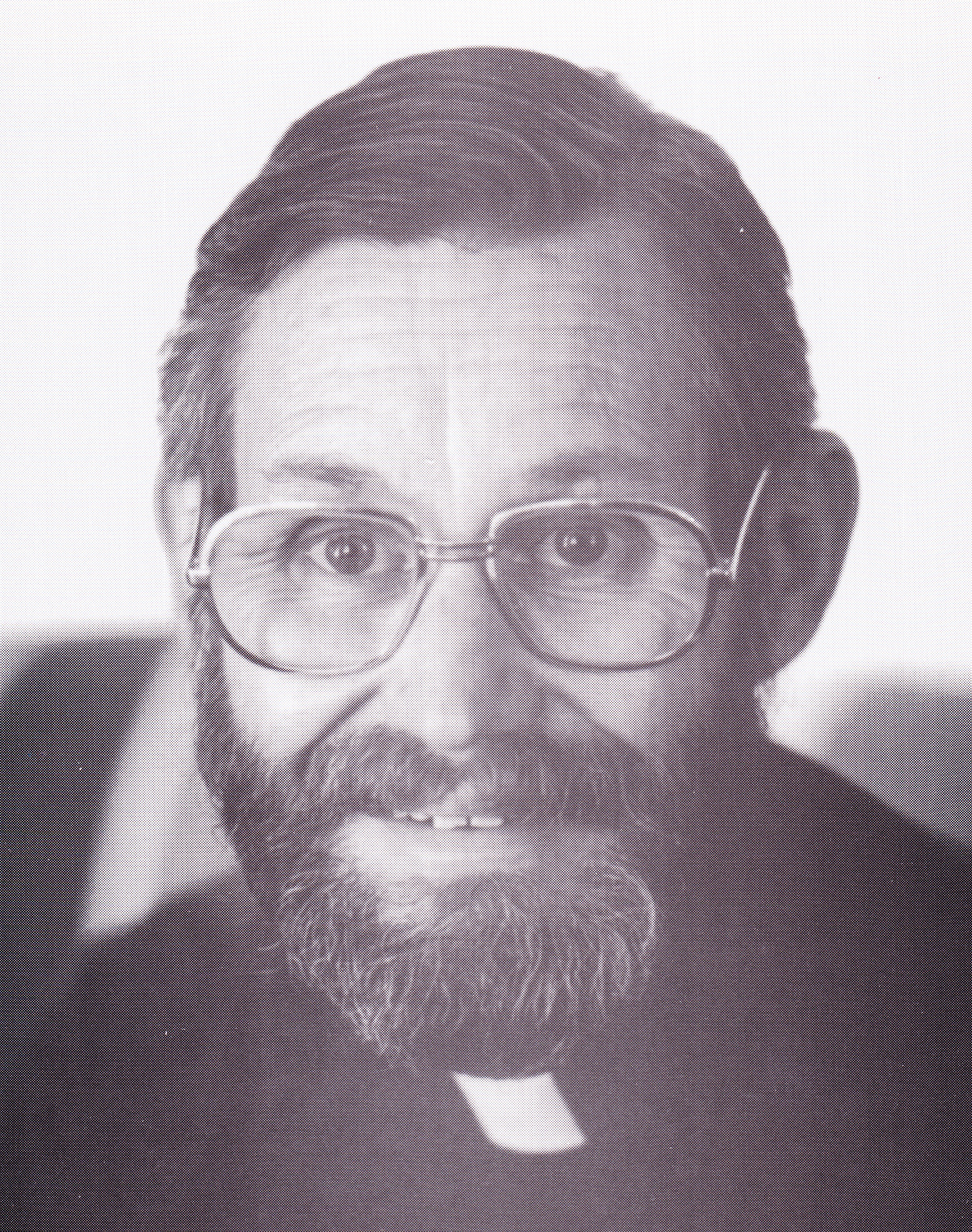
The man was a priest, a well-known and well-loved one, as I came to learn. His name was Father Ben Carrier, pastor of Our Lady of Light Church, and helping the poor, including hapless drifters like us, was part of his way of life.

“After he became pastor of Our Lady of Light the rectory was never without strangers passing through or staying on for weeks or even months. They included drug users, ex-addicts, alcoholics, felons on parole or just nomads roaming the roads, homeless, purposeless, twentieth century gypsies. “Lost children,” he called them.

– Enid Lanyon*

He treated us with same kindness and respect he became legendary for among transients up and down the highways a hundred miles north and east – so he never made us feel like ‘lost children,’ even thought that’s just what we were.

Father Ben told us he had come to California in the late 1950s, with one-quarter of a lung and six months to live. Here we was, over twenty years later, full of life and receiving every day as gift. He suffered from TB and brochiectesis. Ben was a raconteur, and regaled us with stories. He made us dinner, and let us sleep on a couple of couches in the living room and shower in the morning.Then he made us breakfast.

Over breakfast he looked at me and said, “What did you say your last name is?”

“Dehner.”

“Do you know if you have a relative in San Diego?”

Suddenly I recalled Dad’s next oldest sibling, my Aunt Ada, a Carmelite nun.

“Yes, I have an aunt – ”

“Ada Dehner?”

“Yes! Sister Ada. But I’ve never met her. She’s been cloistered for forty years or something.”

“In the the Carmelite Monastery. Ada and I have been the dearest of friends for twenty years. I’m her spiritual adviser.”

“Wow. Tell me about her; we’ve never met.”

“Well, you’re going to meet her today. I’ll take you to there to meet her, if you like.”

Fr Ben Headshot

Fr. Ben Carrier

Just a wild coincidence, right? But it was hard for me to see it that way. Something that day turned in my mind, especially when we entered the reception room and this beautiful sister, who I immediately recognized as a Dehner, appeared on the other side of the grille – something about how every time I turned around for the last year, I was bumping into God and his people, someone wanted to tell me about Jesus, or their religion, or their salvation. Or they didn’t mean to tell me anything at all – I just  knew what they were, or saw it. Back in Seattle, at work alone: Cliff the African-American kung-fu Christian; freshman Huskies center Barney Giles and KT the high school senior, friends and Christians; the Mormon couple and the Scientology Squad… And there had been the Christian peaceniks in Missoula… The Christians at the Poverello center, and the Children of God. I never even meant to go to San Diego, never even thought of my aunt the nun – until that moment. And now I have been picked up by my aunt’s best friend the priest and he’s bringing me to her monastery.

Ada was warm and radiant, and I instantly felt her love. She talked to me as if she already knew me, something so characteristic of my dad’s family. She told me childhood stories about my dad he had never told (she was ten years older), and about the grandparents I never knew. What an unexpected and profound gift. It just came out of nowhere. Or did it? It began to make me wonder.

That day Ben drove us east into the desert, and dropped us in El Centro, where we failed to get a ride, and ended up wandering around until late looking for a place to sleep.

Carmelite Monastery of San Diego

Carmelite Monastery of San Diego

March 30th – 31st

If you don’t die of thirst, there are blessings in the desert. You can be pulled into limitlessness, which we all yearn for, or you can do the beauty of minutiae, the scrimshaw of tiny and precise. The sky is your ocean, and the crystal silence will uplift you like great gospel music, or Neil Young.

-Anne Lamott

We thought we would take I-8 and connect with I-10 in central Arizona, which would take us as far as Las Cruces, NM. After that would be on state routes to Hobbs. But we ended up getting a ride in the back of a speeding little pickup with a cooler full of beer (“Help yourself!”) that headed north at Gila Bend to Phoenix. I don’t remember why, but in Phoenix we decided to walk to Arizona State University in Tempe.  It was about eight miles. It took us three hours. We must have figured we could find a place on campus to crash.

Near some dorms we encountered a group of students who invited us up to their room. They were fascinated by us: real live hitchhikers. By this time, hitchhiking as a youthful fad had already become a thing of the past. It was not as common to see kids our age doing it for fun or adventure. And it was harder to get a ride, because a lot of people were afraid to.

The students gave us some food, asked about our trip and told us we could sleep in a study lounge. In the morning a couple of them got us some food on their meal cards. We ate with them in the cafeteria. We thanked them and left, walking to I-10 to head south again.

From there we hitched to Tucson. We were dropped at an off-ramp at the outskirts, and as we approached a man at a service station to ask some directions, he yelled at us, jabbing his finger at the air.

“You just turn your asses right the hell around beat it back out of town. We don’t have any use for your types here!”

Without a word, we looked at each other and did just as we were told.

From Funset Strip. com

From Funset Strip. com

Before long we had a ride, and and made it as far as Benson. Suddenly it was harder to get a ride. We slept near the road that night. I was always thinking about rattlesnakes and scorpions, both of which I had encountered in central Oregon. To those I could now add my worry of waking up with hypothermia, though it wasn’t actually that cold at night. Finally we got a ride going east from Benson. When they dropped us off, one of my fears was realized: We were left on a remote stretch of the road in the desert. Instead of a hundred or more vehicles per hour, only a half-dozen or so passed by.

The temperature climbed toward 80 degrees. We sat on the edge of the highway, and the occupants of passing vehicles would honk, or roll down their window and yell, “Get a job!” One car slowed down, and then stopped. We hurriedly gathered up our books, packs, sleeping bags, and ran towards the car. And then it sped away, with hands and laughter flitting from the windows.

Time had begun to slow. Today and the days that followed grew long. Mark and I read and talked and slept. But we never brooked the subject of our last months in Seattle. I was reading a book I began there, a history of medieval Europe. It wasn’t exactly captivating, but I would have pored over insurance contracts at this point.

Waiting, waiting…for the next car.

A driver saw us from afar, far enough to decide to stop, not past us, but right where we sat. We jumped to our feet, but before we could approach, he bounced out and over to us. He greeted us cheerfully, and handed each of us a little book.

“Here’s something for you to read over while you’re waiting for a ride. God bless!” With that he returned to his car a drove away. Somewhat amazed and disappointed, we looked at our tiny books. The Gideons’ New Testament with Psalms and Proverbs.

The car disappeared down the highway.

“A ride would’ve been nice.”

“Yeah, we could’ve read in the car.”

Again, silence under the sun. Eventually we pried open our Gideons and read. I was looking for a verse, something I heard long ago, but couldn’t quite remember. I had tried to use it once in something I was writing, but I didn’t get it right. I didn’t know how to find it. Eventually I did, some months later.

This is what I was looking for, in Matthew 5:45. It didn’t say what I thought it said, but it was still good.

“…he maketh his sun to rise on the evil and on the good, and sendeth rain on the just and on the unjust.”

—-
*1995. Simply Benjamin. Nashville: Scythe Publications. P. 5

The Trip that Changed My Life | Part One

Kids
When their imagination bids
Hitch-hike a thousand miles to find
The Hesperides that’s on their mind.
– W. H. Auden

How big is a hare-brain, anyway?
My friend Troy left Seattle in October of 1981, breaking the Alliance. About five months later I left, too. So did my friend Mark. He returned to Missoula, and I went to my hometown of Portland. A lot happened during those five months. Mark and I went our separate ways because of what happened. I didn’t know what was next.

I left Seattle in early March 1982, angry over a falling out with Mark that led to both of us leaving town, and feeling guilty and disappointed in myself and my friends. But I arrived in Portland with some hope for a fresh start. After three years I was coming home, and I didn’t feel the embarrassment I thought I would had I gone back to Missoula. I had no idea what I would do. How did I veer so far from the expected high school-to-college trajectory I was on only 15 months before? What now?

Two very generous people, friends of my sister, let me stay with them when I got to Portland, even though they didn’t know me. They asked for nothing from me (I had next to nothing) and fed me. Immediately I hit the streets, going from business to business, asking about jobs and asking for application forms. The answer was ‘no’ at almost very turn. One older man told me unemployment was the worst he’d seen since the Great Depression. I thought he must be right, but I kept looking.

I lived in the Beaumont neighborhood the few weeks I was in Portland.

After a week or two, Mark called me. He had a proposal for me, for us. Even though I was still mad at him, I listened. He said he had been in touch with Troy, and they both thought that the two of us should go join him in New Mexico. Since leaving us in Seattle the year before, Troy had been working the oil fields of the Permian Basin, in SE New Mexico and West Texas. Now living in a oil town called Hobbs, about 90 miles northwest of Odessa, he was earning around $16 an hour working on the rigs (That’s almost five times the minimum wage we were making at our theater  jobs. In 2013 dollars, it would be $38.59 an hour.), and said we should come down. The two of them made the same argument that Troy had made before he left: making that kind of money in a short period of time was the only plausible way of fulfilling the original dream of the Alliance: a trip to Europe.

After hearing all this from Mark and Troy, I reluctantly agreed to go. Mark would come to Portland and we’d leave from there. If what they said was true, at the very least it would be an adventure. But it wasn’t true.

I have an old Washington County tax record Rolodex card, and on the back I wrote, while talking to Troy:

2201 W. MARLAND
TRAILER NO 8   CAPROCK BAR

TOTEM GROCERY

SAN DIEGO   #10
LOS CRUCES
EL PASO

Troy was telling me where he was living in Hobbs, in a trailer park by the bar, and where to meet him when we got there, at the grocery. He also suggested the route for us. Already you can see we’re off to a shaky start: I-10 intersects the 5 in central LA, not San Diego. At the bottom of the card, I’d also written, CORNELL OUT: MAY 22nd. That’s when Anna would return to Missoula from Ithaca. This would have been a major reservation about leaving Portland: that I would be in New Mexico through the summer and not make it over to see Anna while she was home from school.

How was it, after the bitter end to our Seattle sojourn, the acrimony, the ways in which we had disappointed one another – how was it that I was willing to turn around a few weeks later and go traipsing into the unknown with this guy? Why didn’t I tell Mark and Troy to take a hike, without me? First, it was impossible for me to not think of  these two as my friends, the best of friends, regardless of what had happened. Did I hold a grudge? Yes. Was it enough in my mind to disown someone, to walk away and have nothing more to do with them? It wasn’t in my nature. Second, I didn’t know what I was doing. I didn’t really know if it would work out. I thought it might. It would be a venture of discovery, a romantic beatnik quest, to “make the road my home,” to just head out and see what happens. To do here in the States what we had planned on doing in Europe. Third, nothing was happening for me here. In the near field, it looked like another dead end.

Last and foremost:  just like that, the dream I laid to rest was resurrected, the dream of the Old World, of ancient ruins and medieval towns, French cafes, art treasures, Gothic cathedrals and fairy-tale landscapes. It had such a strong pull on me, stronger I thought than on Mark and Troy, stronger than they even knew. It was the very thing that had drawn me into their hare-brained schemes in the first place. Did I want to go? I was already there.

Passport to Nowhere: March 1982

I went downtown and, in a quaint gesture of my faith, had a passport photo taken – but did not submit an application. I didn’t have any valid picture ID for it.

March 25th
We had a flawless plan. Mark arrived in Portland with $30. I had fifteen dollars, but as I was saying goodbye to Nana and Pop, Pop slipped me a $20 bill, so now I was flush, with $35. With our financing secured, we set off to hitchhike the 2000 miles  to Hobbs, New Mexico, make a small fortune as roughnecks and then hitchhike across Europe: yes, a solid plan indeed. What could go wrong? As it turned out, I was beginning what would become for me a journey of over 3000 miles that changed my life more radically than I could have remotely imagined.

My sister Marji drove me and Mark to a truck stop, where we thought we would have a good chance of catching a ride south. We figured we would go down to LA, then take the 10 east across southern California, Arizona and New Mexico.

This was it: we were leaving; I was leaving home once again, even before it had really become my home again. I had a lot of questions that I couldn’t answer. Could the Alliance be put back together after having been so harshly broken? Would we really trust each other? Did we all share an equal commitment to our stated goal, or would would one or two of us walk away again? I was uneasy about all of this, but I decided to leave anyway. Who knew where this road would lead us?

THURS
NORTH PORTLAND TO EUGENE 3/25/82

Electrical engineer from Vancouver on business trip to Salem & Eugene picked us up 10:30. Nice guy about 35. Talked about the best ways of ‘making it,’ real estate, investments, etc. He had an interest in finances… He said frankly that “If I was a few years younger I’d probably go with you guys.”…

“It must be really great to be able to just pick up & take off, go wherever and not have to worry about any responsibilities tying you down.”

“That’s our philosophy.”

Take off, go wherever. That made me feel epic, hearing that in the very first hour of our journey.

He dropped us off at the U of O campus, where we planned to look up one of my best friends from Missoula. She was out of town so we decided to move on. We’ve must have had some trouble getting a ride, or worried that we wouldn’t make it to a good stopping place for the night, because we chose to stay in Eugene for the night. It was raining, so we looked for a place to stay indoors. Neither of us had ever slept in a mission, but we learned that that was one of the few options when staying in town at night.

We ended our first day on the road at a street mission in a house. It was late when we came in. Someone recited the house rules to us and we were told that if we wanted to eat breakfast in the morning we would have to hear a ‘message’ first, something I recoiled at, as tempting as free food sounded. It was a wretched night. There must have fifty men crowded into a living room and dining room without furniture. When we came in, it was already dark and the lights were out. Somehow we found places to wedge ourselves in between the bodies of strangers. I couldn’t sleep. The room stank. Listening to dozens of men snoring, I lay there, cramped, tired and awake for most of the night.

In the morning, we got up early and learned as quickly as possible what we would have to do to get some food. We would have to wait some time. Then we would have to sit through a sermon, then get in line for some grub.

The free breakfast was too expensive, so we left.

March 26th-27th
We got a ride from some scruffy, friendly biker types who dropped us near Curtin, 33 miles south of Eugene.  There, cold and wet, we caught a break: a guy in a pick-up who was driving non-stop all the way to LA. He wasn’t a talker. He drove 75 mph, kept the radio on and stopped every so often for coffee, gas and and a restroom. Twelve hours later (early Saturday morning) we were at his house in Sunland. He said we could crash at his house and later in the morning he would drop us at the 10.

So we woke up in Southern California: golden, promised land, famous, murderous, dreamed-of, end-of-the-Continent California, opposite in so many ways from where I had grown up.

My home is green and rainy, this is yellow and bright. We are towered by firs, well-watered and meet a cold gray Pacific. This is the place of palm trees, dry lands, burning hills and warm safari surf. This was my first real look around, and the beginning of my love-hate dance with the hazy megalopolis built on paved-over, sweet citrus groves. Starting the day in Sunland, met by clear skies and heading for the desert, I thought I was done with the wet. I was wrong about that.

Where we were dropped might as well have been a foreign country. It was Boyle Heights, east of downtown. I remember seeing  the famed LA Corner’s Department, where ‘Coroner to the stars’ Thomas Noguchi worked, and only three weeks  earlier had been asked to step down, on the same day he examined the body of John Belushi. We were dropped from I-5 South on North Mission Road, walked under the overpass to Marengo Street, where we would have spotted the Coroner’s. Heading southeast and then east on Marengo, we would have looked for an on-ramp to the 10. I don’t remember getting a ride. The highways of LA, right near Downtown where we were, are not really the best for hitchhiking; drivers just can’t stop to pick you up. We may very well have decided to forget about the highways, and hitch a main thoroughfare. I think we walked all day.  In any case, by early evening we found ourselves about 10 or 12 miles away, past Alhambra, past Rosemead, deep in the heart of East LA, and now feeling very much – in fact, too much – out of our element. We couldn’t get a ride to save our lives. We felt stranded.

It was clear to both of us that as we walked, or stood with our thumbs out, that our rift a couple of months before was hanging between us. What had happened was serious, it was painful.Two days had passed, and we didn’t talk about it. But it was there.

LA Map 1982As nightfall approached Mark and I got into an argument about how and where to spend the night. Mark wanted us to use most of our remaining money to get a motel room. I couldn’t see spending our food money to get off the streets for one night. After storming off in different directions, and finding each other again, we kept walking east. I believe we were lost, or rather, unsure of where we were. I had a crude motel map with few street names. I guessed that we were in South El Monte. Perhaps we walked east on Garvey Avenue,  a major street south of and running parallel to the 10  – or perhaps it was Valley Blvd., which is north of the freeway.

At some point we gave up on getting an eastbound ride out of the barrio. We decided to head further south. I thought we were near Whittier when we quit for the night. Now I can look at Google Maps and Street View, and I believe we were at Durfee Avenue and Peck Road by the Pomona Freeway – next to Whittier, but still in South El Monte.

We laid out our sleeping bags on the edge of a McDonald’s parking lot. The temperature was dropping, but it wasn’t especially cold. A few hours later Mark tried shaking me awake. I am a light sleeper, and normally just speaking to me would be enough, but not tonight. I looked at Mark and suddenly realized I was chilled to the core. I was alarmed, thinking groggily that if he hadn’t woken me I might have frozen to death. He roused me so we could find a warmer place to pass the night.

It was probably unwarranted, but as I silently rolled my bag, trembling hands brushing away the dew, I was shivering all over and thinking, “I could have died.”

If it’s freedom you want

It was Stacy Gruby’s fault.

He’s the one who gave Troy, and later all of us, the next hare-brained scheme.

In August of 1981, my girlfriend returned to school in New York. I was going to Portland to visit my family before returning to Seattle. There was something I wanted to do before I left Missoula, though. All summer long I had been looking longingly through a music store window on Higgins, at an electric bass guitar. I wanted to learn a rock ‘n’ roll instrument, and this was it. I had been really taken with the bass while listening to bands over the last two years with great bassists: notably The Who (John Entwistle), The Police (Sting), and Cream (Jack Bruce). This one looked just like the Hofner bass Paul McCartney played in the early days (and still uses, for old time’s sake). It was only eighty dollars. I decided I wanted that bass more than I needed my bike, so I sold it – for eighty dollars.

Meanwhile, in Seattle, Troy had grown restless. He was annoyed when both of us left  for the summer, letting him hold down the real (but mind-numbing) job and pay the bills. Over the summer, I believe that grew into a resentment, if not toward us, then toward his situation. He quit his job and planned to go hitchhiking for awhile. For some reason that I do not recall, Troy ran up a huge phone bill and a total of $1000 in debts. Right before I was going to leave for Portland, Troy showed up in Missoula, and he and Mark decided they would hitchhike to Oregon. They needed some money for their trip. Even though Mark and Troy had earned money all summer, and I hadn’t, I was the only one of us who had any money.

Eighty dollars, to be exact.

You gave them your music money? Are you daft?

Yes, I let them talk me out of that Paul McCartney bass. They hitchhiked to Corvallis, Troy’s home before Missoula, and I went to Portland. In ‘Corn Valley,’ as Troy used to call it, they met up with an old grade school friend of Troy’s, Stacy Gruby. Stacy told them how he and some friends had gone to west Texas, gotten jobs working on the oil rigs, and made mounds of cash. To say that Troy was fascinated by this story would be putting it mildly. The wheels started turning in his head that day and didn’t stop.

At mom’s house in Portland, I answered the door one day and was surprised to see Mark and Troy, fresh from their Corvallis trip. We took a walk up through the neighborhood, where my family had lived since 1974. At the Irvington School playground, where I had played when I was ten, they told me what Stacy Gruby had told them about roughnecking in Texas, and how much money was to be made there. Troy thought we should go there, and proposed a Texas Plan over the Seattle Plan.

One thing the both of them always ragged me about was my cautiousness. (Steve ‘Life-in-the-Slow-Lane’ Dehner, they had dubbed me.) It was true. I had been a little daredevil as a kid, but as a teen I developed an aversion for what I considered unnecessary risks. I did not apologize for it, though, because in my mind, without my caution to balance their impetuousness, I’d have been jailed or dead several times over just in the last year.

Irvington School playground today.  In the ’70s it had a playground in the corner area to the right. It included a high slide and I loved to jump off the top of it. As a kid, I was always jumping off of things.

So, not surprisingly, I balked at the Texas Plan. I said no. Mark leaned toward no, so the Texas Plan was shelved.

I returned to Seattle by train on September 4th, in time for the Kinks concert that night. Before I left, Nana took me shopping for my 18th birthday, which was coming mid-month. She bought me a brown knapsack, which, while a little ragged,  I still have after over 31 years and thousands of miles on the road.

When we were all back at the 20th Avenue apartment, we partied for a couple of weeks, around the Kinks show, visitors from Missoula, and my 18th birthday. But after the fun, the outlook was bleak. There was no food, no money, and there was back rent due. Mark and I had to work two weeks before getting a check. We resorted to shoplifting for food. Even then, we subsisted mostly on water, potatoes and butter. (Troy wouldn’t eat margarine.) We owed debts we could not pay off. The goal – a trip to Europe, our reason for moving to Seattle in the first place – was as remote as it had ever been.

It was time to rethink our plans. By the end of the month, Troy had another job, but for the last four weeks he hadn’t stopped thinking about Texas. What was calling to him, tugging at him? Was it a walkabout, an escape, a quest? He hated the feeling that his path was being carved out for him by his attachment to us, to a job. Whatever else he was after, he wanted to break free.

He made his decision. He was going to Texas, whether we came or not. He wasn’t interested in being talked out of it. Mark and I still considered it too uncertain. Troy moved out.

If it’s freedom you want, come to Texas. No one there tells you what to do and how you have to do it.
-Edna Ferber
Giant

Thus the Alliance was broken. Mark and I moved into a studio apartment on First Hill. We all walked away from our debts, the bills, the back rent, all of it. Troy stayed with his mom for a few weeks, then left for Odessa, Texas, and a long, lonesome trail.

Before he left, the three of us got together to bid him farewell. Troy was a forever-friend, smart, lovable and reckless. It was Troy in the first place whose easy friendship with Mark and then me had made this triad we called the Alliance, and now he was breaking it. He seemed to be breezing away just as easily. I was sad and disappointed to see him go, and I wondered when our paths would cross again.

As we parted, Troy said to us, as we had heard him say dozens of times – and just as casually –  “See ya on down that road.”

“See ya.”

The Seven Most Overrated Movies I Can Think Of at the Moment

These movies mostly qualified as highly rated by being on one list or another of critics’ favorites. That means a lot of people who get paid to do so think these movies are truly great, but I watched them and I think they fall somewhere short of “best ever.”  I reserve the right to add to this in the future, as I know there are lot of overrated movies I thankfully haven’t gotten around to being disappointed by.

7. The Shining. Watching Jack Nicholson go mad is mildly creepy and amusing but not all that scary. Watching Shelly Duvall watch him go mad is mildly irritating but not scary. Watching other various scary things you don’t understand unless you’ve read the book is mildly unsettling, but not scary. So, I guess you could say it’s the Citizen Kane of unscary horror films.

6. Pulp Fiction. The Seinfeld movie: a movie about nothing. Is it funny, scary, shocking and at times compelling? Yes. Do I love the funky chronology? Yes. Did I ever I tire of the overly clever and ironic dialog Tarantino loves to write? Eventually. But is it the greatest film of our generation? No: for that a movie’s got to be about something, have something to say about something. But this is, to quote Jules, “one of the ones that became nothing.”

5. 2001: A Space Odyssey. This movie is huge for me – seeing it when I was kid was monumental – but a recent viewing, wherein I nodded off while Dave was flying through some flashing Andy Warhol paintings,  forced me to see that, as good and groundbreaking as it is, it still does not deserve the place it has been given by critics.

4. Some like it Hot. In a word, oversold. Too much praise as one of, if not the funniest movies ever, builds quite a bit of expectation, and promises more than it delivers. Especially if you waited until you were well into your forties as I did. Lots of the humor seems pretty juvenile now. If it weren’t for Marilyn Monroe, would this movie be so revered? Watch a Pink Panther movie instead.

3. The Producers. This movie suffers from the same oversell as Some Like it Hot. When you’re told from birth that this the most hilarious, side-splitting work of comic genius the human race has ever beheld, you expect a lot of laughs. What I got instead was one really good laugh, from a scene/segment many of us have seen more than once, and which was, I’ll grant, even funnier when seen in the context of the whole film. But the rest of the movie, not so much.

2. The Rules of the Game. I love Jean Renoir, and don’t think La Grande Illusion is overrated. And I don’t hate this movie. I like it and recommend it, but it has been ranked very high, even number one on some lists of the best movies of all time. It’s good, but not that good. Come on. Yes, the French give it the number one spot, but remember: number two is The Nutty Professor.

1. M*A*S*H. Hands down, this is number one. I hate this movie. I consider it one of the most deplorable well-known movies I’ve seen. I realize this really sets me apart from the vast majority movie buffs, and even family and friends. Look, the movie has some laughs, but there is just no getting around what a smug, callous, mean, cooler-than-thou stench hangs over this movie. I’ve seen the movie probably three times in my life, and each time was more unpleasant than the last. I find it unwatchable now. It’s the sort of film that actually seems to detract from my humanity just by watching it. I feel something has been taken, and it isn’t just two hours.

I recall that when I saw it as a young person, I was horrified by the shower scene with Sally Kellerman (Houlihan), and utterly perplexed that audiences laughed at it. That pretty much exemplifies what I dislike about the whole thing: it celebrates bullies (The Swampmen), more than any movie I can think of. Sure, they’re hip, free-wheeling and ironic. But it’s the worst instance of bullies: Altman has you rooting for them, because being cool, smart and funny makes them superior to their victims. Barf.

.

The God Question | Part Three

[Moral] practice has not been able to keep pace with the mind. Man has begun to say, “This is wrong, that is wrong.” Whereas previously he justified his conduct, he now no longer justifies his own or his neighbor’s.  He wants to set right the wrong but does not know that his own practice fails him. The contradiction between his thought and conduct fetters him.
-Mohandas Gandhi
Non-Violence in Peace & War, II-76

I don’t really understand myself,
for I want to do what is right, but I don’t do it.
Instead, I do what I hate.
-Romans 7:15

The Problem of Me
In the summer of 1981, at the same time I was reading my friend’s pharmacology textbooks on LSD, I was also reading Gandhi. This was in part my Looking to the East phase. But it was also my looking within. I had begun to suspect myself as possibly my biggest problem.

That probably reaches back over my entire life up to that point. But over the last nine months I had come up against some unsettling indications that I was perhaps not the person I thought or hoped myself to be. The one I remember best had been the previous fall, when my friends asked me to help them with a proposed pot-growing operation. My gut told me was it was stupid and wrong, but the money that could be made turned my head. I was quite disgusted with myself over that. Why would I not only think but also act in a way so at odds with my self-professed values?

If I could be hard on myself in a very selective way, I was even harder on others, and also extremely defensive. I couldn’t take any sort of criticism; to me, it was always personal and never welcome. As a harsh judge of others, it seems I always assumed the same sort of harshness must have been behind the least bit of criticism directed at me. Underlying my assessment of myself and of others, was a complete lack of insight. I really did not get people. It followed that I didn’t get myself.

When I looked in the mirror, seemingly every part my persona had an opposing aspect. I was a clown who made others laugh but actually took himself far too seriously. I was violent yet peaceful, sensitive yet capable of being really mean, even to friends; serene and patient, yet plagued by anxiety and frustration; compassionate yet judgmental; wildly gregarious but often a loner, vain yet at times overcome with contempt for myself.

It wasn’t a pretty picture, fractured into these paradoxes, and obscured by shadows of unknowing. I wondered what do with myself. That summer I picked up a compendium of Gandhi’s writings. I thought initially that he could inform a decision I had already made to personally adopt a nonviolent lifestyle. Up until the age of 14, violence was part of my life. I chose that it would not be anymore. But in Gandhi there was more, a philosophy of living and working in the world that resonated with me. Non-violence does not sufficiently convey in English what he meant by Ahimsa. It was something greater and deeper than merely refraining from physical violence. It was peaceful and just action, not mere pacifism. It required much of the individual, from within the heart.

This is the only permanent thing in life, this is the only thing that counts; whatever effort you bestow on mastering it is well spent.
-Non-Violence in Peace & War, I-114

It also answered the militant Left and any others who saw violence and destruction as the only means to their utopia –  something I had only awakened to in the last few months in Seattle. And Gandhi insisted that freedom was for all, regardless of their beliefs or station in life.  Ahimsa met me where my desire for personal betterment intersected with my desire for social and political change – inner peace and world peace, so to speak.

However much I was taken with these values, reading about them and pondering them was as far as I got before I was distracted by life and the tumult of the next twelve months, and events that would send me in a very different direction.

* * *

House on Ronald AvenueI stayed with my parents for the summer, who had rented a daylight basement just across Bonner Park from the house on Hastings. Right away I started looking for a job. I had hoped to get on as a YCC crew leader, but was notified in March that I hadn’t been selected. I ran around to all the movie theatres in town, but couldn’t find a job. Dad told me that if I couldn’t get a paying job, I had to line up enough volunteer work to stay busy. That was the deal. I readily agreed, and right away went out to do it.

Missoula Art Museum

Missoula Art Museum

First I lined up a few shifts on the welcome desk of the Missoula Art Museum. We were showing a fantastic exhibit of the photography of Philippe Halsman. Between the exhibit and the hours I sat reading art magazines, my knowledge and appreciation grew, especially for painting and black and white photography.

Then I started serving at the Poverello Center, a NPO that served the hungry and homeless of Missoula. I would come and help with the food line they had every day at lunch. This proved a revelation to me. First, the admonition Gandhi made that we ought to live in service to others, that helping the poor was a special obligation, was now something I was suddenly able to practice every week. It also happened to have been what my parents and Church had taught me since I was little.

Second, it had a lasting effect on me. It was Christianity in practice. It was a direct and effectual expression of the way that Jesus said his followers should be in the world. I was struck by how I felt, giving my time and labor on behalf of others. It was awesome. I didn’t feel so bad about myself. In fact, while I was there, I didn’t think about myself. A year later this sense would revisit me and change my life forever.

The back of the Pov in 2012. A planned new building is scheduled to open in 2014.

The back of the Pov in 2012. A planned new building is scheduled to open in 2014.

I argued a lot with Mark. Daring to relate my dalliance with Gandhism, I was met with exhausting objections: it isn’t practical, it doesn’t work, they are hopeless ideals. I wasn’t able to defend something I had just begun to read about. I felt deflated. Back in Seattle (before or after the summer, I don’t recall) Mark also contended vociferously against altruism, that nothing humans did was truly selfless. I believed that we could act for the benefit others and against our own.

Well, of course I did. I hoped I was doing good, and not solely to satisfy myself. Just a little bit of good work did a heck of a lot to counterbalance how badly I felt about myself most of the time. It suggested that I had at least some good impulse, that I wanted to serve some higher purpose. Sometime in the past year, I had what I considered a revelation. I don’t know how it came to me, but it was the realization that bad people – selfish, mean, violent, treacherous – must be unhappy people. Which was the cause of the other, I couldn’t say, but happiness and badness couldn’t reside together.

I had read enough to know that according to Buddhism, human suffering comes from selfish desires. When I turned for a few hours a week from my selfish desires to the needs of others, to help feed the hungry, I felt perhaps that was true. At the Pov I also met some Children of God who lived a vagabond lifestyle as ‘missionaries,’ denying themselves many physical comforts ‘for the sake of the Good News.’

This was not the end of the variety of spiritual paths I was presented with. In Seattle the Church of Scientology spotted me as a promising target, and I couldn’t seem to get away from them: three or four of my co-workers were Scientologists. In fact, I seemed to be wearing a t-shirt that signaled to all the major cults: “Easy Mark. Proceed with Confidence.”

Yes, the religious smorgasbord was spread before me. Yet for all my searching over the last couple of years; all of the different religious people, ideas, groups and cults I had encountered; the books I read, the hallucinations I had, the hours of pondering and debating, I was still in the dark. Neither the Catholics, the Protestants, Gandhi, Camus, Aquinas, the Scientologists, the Mormons, nor the Children of God had shown me the way out of my questing and confusion. And, right or wrong, I hadn’t latched onto anything that seemed to answer the problem of me. I was no better off, as far as I could tell.

One day I was standing at a bus stop in Seattle, wearing my Easy Mark t-shirt. A girl approached me with a clipboard and a pen. I knew right away that she was a Scientologist, and I knew exactly what she was going to say. This had happened a couple of times before. They ask you questions, and don’t even pretend to mark down your answers. The questions are meant to make you emotionally vulnerable to their recruitment pitch: “We can help you with that.” One thing leads to another and a few months later you are penniless and insane, awaiting the big alien invasion. In Portland once, I went as far as being walked to the downtown Church to get a personality test. But I got the heebie-jeebies and left.

“Hi! I’m taking a survey,” she said, flashing a friendly smile and standing about six inches closer than a complete stranger would. “Could I ask you a few questions?”

I am constitutionally incapable of telling someone to get lost. And saying no was just plain rude.

“Okay.” How was I thinking this was going to turn out? I don’t know, dear readers, I don’t know.

“If there was one thing about yourself you would like to change, what would it be?”

Only one? I thought. “Hmm, I’m not sure,” I lied. Now I just wanted her to go away.

“Isn’t there something about yourself you’d like to change?” The smile was fading.

I squirmed. Without even knowing me, she had my number. How’d she get it? I had a fresh incision from my chin to my belly button, and she was tugging at the stitches.

“Probably.” But I’m not telling you.

Her tone became impatient. “Like what?”

“Um…”

“Come on, all of us have something!”

I shook my head. Angered at my failure to comply, she walked away in a huff.

There were a lot of things I would change if I could, including knowing how to talk to someone like that without becoming flummoxed, and letting myself feel guilty for making her mad. Weak, slow on my feet, not knowing what a boundary was between myself and another person, not even a stranger. “No, thank you, I’m not interested, have a nice day,” would have sufficed. But no, one question from her and I need some medication.

Worse was the real answer to her question. I couldn’t have begun to put it into words, but the feeling plagued me of not being good, or good enough, or knowing what to do about it. I never killed anyone, or raped or tortured anyone, but what if what’s wrong with me is what’s wrong with other people, the people I judge, the people who anger me, shock me and repulse me with their outrages against my sense of moral order? If I can’t change, then how can they? I have no interest in becoming some kind of saint, but something is wrong with me. Maybe it means I’m in the same fix as the people who make the world so wrong. The people who made the world wrong a thousand years ago as well. In other words, the people who made me question the faith of my mothers and fathers. Where do I look next?

Who knows?

The Road to Emmaus #2 by Daniel Bonnell

The Road to Emmaus #2 by Daniel Bonnell

Part Four (coming soon)

The God Question | Part Two

Warning: drug use, scholasticism.

“Unless you people see miraculous signs and wonders,” Jesus told him, “you will never believe.”
-John 4:48

The Knowledge Problem, or Doubting & Thomas

Let’s talk about Sunday mornings. Circa 1976, when I was twelve. There was fighting over the bathroom, lots of hollering. Bickering and jostling in the car on the way to church. Morphing from brat to boy, as we went from the car to the sanctuary.

I would sit through the Mass, bored, compulsively fidgeting, and occasionally entranced by the wondrous interior of the neo-gothic building. I would stare at the brilliant stained glass windows, which portrayed the saints, mostly as they were being martyred. I found the St. Lawrence window a little hard to accept. It showed a large grill ornately carved from solid stone, which I was told was the device on which the saint was, uh, fried, I guess. Broiled? Simmered to taste? They burned him. That seemed very cumbersome to me. Once I said out loud, “Why didn’t they just drop that thing on his head?” Very likely I was more suited to making martyrs than being one. The window of St. Stephen, my namesake, also fascinated me. He was being stoned to death. I had no idea who he was.

The Mass is beautiful, smells good and is gorgeously adorned, but I could make no connection between the rite and my life as it was the moment we walked out of the building back to the car to jostle and bicker our way home.

The warm feelings I often felt during the service were, I thought, the most you could experience of God. The only other time I felt anything like that sense of awe and coziness was watching sunset or the ocean. It was nice, but it didn’t answer any of my questions. It may have hinted at it, but it didn’t put me in touch with God.


Confronted with serious questions about the nature and character of the Catholic Church, at 13 I began to wonder how it was that I was to know anything regarding God. I really did not have anything to go on.

The following year I was back in Portland. Perusing my mom’s books, I first reached for the Bible. I turned to the Gospels, looking for the Jesus that so impressed me a few months before in Jesus of Nazareth. What I found seemed to be in a foreign language, incomprehensible. The words on the page were dead to me.

I put the Bible back and pulled another book out. It was a collection of writings by Thomas Aquinas (1225-1274), derived mostly from the Summa Theologica, his 3500-page exposition of Christian doctrine. There, in Part One, under his treatise on God, I found his reasoned arguments for the existence of God.

Concerning the Divine Essence, we must consider:
(1) Whether God exists?
(2) The manner of His existence, or, rather, what is NOT the manner of His existence;
(3) Whatever concerns His operations—namely, His knowledge, will, power.

Concerning the first, there are three points of inquiry:
(1) Whether the proposition “God exists” is self-evident?
(2) Whether it is demonstrable?
(3) Whether God exists?

-Summa, Q. 2.

I took it to my bedroom, and struggled with it for some time, trying to draw out the answer, the dawning truth, the solution to the problem of knowing.

Thomas_Aquinas_by_Fra_BartolommeoI answer that, Everything which is raised up to what exceeds its nature, must be prepared by some disposition above its nature; …Hence it is necessary that some supernatural disposition should be added to the intellect in order that it may be raised up to such a great and sublime height. Now since the natural power of the created intellect does not avail to enable it to see the essence of God, as was shown in the preceding article, it is necessary that the power of understanding should be added by divine grace.

-Summa, Q. 12. Art. 5

Thomas holds that apart from God’s gracious intervention, the human intellect lacks the understanding it needs to see the the essence of God. What about seeing, perceiving God himself? How does one obtain this grace?

It seemed like a mirage. I could see the dim outline of what he was saying, but as I looked at it, the tangible and certain truth I needed would fade. I wanted something I could grab hold of, and his logical arguments weren’t giving it to me. His thinking was way beyond my grasping. Even if I could follow him, he could only help if I were trying to reason my way to God.

Too, Thomas was a product of the same medieval church that was so problematic for me. He endorsed one of the singular crimes of the Church, something unique neither to Catholic Christianity, medieval Christianity nor to Christianity at all:

I answer that, With regard to heretics two points must be observed: one, on their own side; the other, on the side of the Church. On their own side there is the sin, whereby they deserve not only to be separated from the Church by excommunication, but also to be severed from the world by death. For it is a much graver matter to corrupt the faith which quickens the soul, than to forge money, which supports temporal life. Wherefore if forgers of money and other evil-doers are forthwith condemned to death by the secular authority, much more reason is there for heretics, as soon as they are convicted of heresy, to be not only excommunicated but even put to death.

-Summa, Q. 11. Art. 3.

People_burned_as_heretics

Of course, not only Christian dissidents but infidels aplenty fell victim to the stake, the sword and the torture chamber: Jews, Muslims, pagans and the falsely accused. Poorly done, boys.

* * *

In the medieval world, called by some ‘the age of faith,’ I noticed that the supernatural was a present reality to those who believed, at times entering the natural realm in the form of miracles, visions and spirits – both good and evil. It seemed to me that if an angel or a long-dead saint, or Jesus himself visited you, your days of doubting and questioning were over. That would pretty much seal the deal. Of course, I doubted whether such events ever took place and did not expect any such visitation, but I did think it would sure be helpful.

This thinking led me to the conclusion that instead of philosophical or theological arguments, what I needed to settle the question of God’s existence and the truth about our faith was an experience, some glimpse of the other side, the eternal, the transcendent – hopefully real enough that my questions would be answered in a moment. It was like wishing I could fly, I sensed, but with a little more hope of the possibility. I was a dreamer, though, and this was likely just another dream. I never even made it a prayer.

In the absence of such a unlikely occurrence, I was left where I was. I wanted to believe, but more, I wanted to know. I remember about this time (eighth grade) reading Thoreau’s statement that “The mass of men lead lives of quiet desperation.” Wow, I remember thinking, I feel like that. I don’t want that to be the way I lead my life. If there was no God, and I never had an answer, and I was left thinking that my life had no apparent meaning or purpose, then that is exactly what my life would be: quiet desperation. The prospect was depressing.

Over the next year or two, I could no longer honestly make any profession of faith. During my sophomore year, Dad had strongly encouraged me, stopping short of insisting, to attend a youth group at the Catholic church that he and Jane had begun to attend. I did so for a few months, but when they stopped attending, so did I. This was the same time that I began to party, drink and use drugs. They were a nice group of kids, and the leader was a guy in his twenties who showed real caring for us but had little to offer someone in my situation. What does an apologetic for the faith sound like from someone who lends little or no authority to Scripture or to the Church? I don’t know. I never heard one.

At 16, I remember telling my girlfriend – who had been raised a Lutheran – that I was an agnostic. I told her my doubts started with the Church. By this time I had undertaken to look beyond Christianity for answers. With my exposure growing up to the counterculture of the 70s, I naturally looked to the East. I read some Buddhist writings. It did not, and never has, made much sense to me. It just did not resonate with me. I was thinking within mindset I was raised with. In fact, it made me skeptical of claims by Westerners to fully embrace and comprehend the traditions of the Eastern mind. It’s really very different. I freely admit: I didn’t get it. But I didn’t give up on it right away.

Further, I was also wary of New Age spirituality. A girl in English class once asked me in a dreamy voice, quite out of the blue, “Have you ever tried astral projection?”

“Have I what?”

“Traveled out of your body to the astral plane.”

“Uh, no,” I confessed. “Have you?”

“It’s like totally intense. You should try it.”

Given my desire for a supernatural experience, you’d think I might be tempted. But I thought she was loopy. I wasn’t entirely sure she had returned from her travels. Besides, I had my own travel plans.

I was going to drop acid. I was very interested, but I put it off for quite a while because I had reservations about it. I wanted to make sure it was safe. After I had already taken two trips, I decided  should consult a travel agent. In the summer of 1981, now 17, I returned to Missoula from Seattle, where I had moved in February. My friend Matt Crowley was a freshman at the University of Montana, studying pharmacy. I asked if he had any information about LSD. He loaned me two or three of his pharmacology textbooks, and I read very word they had about the hallucinogen. There were two things I wanted to learn. One, How dangerous or safe was it? And two, What kind of supernatural experiences had people reported after taking it?

I have only a vague recollection of what I read about the risks, but I concluded that the danger was mostly psychological, and based on my first two experiences, decided it wasn’t a concern.  Instead I fastened onto the users’ reporting they had “seen the face of God” or had some other opening to the cosmos or the eternal. My thinking was right out of the 1960s. What if there was something to it, what Timothy Leary and others have been claiming? What if the effect of LSD is to open an unseen reality to our conscious minds that we cannot see otherwise? Suppose it was the missing ingredient: “some supernatural disposition should be added to the intellect in order that it may be raised up to such a great and sublime height.” As far as my friends were concerned we were all doing it for fun. But known only to myself, I was hoping for something more: a spiritual experience that would lead to knowledge.

I never received the experience I sought. But that summer, I took acid with perhaps five or six friends. We were at the house of a friend who’s father was a minister. I found a small icon hanging on the wall near the front door. And I was hypnotized by it. It was an image of Mary and the infant Jesus. I stood and stared. Perhaps five minutes, perhaps twenty – who knows? In their shimmering faces I thought I was understanding something, connecting with something that reached across time, as if persons thousands of years and miles apart were suddenly face to face and knowing each other, smiling at each other, communicating without words. I believed I was looking into the infinite beyond. It made some kind of sense to me, and I told myself I needed to remember, after I came down, what it was I had just been shown or discovered or felt. But I couldn’t. It completely eluded me.

Is that how it is?, I wondered. Is experience always that temporary? Can it be just as much a mirage as Thomas’ logic, or Zeffirelli’s movie? Does it just dissipate like holy incense on Sunday morning? I know it was a hallucination. But how much more convinced would I be by any other sensory experience? Doesn’t every experience fade with time and doubt? Am I hoping for something that won’t actually give me what I need? Am I looking for the wrong thing?

Who knows?

Detail, The Conversion of St. Paul,by Caravaggio.

Detail, The Conversion of St. Paul, by Caravaggio.

Part Three…Part Four

The God Question | Part One

And I say also unto thee, That thou art Peter, and upon this rock I will build my church; and the gates of hell shall not prevail against it.
-Matthew 16:18

But he turned, and said unto Peter, Get thee behind me, Satan: thou art an offense unto me: for thou savourest not the things that be of God, but those that be of men.
-Matthew 16:23

From the age of thirteen to the age of eighteen, I wrestled with what to think and believe about God and the Christian faith in particular. This not a polemic or an apologetic or a critique or an argument. It’s just a story. The ending of it is not here; it will be here in a few months.

I was raised in the Catholic Church during a time of considerable change. It was the Vatican II church of the 60s and 70s, and my parents found themselves in the liberal stream of change and reform. Questioning official dogma, institutions and customs was inherent in the liberal tradition. So was a modernist (as Rome called it), skeptical view of the Scriptures. Eden was allegory,  Noah’s flood a fable. Its history was unreliable, many of the commandments outdated.

As liberals we accepted the conclusions drawn by the secular world: we believed in Darwinian evolution, the Big Bang and Freudian psychology. We went with general drift of the day, and mostly agreed with the cultural shift in values. After all, morality, in some arenas, needs to be updated to modern life. For example, why should premarital sex be considered a sin? Who says birth control or abortion or divorce are always – or ever – wrong? The very notion of sin is archaic. Hell is a preposterous conception in light of a loving God. In fact, psychology, medicine, and political and social progress offered more reliable, rational and scientific solutions to the human predicament than anything prescribed by ancient writ. When we look at the patriarchal, superstitious and pre-scientific worldview that formed the minds of the biblical writers, there is very little of what they wrote that can speak to us today. Yes, there are beautiful passages there, but we have to sift through the text to find what is inspirational and uplifting, and leave the rest. It is not, in its entirety at least, the divinely inspired Word of God.

I have told friends the religion I was raised with was defined more by what we did not believe than what we did. That may sound harsh, but it isn’t meant as a put-down. It’s meant to describe my experience. Though we affirmed many things that corresponded pretty closely with a secular-progressive worldview, when I asked if we believed one Christian tenet or another – the creation, Adam and Eve, the flood –  the answer was often No. But we did believe in God. That was foundational. We did believe in Jesus, and, even if the relationship might be strained, we did believe in the Church.

Where did this leave me? Well, let me spell it out. I have many friends who were raised in more conservative/traditional religious homes, both Catholic and Protestant, including fundamentalist homes. They commonly came to a point in their lives, if not as teenagers or young adults, then later in life, when they had to scrutinize their beliefs – those things that had been bequeathed to them as unquestionable certainties – with a more critical mindset. Usually this will result in walking away from faith or finding it strengthened by making it their own. They might become critical of the way they had been taught their faith, or adopt an easy bemusement toward the quaint backwardness of their parents and their church. I think they might not understand what an alternative would have been like.

So here is one. If the Bible is not a reliable source of information about what I should believe, and the Church is flat-out wrong in some of its bedrock doctrines, then what is my source, my authority? Me? How am I supposed to know anything regarding the faith, or what to believe? What is the truth about the most important things, and how do I discover it? This was at the root of my wilderness wanderings as a teenager.

The Historical Problem, or What if you are the gates of hell?
camelot 67It all began with King Arthur. Over my Christmas break in 1976, I spent a few days with my grandparents. At the time I was living in the country with my dad while Mom was away at grad school. I was 13. I watched the movie Camelot and was absolutely carried away by it. I watched it about three years later in a theatre and hated it, but when I saw it on TV, I was captured by the Arthurian story. When I got back to school, I spent the rest of the year in libraries consuming every book, historical or literary, I could find on the Arthur cycle. This led to an ardent interest in medieval European history and culture that lasted for years. I read up on the Norsemen, the Norman conquest, art and architecture, the Holy Roman Empire, Anglo-Saxon England, the Byzantine Empire and the Crusades. I read the poetic Eddas, the chroniclers, and the epic poems. I couldn’t get enough of it.

Again and again I came up against the ugly character of the medieval Roman Church. It was politically powerful, enormously wealthy, and sometimes callous, manipulative, merciless and cruel. It sought to control the minds of people and the fates of nations. In short, it was a complete bummer.

I  began to think of this problem in a whole new light when I saw something else on TV at Easter: Franco Zeffirelli’s Jesus of Nazareth. I am not exaggerating when I say this was the single most important thing I ever watched on TV, and it was a singular milestone on the journey I am describing.

Simply put, this was the first time I ever saw Jesus as real, immediate, relevant or alive. Every Sunday morning I beheld him as a dead man hanging on a cross, and we read a mere few words from the Gospels. In six hours, I heard more of his words than I had in my whole life. The experience was profound for me because it was fresh. There wasn’t anything stale or statuary here. The flesh-and-blood man made sense. He answered something now.

The conclusion I drew from this experience would make all the difference in the next five years: If the character of a loving and compassionate God could be known, certainly no one has reflected that character better than Jesus. I still believed this when I came to question God’s existence. If there was a God, I thought, he was like Jesus.

Now I looked at the problem of the historical Church in light of this television Jesus I had just been confronted with. Now, not only the sins of the Church glared at us, but its very nature didn’t bear any resemblance to the small, mostly poor band of followers Jesus knit together with his message of love and hope. The disparity I now saw made the Church – both medieval and modern – seem that much worse. How was I supposed to believe that this was the same thing Jesus established with his own words 1,940 years ago?

That was about as far as my 13-year-old brain could take the problem. You might wonder why I didn’t simply embrace this new-found appreciation for Jesus and carry on. Because it was movie on TV, a fading memory, and it didn’t begin to answer my questions.  I was left wondering where this remarkable Jesus was in the world. In the Roman Catholic Church? In a book, or a miniseries? Is there a forwarding number?

Is he nowhere, dead and buried, and just a great guy with some great ideas? Or was he everywhere, alive yet unseen and actually God in the flesh?

Or is he just one of many standing in the religion pantheon, with Buddha and Mohammed and Moses? Pick your favorite guy and exit through the gift shop?

Who knows?

jesus of nazarethPart TwoPart Three…Part Four

Laugh Your Life | Part Two

Kick over the wall ’cause government’s to fall
How can you refuse it?
Let fury have the hour, anger can be power
D’you know that you can use it?
-Strummer/Jones
Clampdown

Free Radical

Situated with my friends, with a job and nice apartment in Ballard, I wanted to do more than work and watch movies. First,  I wanted to find and join some leftist activists. In particular, I wanted get involved in the No Nukes/antiwar movement. Somehow I was dissuaded. I became disenchanted by the prospect, or distracted, somehow. I only remember two small incidents; I can’t help thinking there must have been something more that I can’t recall. On May 3rd, there was a huge anti-war rally, and all three of us went to it.

Seattle Rally May 3 1981

At the rally, I talked with a member of the Revolutionary Communist Party, the same group that had been at the center of a melee I was in the day before at First and Pike.The RCP’s stated goal: the violent overthrow of the US government by the end of the 80s. I wasn’t a communist, but I was certainly leaning toward socialism and was adopting an anti-capitalist attitude that made me at least somewhat sympathetic to ‘mainstream’ communists.  But the RCP’s  program of violence, even civil war, elicited no such sympathy. As my thinking became more radical with regard to change, I also was beginning to see the further one moved from the center, the less freedom was valued. The radical, the ideologue, far enough to the left or to the right, is no friend of the Bill of Rights. Those rights stand in the way of burning down the City and remaking it according to the Perfect Plan. My opposition to violence and basic belief in the Bill of Rights wasn’t going to make me a very good radical.

“Let me ask you something,” I said to him. “You want to take over the government. Make a new constitution.”

“Yes.”

“What’s your position on freedom of religion?”

He hemmed and hawed. “Well,” he said cautiously, “religion is one of the major problems in the current power structure.”

“People in this country wouldn’t  have religious freedom under your regime, would they?”

“No.”

That means forced renunciations or – for those won’t – prison, re-education, death.

“That’s what I thought.”

Turning away, I said to Troy, “At least he’s honest.”

I was thinking, Crap, I’m marching in the same rally with this goon. Someone who’d put a bullet through the head of everyone in my family, if he had the power.

It’s funny. That was a conversation that could just as likely have taken place in 1969. As in Missoula, there was this subculture frozen in time, as if Nixon were still president and bombing Cambodia, and J.Edgar Hoover was spying on them. The world was changing around them and the agents of change had parked themselves in a timeless echo chamber, with street theatre puppets, Grateful Dead concerts and Marxist dogma.

Around that time, I went to the office of the historic underground newspaper, Northwest Passage. I told a guy there my newspaper background and said I’d like to help out. Without showing the least interest, he said maybe I could help with production. I could check back later and he offered a time I could do so.

“Actually, I’m interested in writing, too.”

“Yeah, well, we’ve got plenty of writers.”

I went back and worked an evening on production, although I don’t remember it; I just havenorthwest_blog_pic2 crop letter that says so. In it I also say that all three of us wanted to work there in the fall. We never did, though. I suspect I didn’t really believe that I would get the opportunity to write. Even though the paper was known for accepting articles from readers, and getting a lot of submissions, now I got the impression they had more than they needed.

By themselves, I don’t think either of these events dissuaded me from activism. Perhaps they damped my enthusiasm, though. At 16 I had been welcomed warmly by the small cadre of peace activists at the University of Montana, even though all I had to contribute was my enthusiasm and commitment. But Seattle had thousands of activists, splintered into their little constituencies, none of whom, I thought, would care that I wanted to write for their cause. That’s what most of them were already doing themselves.

That's right: Katherine Hepburn. Letter to Dad & Jane.

That’s right: Katherine Hepburn. Letter to Dad & Jane.

Another factor was the anger and pessimism I sensed. Perhaps I was projecting, but for a town that was firmly of the left, where they held political power and cultural dominance, Ronald Reagan really had a lot of folks in a lather. Things seemed pretty rotten, I suppose, if your goal in life was turning America into one big petroleum-free food co-op with no national defense.

But not so bad if you concentrated on the positive, like getting high and doing The Pogo.

Prior Engagement
My interest in writing wasn’t in any way diminished, and I have a note recording my first serious thought about filmmaking. On April 22, Mark and I had a conversation about writing and making a film. I got very excited about the idea, but I had no idea what it would involve.

April 1981

April 1981

That conversation never developed into a script or anything beyond. But it was the impetus for me to start some screenwriting, which I believe I first put my hand to in the fall. What’s most interesting about my note is that I immediately worried that if we went forward with such an idea (making a film), it could scuttle or delay our Europe plan, and interfere with my seeing Anna. I was trying to stay focused, but having such a hard time!

Mark and Troy both knew that regardless of what I was doing in Seattle, come summer I was going back to Missoula. Classes let out at Cornell, and Anna would be returning on Memorial Day weekend. At some point though, Mark decided he was coming back for the summer as well. Troy and I didn’t care for the idea. We thought it might be hard to make ends meet, especially if we didn’t land summer jobs as we hoped. But he wanted to go, and felt sure he could at least get some work from his mom.

We returned to Missoula on May 28th. Our manager at the King Cinema said we could have our jobs when we came back. She probably couldn’t have promised it, but we did go back to work there when we returned to Seattle.

We had been in Seattle for only little over three months. Already it looked as if our plans had little hope of success. Our earnings did not exceeded our expenses, and our whole plan depended on saving money. Beside that, without any of us knowing it, our resolve was so precarious that only one change of circumstance would be enough to chuck the whole idea aside: something like a falling out, or a girlfriend or another idea.

A better idea.

Laugh Your Life | Part One

Dear Steve, Happy Valentine's Day! I couldn't resist this card! Just want you to know that I love you even though I think you're taking the steps too soon. And - there is a safety net, don't forget. Much love from all of us - Mom

Dear Steve, Happy Valentine’s Day! I couldn’t resist this card! Just want you to know that I love you even though I think you’re taking the steps too soon. And – there is a safety net, don’t forget. Much love from all of us – Mom

Living in Seattle is like being in love with a beautiful woman who’s sick all the time.
-Anonymous

But oh, that magic feeling, nowhere to go
Oh, that magic feeling, nowhere to go
Nowhere to go
-Lennon & McCartney

In mid-February, 1981, I dropped out of high school. The plan my friends and I had hatched was this: move from Missoula to a big city, make a lot of money, then travel around  Europe until it ran out. Pure genius, right? A high school dropout like me would find it a cinch to make and save loads of money in a short time. The only puzzle is why others don’t follow this simple sure-fire plan.
Cosmo Motel SeattleAt first we thought we would move to Boston – I don’t remember why. But we settled on Seattle, in part because Troy’s mom lived there. None of us knew much about Seattle, but that only added to the sense of adventure we had about the move. It was anticipation that distracted me from the consideration that at only 17, I was leaving a place I loved more than I realized, for a place I didn’t know, away from parents and friends.

Cosmo - 1976 map

Before shouting, “Hi, Seattle,” make sure you’re in Seattle. -Mick Jagger

We drove the 480 miles to Seattle on February 19. None of us had a car, so a fourth friend drove us. Between us we had $400. We stayed 3 nights at the Cosmopolitan, at that time a cheap downtown motel situated along the Monorail line on 5th Avenue. (It’s a King’s Inn now, and not to be confused with the condo tower on Virginia Street.) We took acid and walked around downtown, then back to the Cosmo where we passed several hours that swirled with hallucinations, buffoonery and maniacal laughter. My only previous visit of note to the city was in 1978 for the King Tut exhibit that was confined to the Seattle Center. Thus my first look at my new home was through a kaleidoscopic window of imaginary color and light, melting, erupting and shimmering in the cold winter night.

* * *
After the Cosmo, we stayed in the apartment of Troy’s mom, Sharon,  and his younger sister. We were there about five weeks. It was crowded. Sharon was gracious, but it must have grown annoying having us at such close quarters for so long.Troy was first to land a job, and I was second. The difference between the job he was able to land and mine ought to have glared at me as the obvious first clue to the consequences of quitting school. Troy began work proofreading multimillion-dollar contracts for a re-insurance company. It paid an excellent hourly wage for an 18-year-old just out of high school. I went to work at the Ballard McDonald’s. A couple of weeks before that I had been hired to call people while they were eating dinner, try to sell them frozen meat and fish, get yelled at and hung up on. I was humiliated and relieved when I was fired after my first shift.

Mark got a job at a downtown movie theatre. Once one of us had a job and a paycheck, we got our own place. We rented a 3-bedroom walk-up in a four-plex in Ballard, on 20th Ave NW near 58th Street. At $345, the rent was on the steep side, but it was spacious and we each had our own room. Our landlord, whose name was Wen Lee, spoke little English and would come to regret renting to us, we dubbed Obi-Wen, the Jedi Landlord.

Thurs. Feb. 19 – Missoula-Seattle/Cosmo Motel
Fri.              20 – Cosmo Motel
Sat.             21 – Cosmo Motel
Sun             22 – Sharon’s – Dave (our driver) left
Mon            23 – Job hunting begins – slowly.
Fri               27 – Hired – Pacific Meat Co.
Mon  March 2 – First nite – fired
Mon             9 – Troy started work/ my interviews
Thurs         12 – McDonald’s – orientation meeting
Fri              13 – First day. Grueling and grubby.
Sat             21 – Mark starts work at theatre selling concessions.
– my notebook, 1981
* * *
I found Seattle in 1981 glittering and gritty, grass-green and pavement-gray. I saw similarities to my hometown of Portland, but it was bigger and in some ways better: It rained less, at least in that year. It was circled by water and mountains, and I was intoxicated when I caught the salt-sea air. Downtown clubs like Wrex and the Gorilla Room shook with local bands like Student Nurse, the Refuzors and the Fartz. There was so much more than we were used to, especially for Mark and Troy, who hadn’t lived in towns bigger than Missoula, MT or Corvallis, OR. There were art-house movie theatres, restaurants of every kind, music stores that blew our minds with thousands of records. There were Broadway shows, big rock concerts, under-21 clubs and bookstores I could lose a day in.
Seattle Ent 75
But we were broke. So, living in Seattle, for me at least, was like being invited to a banquet but not permitted to eat. I remember standing around outside the clubs, but I don’t recall ever going in. There was a cover charge, and I wasn’t about to pay money to get slam-danced.  I probably missed some good music; mostly I missed the early 80’s Seattle pre-grunge punk scene. Almost any of the interesting things we would’ve wanted to do cost money and we didn’t have much of that.

Theatres & the Absurd
I hated working at McDonald’s. Mark told me I could get on at the theatre, so in May, I applied there and quit McDonald’s after five weeks, when I was hired by the King Cinema. It was a single, 900-seat movie house, supposedly the biggest in Seattle, at 6th & Blanchard (currently the King Cat Theater). I worked concessions mostly, sometimes tearing tickets and cleaning the lobby. We were open all day, opening around noon, and usually not busy until Friday and Saturday nights. The rest of the week, it was very slow.
The Way We Were: the King when it opened in 1974.

The Way We Were: the King when it opened in 1974. It’s the laughter we will remember.

When I started, we were showing Roman Polanski’s Tess, certainly one of the most visually beautiful movies I have ever seen. Two, three, maybe half a dozen patrons would come in, and once the concession counter and lobby were clean, we kicked back until they emerged 3 hours later. It’s good thing we liked movies, because it was the one form of entertainment that was wide open to us, any time we weren’t working. It was at least one table at the banquet we could eat from. All we had to do was have Gigi, our manager, call the manager of most any theater in town, and ask them if we could have a pass into their show. We could see about anything we wanted. Good and bad, we saw dozens of movies. I saw more new movies that year than any other in  my life: Reds, Gallipoli, Prince of the City, Body Heat, Blow Out, An American Werewolf in London, The French Lieutenant’s Woman, Time Bandits, True Confessions, Pennies from Heaven, American Pop, Excalibur, Whose Life is it Anyway?, Ragtime, The Hand, Wolfen, Eyewitness, Fort Apache the Bronx, Taps, They All Laughed, Arthur, The Border, Cannery Row and more. If we really liked a movie, we went back and watched it again. We must have seen Breaker Morant five times. (I saw the big summer movies when I was back in Missoula.) And the ones that showed at the King Cinema Mark and I saw over and over, until we could recite large sections of dialog: Tess, Absence of Malice, On Golden Pond, Bustin’ Loose.

We also made it to art houses like the Harvard Exit where we were dazzled by stunning and strange foreign films, including some foreign and Hollywood classics. The two that stand out in my memory: Lawrence of Arabia, and a truly bizarre, wonderful and labyrinthine 1965 movie from Poland, The Saragossa Manuscript. (For a great slide show of Seattle cinemas, go here.) We saw some lesser known films, like Breaking Glass and McVicar. I saw a great documentary on James Agee.Nineteen Eighty-One, in my mind, was and remains the year of the movie. In the year and a half after I left the King, I saw only two movies.

* * *
I’m a little lost lamb
in the heart of the city

-Nick Lowe

At the outset we had no friends in Seattle. The only people we met were those Mark I worked with at the theatre, and they became our new friends. It was a diverse group of people who ranged from about age 17 to their mid-twenties. We had the good fortune of meeting some excellent people who made our lives richer than they would have otherwise have been. Some of them we only saw at work, but at least half-dozen we saw after hours all the time. We went out to shows, and sometimes partied together. Interestingly, of our dozen or so co-workers, three or four identified as Christians,  a young married couple were LDS, and another contingent hailed from the Church of Scientology, including a guy who taught Scientology classes. There was no shortage of lively and stimulating discussions about religion and the meaning of human existence.

In fact, I was thinking about these things all the time. For that, I needed some mental space – a lot of space – and time alone with the these thoughts I was wrestling with. I would not happen upon that kind of space until a year later, but as long as I kept these thoughts to myself, I could manage some reflection.

But Mark, well, he crowded me. He didn’t mean to. He would draw me into long debates that lasted into early morning hours in which I would put up lame defenses of things I may have wanted to believe, but which crumbled under his persistent and unrelenting arguments. When we first arrived in Seattle, Mark had given me Albert Camus’ The Myth of Sisyphus, which I read the first week at Sharon’s. This essay was nothing less than a blitzkrieg against my liberal idealism and fuzzy agnosticism. I came face to face with the flat-out assertion that our existence is absurd, a result of the collision of our desire for reason with an unquestionably unreasonable world. In a godless and absurd universe, the only real question is suicide. Life, death and everything in between leave us without any claim on hope. But suicide is not an option: paradoxically, the absurd man must reject the “invitation to death” in favor of a life lived on his own terms.The only thing to do is rebel against the absurdity of the world, and live life to the fullest, in “my revolt, my freedom, and my passion.”

Of course I could not begin to accept the premise, even if his solution sounded fine. The world is insane and nonsensical on its face, but that does not force upon me a surrender to this fact as the ultimate and defining truth of my existence. Not everything is absurd. Some things do make sense. Many things are beautiful and good, and if nothing else, as rational beings we have survived by constructing a reasonable reality – if even in our minds – that we can cope with.

If I were certain there was no God, then this premise of the absurd might make sense. But if I am not certain, I cannot choose to live as if this absurdity were inescapable: it might be have an escape. I just don’t know what it is. Knowing about God, if that were possible, would sure help.

Despite my rejection of Camus’ statement of the human problem; despite the apparent seriousness of my thoughts; despite the high unlikelihood of success in Seattle; despite my occasional loneliness and fairly constant confusion, I was, in my day-to-day life, taking Camus’ advice: I was kicking at the wall, I wanted to kick it down, I was taking everything life had to offer, I was trying new things, I was looking for a girl to keep me company, I was feeling my passion and letting it rise, I was drinking whiskey and smoking the herb, I was laughing, laughing every day, laughing down the dead-end street, laughing my life.

We all were laughing, that’s just how we were, how we are, the three of us. We looked at the situation we had put ourselves in, saw the absurdity of our own mistakes and missteps, and we thought it was funny. We laughed our lives.

Down? No, not yet, anyway.

sisyphus-1549 titian

I leave Sisyphus at the foot of the mountain. One always finds one’s burden again. But Sisyphus teaches the higher fidelity that negates the gods and raises rocks. He too concludes that all is well. This universe henceforth without a master seems to him neither sterile nor futile. Each atom of that stone, each mineral flake of that night-filled mountain, in itself, forms a world. The struggle itself toward the heights is enough to fill a man’s heart. One must imagine Sisyphus happy.
-Albert Camus

Friends for Life

I have been writing for almost a year about a time of my life when the two most important people were my best friends, Troy and Mark. Both of these friendships have hit shoals at times, and looked like they were sunk. But 33 years later, they are not. The two guys I met at Hellgate High School when I was 16 years old are still my friends. I trust they always will be.

I want to say this because what I am publishing in the next months might cause a reader to wonder. So I want to say at the outset that I love my friends and I am grateful for all the times we shared, good and bad.

I first talked with Troy my freshman year, in the spring of 1979. I walked into the Lance office, where Troy served as the news editor, and told him Todd Hess, the student body president, had agreed to create a new office, that of school historian, and I had been named to the post. Instead of laughing at me, Troy told me to sit down. He took out a steno pad and asked me a few questions and made notes of my answers. Then I left. I’m guessing that’s when Troy laughed. Really, I didn’t want or expect an article. I wanted a look at the newspaper office. I wanted to work there.

In the fall I met Troy again. He was now editor-in-chief and I was student in Journalism 1, the prerequisite to serving on the staff. Over the course of the fall, I found myself with new friends, all in J1 or on the staff, including Troy. One new friend was J1 classmate Dave Larson. In the winter, 1979-80, I became acquainted with Mark, Dave’s close friend. Mark already knew Troy from a class or two they had together. I also remember the first conversation I had with Mark. In the hall outside the Lance office, I was telling Dave I thought taking acid was out of the question for me. Everything I had heard about it freaked me out. It was scary and dangerous. You could lose your mind, jump out of a window. Mark chimed in, telling me that it wasn’t dangerous if it was clean, i.e. not laced with other drugs or contaminants. The acid generally available in Missoula was clean. I should think about it. I wasn’t convinced, but I did think about it.

That may seem a little shocking, especially to readers who are too young to remember when drugs of every kind were ubiquitous in the schools and on the streets. We could get pretty much anything we wanted, and I mean anything. Yes, many of my friends and I used drugs. It was as commonplace as teenage drinking and more common than teen pregnancy. Teenage drug use in the US reached its peak at that time. It was a different day, before Nancy Reagan’s ‘Just Say No’ campaign. So it wasn’t that strange that I would stand in the hallway of our school talking about dropping acid like it was a new diet. Nor was it strange that the person putting in a good word for it would become one of my best friends.

Now the three of us knew each other, and six months later we were fast friends. We formed the Alliance, moved to Seattle, hitchhiked thousands of miles, landed in Midwestern cities far from home, got married, had kids, had our estrangements and reunions, fought and argued and laughed and lived through some real adventures together. Now we all live out west again, and Mark and I are only miles apart.

X Ray Specs Ad 1973 cropI find it hard to explain how our friendship formed, other than to state the obvious: we liked each other. We were not the same, though in some ways we were, but I think we liked the ways we were different, and over time we changed owing to our friendship. Also, we were willing to conceive our idiot plans, convince one another of their merits, and proceed as if they made perfect sense. Or: we were willing to go along with them even if they amounted to the conceptual equivalent of X-Ray Specs: Yeah, they probably won’t work, but wouldn’t be cool if they did? Order me some!

I feel like we’re army buddies. Not war buddies, but friends for life on account of having huddled together for a night, homeless and hungry in a Tornado Alley thunderstorm – and having known each other for just as long as we’ve known ourselves.

Keep in mind, if you should read these posts, nothing is meant to disparage my friends. Yes, we were all fools, and fools together. We’re all agreed on that. Yet our folly was shared, and we seemed to have grown from our common experiences. As I see it, there is not blame; more, there is amazement that we came out alive and still friends. All, I believe, is forgiven if not forgotten. But I am recalling these long-ago stories knowing that my memory is not always accurate, but hoping that what I write is true to the recollections I now have, and what my experiences meant to me then. I hope it is also true to our friendship, which means more to me than anything I might write.

In writing this out, Mark and Troy have given me their permission, without knowing what I was going to write. They put a lot of trust in me. I hope, while being as honest as I should be, to not make them regret it.